
Brain Energy Before/During/After LiveO2 Training
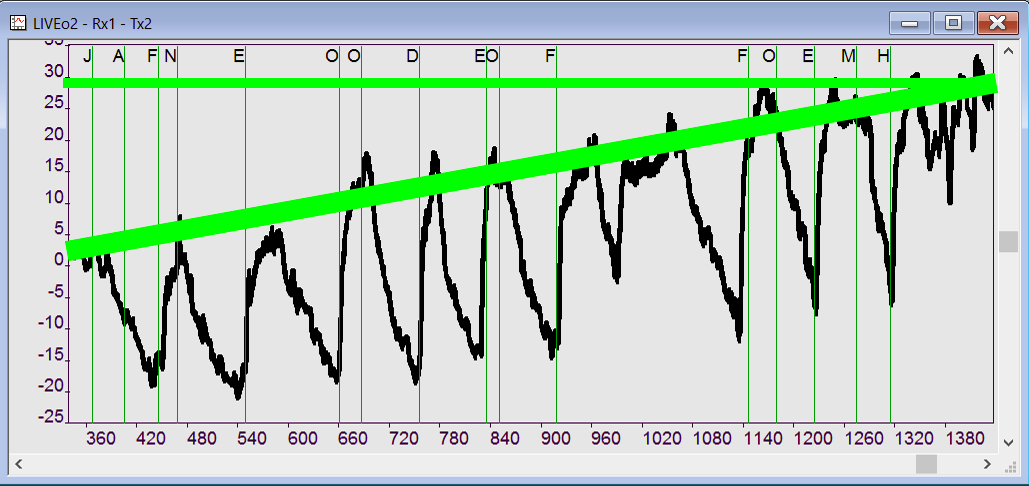
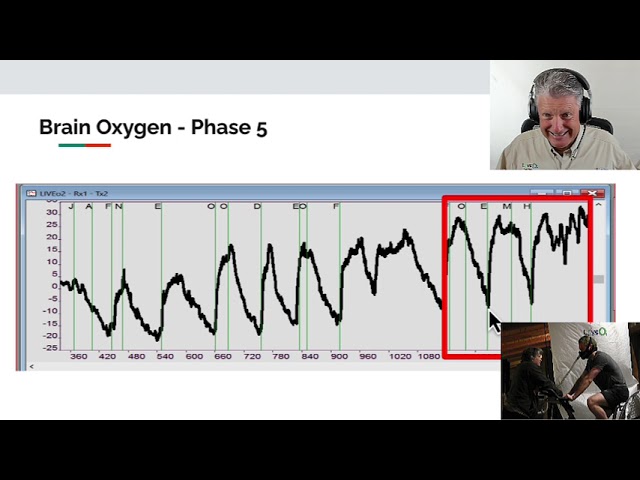
Real-time brain measurements show a 29% durable increase in brain energy production from a single Adaptive Contrast session. Here is the data.
Watch the Full Brain Energy Experiment
Real-time brain scans during a LiveO2 Adaptive Contrast session — see the data as it happens.
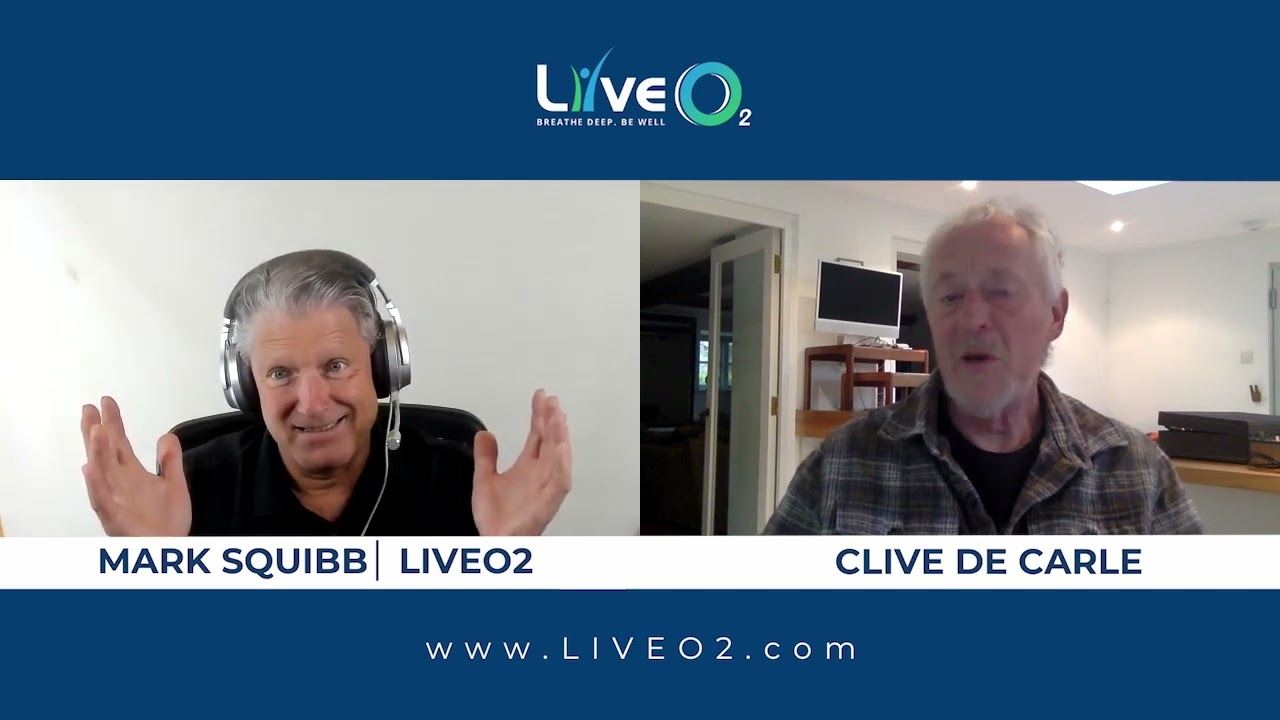
Watch as real-time brain oxygen sensors capture the 29% durable increase in brain energy production during a single Adaptive Contrast session.
The Headline Number
LiveO2 training produces a 29% durable increase in brain energy production. Not a temporary spike that fades when you stop exercising. A lasting change in how much energy your brain can produce and use.
Brain energy maximums occur during high-oxygen recovery after sprints on low-oxygen air with Adaptive Contrast. The challenge phase forces your body to open every blood vessel to the brain. The switch to high oxygen then floods those open pathways with maximum concentration. The result is more oxygen reaching your brain than any other method can deliver.
The Experiment
The experiment uses prolonged exertion with low-oxygen air to trick the body into compensatory blood flow. Here is the key insight: when your body senses oxygen deprivation, it prioritizes blood flow to the brain. Your body will sacrifice blood flow to muscles, organs, everything else — to keep the brain alive.
The BrainO2 protocol exploits this survival mechanism. By creating controlled oxygen deprivation during exercise, it forces the body to maximize brain blood flow. Then it floods that maximized pathway with high-concentration oxygen.
The result is more oxygen reaching the brain than any other method can deliver. Not because of more oxygen in the air. Because of more blood flow to the brain carrying that oxygen.
Session Timeline
How We Measured It
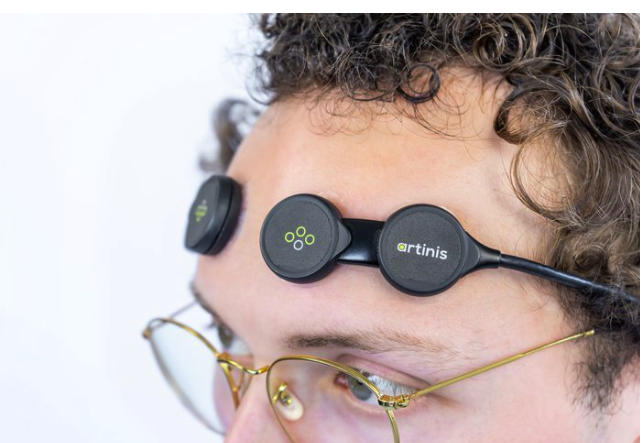
This is not guesswork. The brain energy data comes from a deep tissue oxygen sensor by Artinis, placed on the pre-frontal cortex. The sensor measures both oxygen-rich and oxygen-depleted blood in real time, yielding a continuous readout of brain oxygen use.
The cognitive panels use CNSVS — a clinical neurological testing system used by medical professionals worldwide. This is the same system used in clinical concussion assessment, ensuring the before/after comparisons are rigorous and standardized.

This combination — real-time brain oxygen monitoring plus standardized cognitive testing — gives us both the physiological mechanism and the functional outcome. We can see what is happening inside the brain AND measure whether it translates to actual cognitive improvement. It does.
Equipment That Makes It Possible
The BrainO2 protocol requires Adaptive Contrast switching. Two LiveO2 systems can run this protocol, each with different advantages.
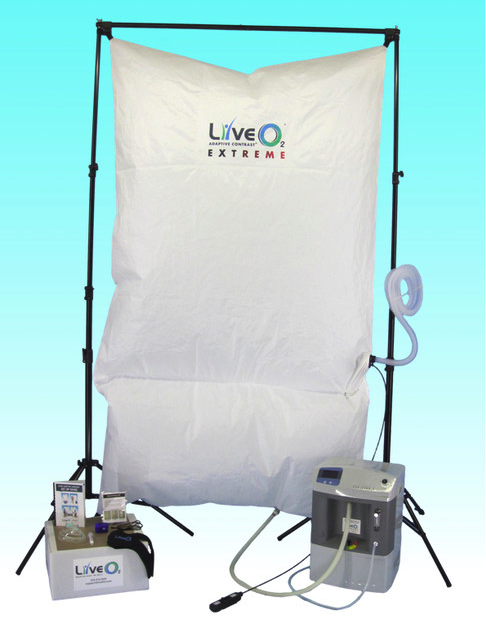
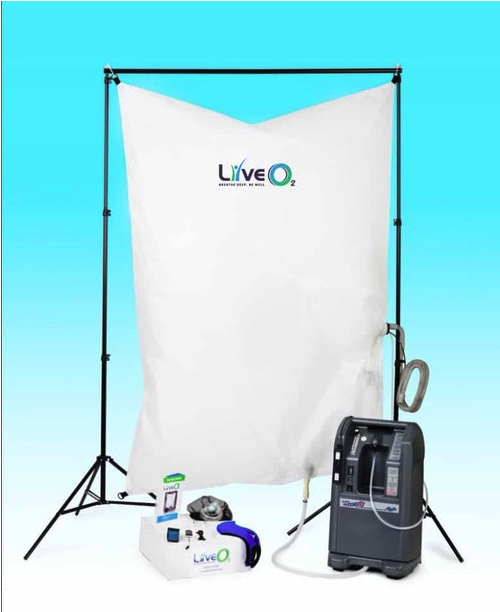
LiveO2 Extreme is the ideal choice for this protocol. Progressive hypoxia makes it easier to establish and maintain brain blood flow during training at low to moderate exertion levels. This means exertion-limited users — including older adults and those recovering from injury — can activate the brain blood flow threshold that creates these effects.
LiveO2 Adaptive Contrast also works, but maximum hypoxia at simulated 10,000 ft altitude requires intense exertion to activate the brain blood flow circuit. This system is best for users capable of high-intensity interval training.
These results rely on novel performance of invention per US Patent No. 9,833,643.
Deep Dive: Brain Oxygen Mechanics
A closer look at how Adaptive Contrast drives oxygen into brain tissue.
Long-Term Case Studies
The real question with any protocol is whether the results last. Two long-term case studies of concussed athletes who used BrainO2 show permanent restoration of mental function. Both were lifetime athletes capable of high-intensity interval training. Results reproduced with permission.
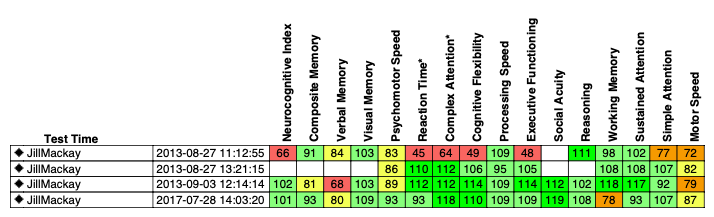
Case Study 1: 58-Year-Old Female (3 Concussions)
After a 2-hour protocol session, this subject showed restoration of cognitive capacity lost from 3 concussions over 18 months. Follow-up testing confirmed results persisted beyond 4 years.
Case Study 2: 24-Year-Old Male (10+ Concussions)
After 4 protocol sessions over 90 days, this subject showed restoration of cognitive capacity lost from 10+ concussions over 10 years. Subject reports recovery duration exceeds 8 years.
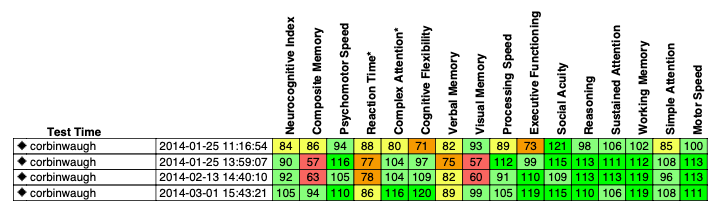
Both subjects report the improvements as permanent. Not temporary boosts. Lasting restoration of cognitive function.
How Long Do the Benefits Last?
BrainO2 training maximizes mental and physical performance beyond levels achievable by other known methods. Here is what the data and user reports tell us about durability.
Tissue oxygen levels increase by approximately 33%. Third-party lab tests on muscle tissue show an increase in muscle PO2 from 60% to 80%. These tissue oxygen levels correlate to measured increases in strength, agility, endurance, and recovery velocity.
Performance elevation lasts about 4 days. Users report that a BrainO2 training session enables above-normal performance for approximately 4 days. Optimal repetition is every day or every other day during recovery periods.
Recovery time cuts in half. Users report fatigue and injury recovery times are normally less than half of what they would expect. No user has reported soreness or fatigue after using this protocol, and most report it is beneficial immediately before any exertion event.
The mechanism is straightforward. Adaptive Contrast training uses low-oxygen exposure to cause the body to fully optimize oxygen delivery, while brief high-oxygen bursts deliver maximum concentration of oxygen to all tissues via blood plasma. The vascular adaptations that make this possible persist well beyond the training session itself.
Training and Support
BrainO2 is an advanced protocol. Do not attempt it without proper training. LiveO2 offers multiple options to learn and execute it safely:
On-Site Staff Training — Have LiveO2 experts come to your facility and train your team in person.
BrainO2 Digital Course — Self-paced online training covering the full protocol, safety guidelines, and execution details.
Protocol Coaching — One-on-one guidance from experienced LiveO2 coaches to customize the protocol for your situation.
Common Questions
It means brain energy production increased by 29% during the protocol and stayed at that elevated level after the session ended. “Durable” means the increase persists — it is not a temporary spike that disappears when you stop exercising. The brain maintains a higher baseline energy output.
A deep tissue oxygen sensor by Artinis is placed on the pre-frontal cortex. It measures oxygen-rich and oxygen-depleted blood simultaneously, giving a real-time readout of how much oxygen the brain is consuming — which directly correlates to energy production. More about brain oxygenation measurement.
No. BrainO2 is an advanced protocol that uses prolonged low-oxygen exposure. New users should train with standard LiveO2 protocols for at least one month before attempting it. Working with an Official LiveO2 Trainer is strongly recommended.
Either the LiveO2 Extreme or LiveO2 Adaptive Contrast system. The Extreme is recommended because its progressive hypoxia makes it easier to activate brain blood flow at lower exertion levels. The AC system works but requires high-intensity interval training capability.
The case studies show permanent restoration of cognitive function in concussed individuals — including a subject who recovered from 10+ concussions over 10 years, with results persisting beyond 8 years. See results 41 years after concussion.