
The Ben Menefee Story — An Ultimate Warrior
After a devastating brain injury in Afghanistan, doctors said he’d never walk again. 2 out of 100 survive his type of injury. Ben didn’t just survive.
Ben’s Recovery Story
From a 2% survival rate to walking again — watch how LiveO2 Adaptive Contrast changed everything.
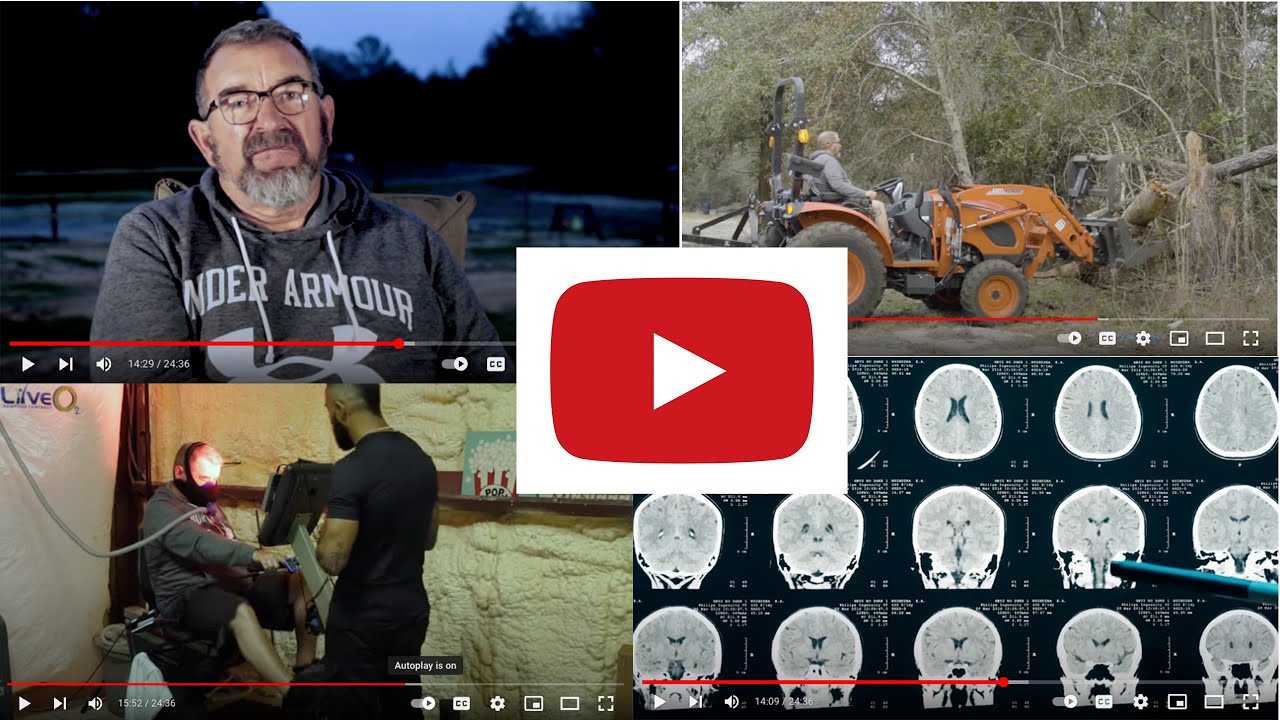
Ben Menefee survived a devastating brain injury in Afghanistan that only 2 out of 100 survive. Doctors said he’d never walk again. This is what happened when he discovered LiveO2.
The Day Everything Changed
Ben Menefee was serving in Afghanistan when a traumatic brain injury put him in a coma. When he woke up at Walter Reed Veterans Hospital, the news was as bad as it gets.
Only 2 out of 100 people survive his type of brain bleed. The doctors told him he might never talk again. Might never walk again. His left side was paralyzed. He suffered from uncontrollable laughing and crying episodes. Severe headaches were constant. Exhaustion was his baseline.
Most people would have accepted that. Most people would have listened to the statistics, nodded along with the prognosis, and settled into a life defined by limitation.
Ben Menefee is not most people.
The Fight for His Own Life
Here is what nobody tells you about brain injuries: your body wants to heal. Every cell in your body is wired for repair. The problem isn’t willpower. The problem is delivery. Your damaged tissue is starving for oxygen, but the very injury that caused the damage also destroyed the pathways that deliver it.
Ben started with hyperbaric oxygen treatments. They helped. But progress was slow. The sessions were expensive, required travel, and he could only do them on someone else’s schedule. For a man fighting to regain control of his own body, that dependency was its own kind of prison.
He needed something he could do at home. Something he could do every day. Something that would let him take the small amount of exercise his half-paralyzed body could manage and amplify it into real, measurable progress.
The question wasn’t whether Ben had the will to recover. The question was whether he could get enough oxygen to his brain to make recovery possible.
When LiveO2 Entered the Picture
Ben discovered LiveO2 Adaptive Contrast. And everything changed.
Here is why it mattered for someone in Ben’s situation. Traditional oxygen therapy gives you more oxygen. That’s fine. But LiveO2’s Adaptive Contrast does something fundamentally different. It tricks your body into opening blood vessels wider than normal, then floods those open pathways with high-concentration oxygen.
For Ben, this was the breakthrough. His body could only manage limited exercise. With a standard system, limited exercise means limited results. But Adaptive Contrast took whatever movement he could produce — however small — and used it to push oxygen into tissue that hadn’t received proper circulation since his injury.
Think about that for a moment. A man who could barely move was able to deliver more oxygen to his brain than a healthy person gets during a normal workout. Not because he was working harder. Because the technology was working smarter.
The Transformation Nobody Expected
As soon as Ben was physically able, he switched from hyperbaric treatments to at-home LiveO2 with Adaptive Contrast. He could train on his own schedule. Every day if he wanted to. No appointments. No travel. No waiting rooms.
The results started compounding.
The laughing and crying episodes stopped. It had been over a year since he’d had one. If you have never experienced uncontrollable emotional episodes from a brain injury, you cannot fully appreciate what that means. Imagine not being able to trust your own reactions. Imagine crying in the middle of a conversation for no reason. Now imagine that just… stopping.
He got out of the wheelchair. The man they said would never walk again demonstrated wheelchair-free mobility. Not shuffling. Not being carried. Moving under his own power.
The headaches disappeared. Constant, debilitating headaches that had been his companion since the injury simply went away.
“Ben loves watching his doctors try to figure out why he no longer needs drugs to control his blood pressure or cholesterol.”
— LiveO2 TVRead that again. His doctors are confused by how well he is doing. That is the kind of result that doesn’t show up in a textbook. It shows up in a man who refused to quit.
Why Ben’s Story Matters for You
You probably do not have a traumatic brain injury. And hopefully you never will. But here is why Ben’s story should matter to you anyway.
If Adaptive Contrast can push enough oxygen into a severely damaged brain to restore function that doctors said was permanently lost — what can it do for a brain that’s simply underperforming?
Brain fog. Fatigue. Poor concentration. Slow recovery from workouts. These are not diseases. They are symptoms of the same underlying problem Ben had: not enough oxygen reaching the tissue that needs it most.
The difference between Ben and most people is only a matter of degree. His vascular damage was catastrophic. Yours might be subtle — caused by age, inflammation, stress, or minor injuries you never even noticed. But the mechanism is the same. And the solution is the same.
How vascular injury limits oxygen delivery — and why you do not need a TBI to benefit from fixing it.
From Recovery to Mission
Ben’s journey did not end with his own healing. It ignited something bigger.
He became an advocate. A voice for veterans and anyone facing a battle that traditional medicine has given up on. His dedication to raising awareness about what oxygen training can do — especially for people who have been told there is nothing left to try — is the reason his story keeps spreading.
This is what happens when you give a warrior a second chance. He does not just save himself. He goes back for everyone else.
It is never too late. If a man with a 2% survival rate can walk again, your body has more potential than you think.
Common Questions
Ben suffered a traumatic brain injury (TBI) with a severe brain bleed while serving in Afghanistan. Only 2 out of 100 people survive his type of injury. He experienced left-side paralysis, uncontrollable emotional episodes, constant headaches, and extreme fatigue.
LiveO2 Adaptive Contrast enabled Ben to amplify the small amount of exercise his injured body could manage. The system opens blood vessels wider than normal through low-oxygen challenge, then floods those pathways with high-concentration oxygen — delivering oxygen to damaged brain tissue that normal breathing cannot reach. Learn how Adaptive Contrast works.
Ben regained the ability to walk without a wheelchair, his uncontrollable laughing and crying episodes stopped completely, his constant headaches went away, and he no longer needed medication for blood pressure or cholesterol control.
No. Ben’s case demonstrates what happens with severe oxygen deprivation, but most people experience milder versions of the same problem — reduced oxygen delivery from aging, inflammation, or stress. LiveO2 improves oxygen transport to all tissues. Learn about restoring oxygen for optimal health.
LiveO2 uses an Adaptive Contrast system paired with a stationary bike or other exercise equipment. It can be set up at home for daily use. The system connects to a reservoir that delivers both high-oxygen and low-oxygen air during your training session.