
Warriors
Pro Football Recovery: 3 Concussions, 25 Years, and a Brain That Came Back
Stephen White played QB for the BC Lions. 3 compounding concussions ended his career and left him struggling for 25 years. After 9 months of LiveO2 Adaptive Contrast, his neurological panels show measurable recovery across every tested category.
Stephen White — Post-Concussion Recovery (15-Minute Interview)
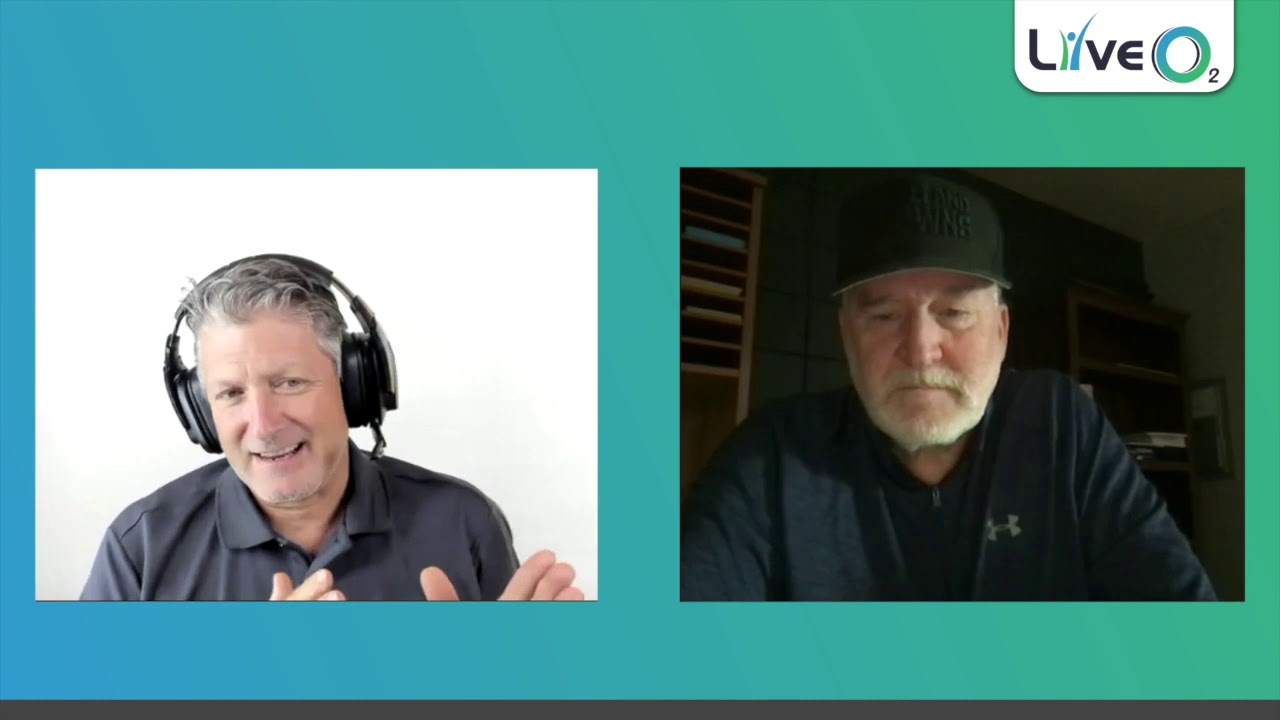
This is the 15-minute highlights version. The full 49-minute interview is also available for those who want the complete story — watch the extended version here.
The Injury That Didn’t Show Up on a Scan — But Ended a Career
Stephen White quarterbacked for the BC Lions in the CFL. His football career ended the way thousands of athletes’ careers end — not with one catastrophic hit, but with multiple concussions that compounded over time until the cumulative damage became disabling.
3 concussions. Each one compounding the effects of the last. By the end, the cognitive impairment was severe enough to affect every area of his life — not just football.
For 25 years, Stephen dealt with the consequences: memory issues, emotional dysregulation, cognitive fog, and the gradual loss of the abilities he’d relied on his entire life. Standard medicine had no clear answer. The injuries were old. The damage was documented but apparently permanent.
“I couldn’t even run my own camera anymore. I just looked at it and had no idea — and I was always the guy they’d come to to figure stuff out. That was the bottom of the bottom.” — Stephen White
What makes Stephen’s case scientifically meaningful is that it happened before the internet — before concussion protocols, before baseline testing, before anyone was systematically tracking brain health in athletes. The injuries were old. If recovery was possible for him, the implication is significant: the age of a brain injury does not necessarily determine whether it can improve.
9 Months of Adaptive Contrast — What the Numbers Show
Stephen’s recovery was tracked with pharmaceutical-grade neurological panels before and after 9 months of LiveO2 Adaptive Contrast training. The panels test cognitive processing speed, memory, attention, motor speed, reaction time, and executive function — the same battery used to assess neurological fitness in clinical settings.
The results at the 9-month mark:
| Neurological Category | Before | After 9 Months |
|---|---|---|
| Neurocognition (overall) | Low / Red | Improved |
| Verbal Memory | Low | Improved — room for more |
| Visual Memory | Low | About the same |
| Psychomotor Speed | Very Poor | Significant improvement |
| Reaction Time | Terrible (1st percentile) | Excellent — rattlesnake fast |
| Simple Attention | Very Poor | Quite good |
| Processing Speed | Low | Significant improvement |
| Executive Function | Low | Significant improvement |
| Social Acuity | Low | Significant improvement |
| Motor Speed | Low | Improved |
9 out of 10 tested categories improved. All but one of the red-zone (1st percentile) scores moved to yellow, green, or dark green — meaning his brain measurably moved from severe impairment toward normal function across almost every measured dimension.
Stephen’s reaction time went from the 1st percentile — among the worst measurable — to “excellent.” For a former quarterback, this is particularly striking: reaction time is perhaps the most fundamental cognitive-motor skill in the position, and it measurably recovered 25 years after the injuries that ended his career.
Beyond the Numbers: What Recovery Actually Felt Like
Stephen’s framing of his recovery puts the numbers in context. The clinical improvements were real and documented — but he’s clear that the most significant change wasn’t captured by any panel score.
“All the motor skills and memory — all that stuff is beautiful. But emotionally, man — that’s where the gold is.”
— Stephen White, former BC Lions QBHe describes a progression that anyone who has dealt with post-concussion symptoms will recognize: the fog that sets in on Sundays after a game (which players often attribute to alcohol or fatigue), the gradual loss of the ability to start conversations, the moment when he couldn’t remember how to get back to his own house after accidentally driving to the house he grew up in as a teenager.
After 9 months of training, he’s running the executive director function at a clinic, helping other veterans and athletes recover. He’s back to producing video, handling complex cognitive tasks, and doing the work he couldn’t do for years. And he’s using what he learned to help others — starting every new client with a baseline neurological assessment so they have a measurement to track against.
Why 25-Year-Old Brain Injuries Can Still Improve
The standard assumption about chronic post-concussion syndrome is that time sets the ceiling: the older the injury, the less likely meaningful recovery becomes. Stephen’s case challenges that assumption directly.
The mechanism explains why. Post-concussion symptoms are driven largely by persistent vascular brownout in the injured tissue — regions where microvascular inflammation from the original trauma restricts blood flow, reducing oxygen delivery to the affected neurons. This isn’t scar tissue. It’s a state of chronic, low-level hypoxia that perpetuates the symptoms indefinitely because the conditions that cause them never resolve.
Adaptive Contrast training repeatedly pushes tissue oxygen above the regenerative threshold — the level at which vascular inflammation reverses. Over repeated sessions, those brownout regions progressively clear. The neurons that were functioning at diminished capacity due to oxygen restriction begin receiving adequate oxygen again.
The age of the injury doesn’t change this mechanism. A 25-year-old brownout zone responds to the same regenerative oxygen signal as a 6-month-old one. What matters is whether the tissue is still present and the vasculature is still functional enough to respond — and in most post-concussion cases, both remain true long after the original injury.
Stephen’s numbers confirm it. So does his life.