
Two Years Later: How Tri Lipton’s Family Got Their Dad Back
PTSD. Suicide attempts. VA hospitalization. Then five days changed everything. Two years on, Tri completed trade school and became the dad his daughter can come to.

Before you read on
This page describes suicide, hospitalization and PTSD. If that is hard for you today, it is fine to stop here.
If you are a veteran in crisis, help is free right now. Call or text 988, then press 1 for the Veterans Crisis Line. You can also text 838255. It is open 24 hours a day.

Tri’s 2-year update — and what the data shows across 28 similar cases.
Watch the full extended interview →
70% Disabled. Just Trying to Live.
Tri Lipton served in the US Air Force as fuels. He came back with PTSD from a traumatic experience during deployment — something he never reported, never pursued, and tried to bury.
Sleep fell apart. Drinking got worse. Manic episodes. A suicide attempt. The VA hospitalized him. He ended up in long-term inpatient care. His VA disability rating: 70%.
His wife was the sole parent. His daughter had learned to route around him. He wasn’t accomplishing anything. He was just trying to live.
Two to three years in, a relative of his wife — Mark Squibb — offered an olive branch: come to Colorado. We’ll try something.
“At that point, I had basically given up and resigned myself to navigating my life the best I could.”
Five Days That Rewired the Equation
Tri drove to Colorado. No expectations. Just exhaustion and a borrowed hope.
Over five days, he did multiple sessions per day on a stationary bike — at least 15 minutes each — with oxygen alternating between high and low concentration. Mark’s place had everything dialed: clean mountain environment, camaraderie with other veterans, physical training reminiscent of military PT but accessible regardless of fitness level.
Day-by-Day Shift
Arrival: Stressed from the drive, emotionally erratic, sleep-deprived, in zombie state from medications.
After first sessions: Physical release — “like a cramp letting go of my head.” Emotional pieces starting to fall back together.
Day 2: The emotional ping-pong — erratic highs and lows within hours — began to stabilize. “The day after was almost like the episode didn’t happen.”
Day 5: Speech clearer, posture changed, emotional stability maintained. Processed memories without re-traumatization.
First week home: Offered to put daughter to bed for the first time. Wife laughed and cried.
What a Session Actually Is
People picture a clinic or a chamber. It is neither.
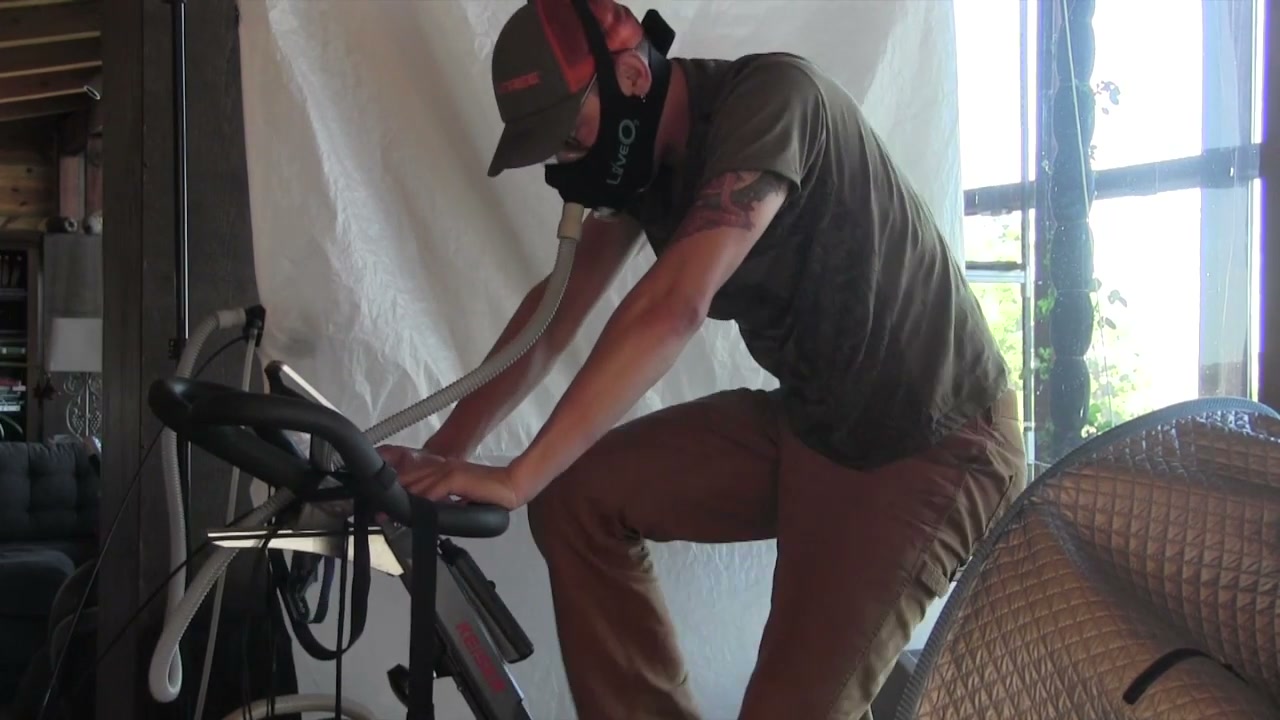
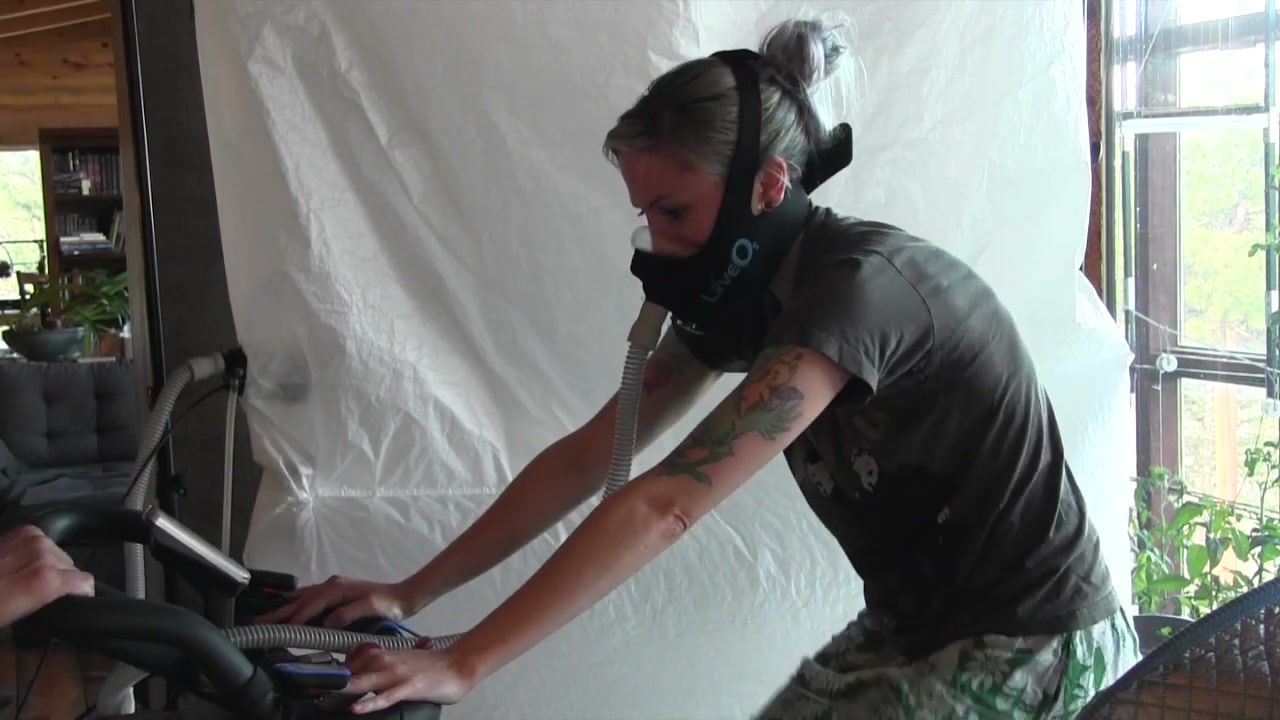
You sit on an exercise bike. You wear a mask. You pedal. A session runs about 15 minutes.
What makes it LiveO2 is what comes through the mask. The system switches between high and low oxygen while you ride — like hot-cold contrast training, but for oxygen. That switch is the patented part, and it is the whole point.
Tri did five days of it in Colorado because that is where the equipment was. Most people now do the same sessions at home, on their own schedule.
What the switch actually does
One cycle, four beats. The vessel is the same vessel throughout — what changes is how wide it is open when the oxygen arrives.
Oxygen-rich air
You breathe air with far more oxygen in it than the room.
Flip to altitude air
Oxygen falls to altitude level. Your body notices immediately.
Vessels open wide
The small vessels widen to go and get what your body is short of.
Oxygen floods through
Oxygen returns — and now it moves through a vessel already wide open.
Open the path first. Then fill it. Breathing extra oxygen while you sit still raises how much oxygen is in you, but does much less about where it goes. The switch is what opens the path — and it is the step passive oxygen treatments skip.
Why the switch matters
Breathing extra oxygen while you sit still is the weak version. It raises how much oxygen is in you. It does much less about where that oxygen goes.
Adaptive Contrast works in two steps. First you flip to altitude-level air. Your body reads the drop and opens the small blood vessels to go get what it needs. Then you flip back to oxygen-rich air, and it moves through vessels that are already wide open.
Open the path first. Then fill it. That order is the difference, and it is the step passive oxygen treatments skip.
The bike is not incidental either — it is the delivery system. Working muscles raise your heart rate, and a faster heart carries that oxygen further than it would travel at rest.
See the protocol: BrainO2.
PTSD Is a Family Disease
“Whether you know it or not, PTSD is a communicable disease,” Mark Squibb said. “When you come back jacked up, it’s hard for your family to help you — and what we see is that we need to help their families come back to okay too.”
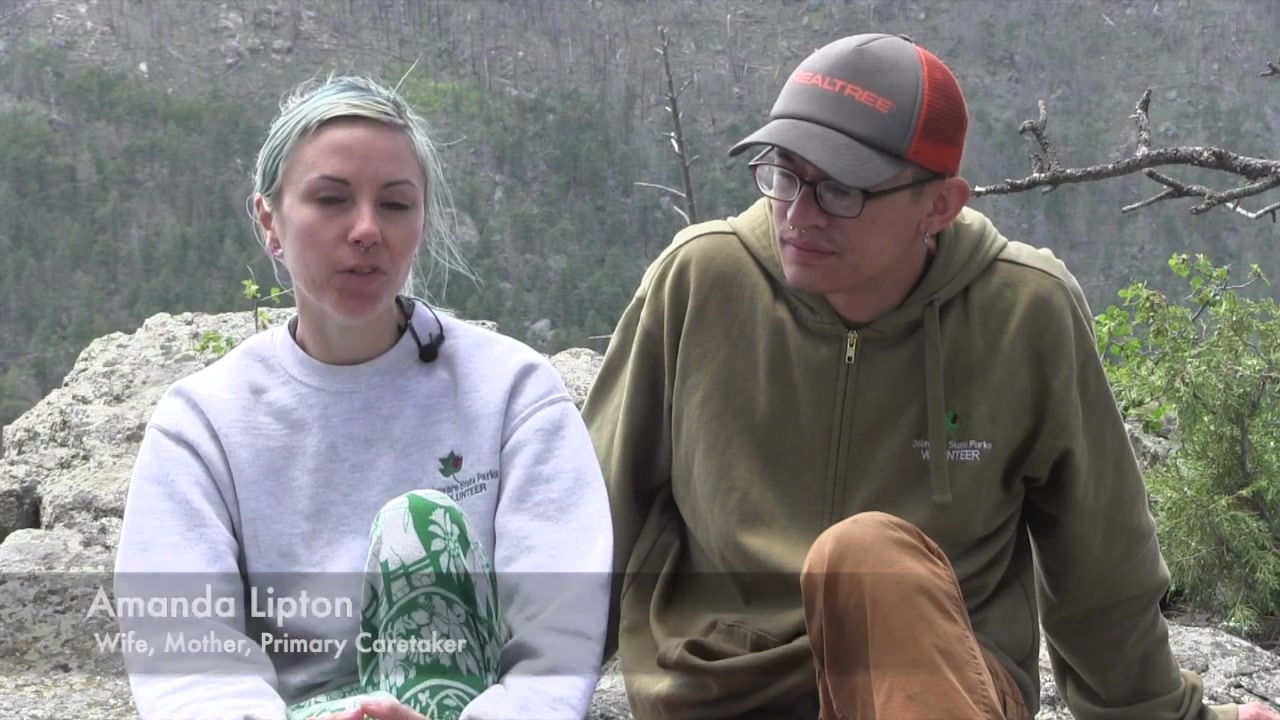
Tri’s wife had been a full-time caregiver for years. When Tri recovered, she had to figure out who she was again. The burden she’d carried — adjusting the environment, managing his states, parenting alone — was suddenly gone. She laughed about it. She also cried about it.
Tri went back to school on his GI Bill — something he’d failed to do before, losing benefits he couldn’t recover. He completed a full year of a desktop support technician program. Kept the schedule. Did the work.
If you are the one holding a household together right now, this part of the story is about you. Partners and parents carry a load nobody measures — managing the room, covering the parenting, reading the mood before anyone speaks. You are allowed to ask questions on your own behalf. You do not need the veteran in your life to ask first.
“She comes and asks me for stuff. She asks my opinion. She asks what I think. She asks for help and advice. I’m the dad — I’m somebody she can come to, as opposed to somebody who needed to be avoided or walked around.”
— Tri Lipton, two years after treatment
What the Data Showed Across 28 Cases
Tri wasn’t alone. Mark Squibb’s team ran neurological panels on 28 post-concussive PTSD cases. The results were consistent.
Program Outcomes
Among the cases: Nathan, who had been isolated for 15 years post-injury. He arrived stuttering through every sentence, unable to complete a thought without stopping. By day five, long smooth sentences. Body language shifted. Posture taller. He said he felt things coming back that he hadn’t realized were still there.
Why Veterans’ PTSD Often Has an Organic Component
The Hidden Brain Injury Inside PTSD
Many veterans classified as PTSD also have undiagnosed post-concussive syndrome. Training exercises, blast exposure, physical altercations, and accidents accumulate over careers. Each concussion restricts blood flow to portions of the brain. Over time, those sections go offline.
The result looks like PTSD: emotional dysregulation, cognitive fog, sleep disruption, social withdrawal. But underneath it, the brain is simply starved of oxygen and blood flow — not psychologically broken.
What Oxygen Training Does
Oxygen training drives oxygenated blood directly into brain tissue that has been operating at reduced capacity. When enough oxygen reaches dormant regions, they can switch back on — often within the first few sessions.
This is why recovery can be so rapid in cases that have been treatment-resistant for years. The problem wasn’t psychological rigidity. It was physical. The brain was offline. Oxygen brought it back.
“It doesn’t matter what kind of injury you have,” Mark explains. “What matters is whether the brain tissue is truly gone or just offline. In most veteran PTSD cases — it’s offline. Oxygen gets it back.”
LiveO2 is not a treatment for PTSD. It is not intended to diagnose, treat, cure or prevent any condition, and nothing on this page is medical advice.
Tri kept his care team. Oxygen training was something he added, not something he swapped in. If you are working with a doctor or a therapist, keep them, and tell them what you are considering.
This is one man’s account. Individual results vary. We publish it because he asked us to.
Frequently Asked Questions
Send Tri a Message
Tri now works as a PTSD outreach lead for LiveO2. He offers his own time to veterans and families who are still deciding. If you would rather ask a person who has been where you are than read another page, write to him here.
Try It Before You Decide Anything
You do not have to drive to Colorado to find out whether this does something for you.
Find the nearest LiveO2 location, sit on a bike for 15 minutes wearing the mask, and see for yourself. That is the whole test — and it starts a conversation with someone who can answer your questions.