
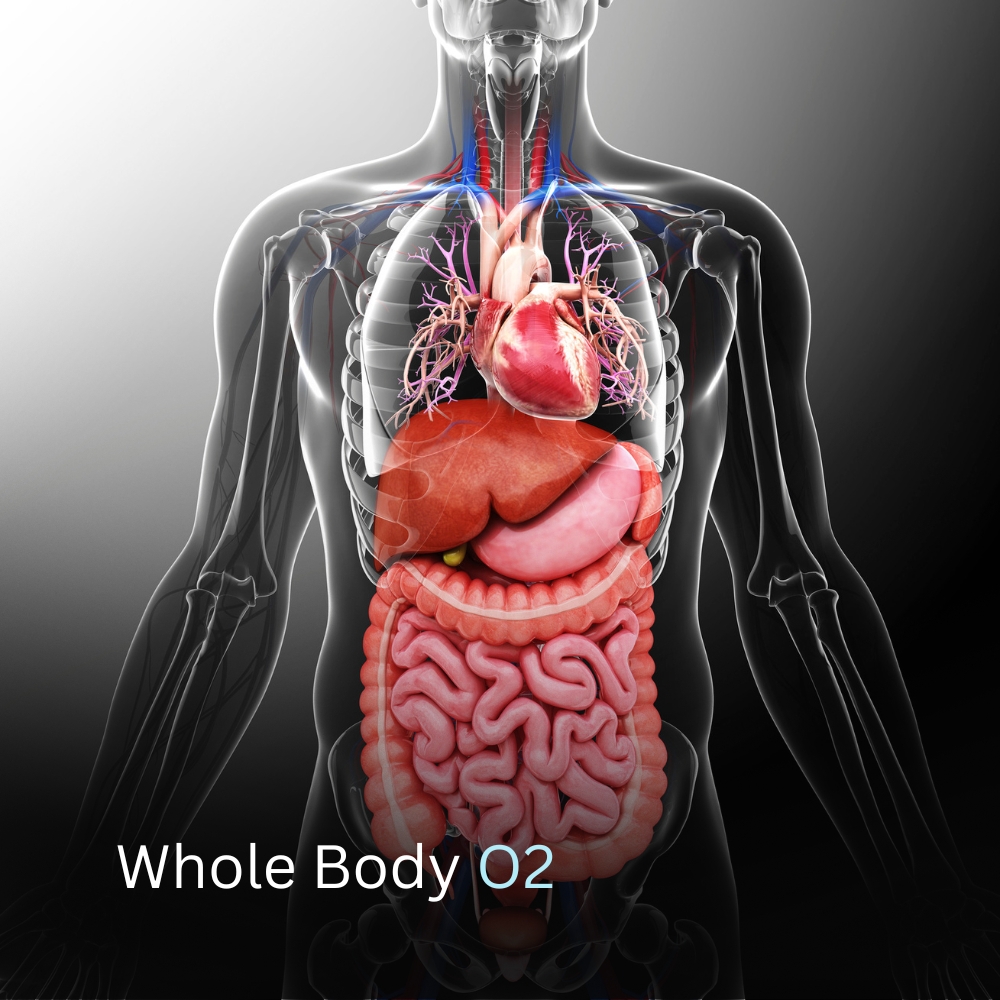
Whole Body O2™
15 minWhat if you’re not slowing down because of age — but because your body isn’t getting enough oxygen?
Get your body back online.
A few LiveO2 sessions deliver the oxygenation that takes weeks in a Hyperbaric Chamber — the one resource every cell in your body runs on.
Why LiveO2 Outperforms HBOT
You’re not imagining it
Your Body Is Asking for Something It’s Not Getting
When oxygen can’t reach your tissues, everything slows down — healing, thinking, moving, sleeping. It’s not aging. It’s oxygen debt. And your body has been carrying it for years.
The pain that won’t let up
Joints ache. Muscles stay sore for days. You’ve tried everything — but nothing seems to reach the root of it.
Energy that’s just… gone
You used to power through your day. Now even routine tasks feel heavy. The fatigue isn’t laziness — it’s cellular.
Sleep that doesn’t restore
You go to bed exhausted, but wake up feeling the same. Real recovery requires oxygen reaching tissues that have been cut off.
A mind that’s losing its edge
Words slip. Focus fades. You notice it — and so do the people around you. Your brain needs more oxygen, not more supplements.
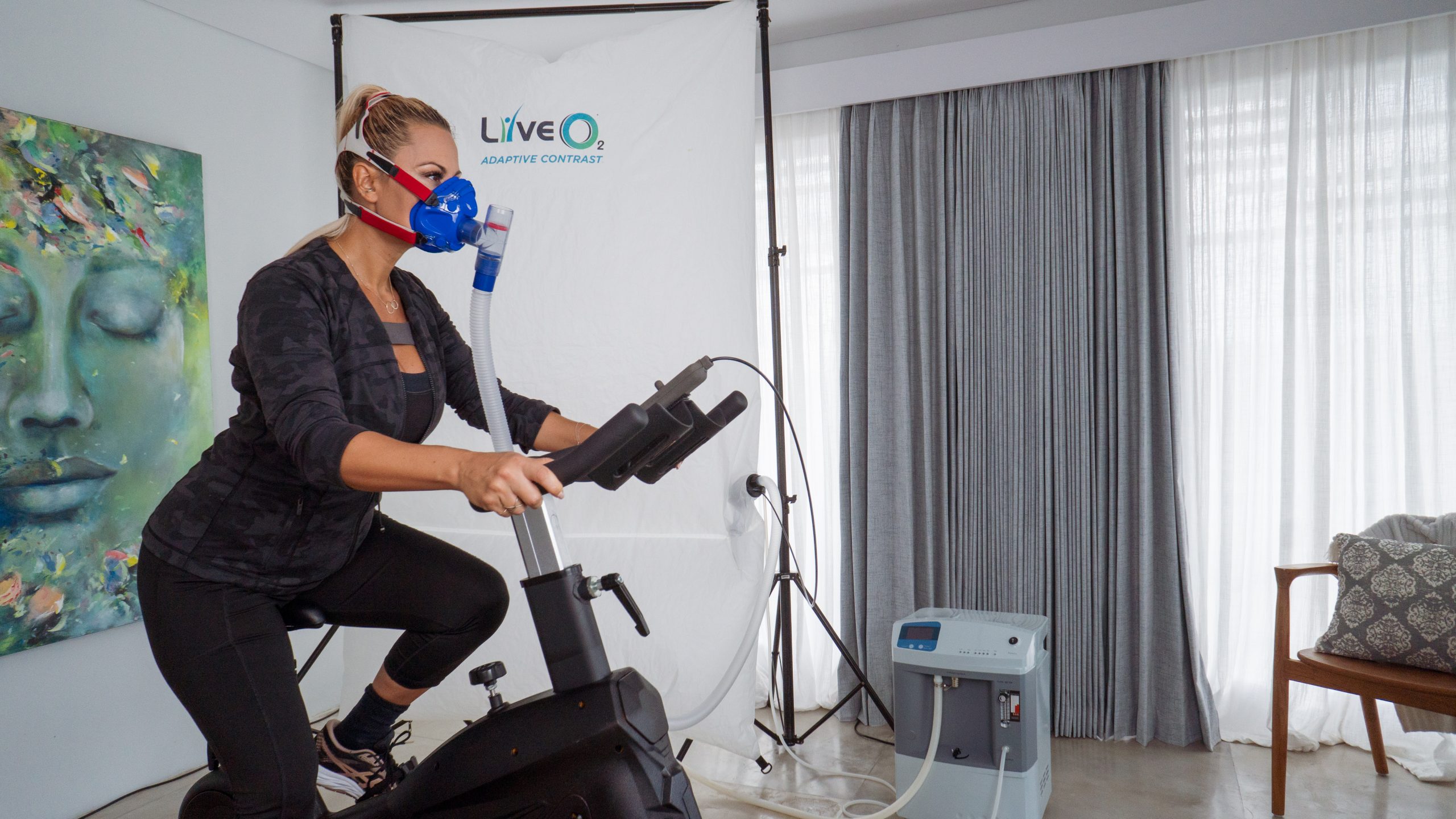
Faster Results. No Chamber Required.
HBOT requires 20–40 clinic sessions over weeks before most patients report noticeable improvement. LiveO2 users typically feel measurable differences within the first few 15-minute sessions — at home.
Time to Noticeable Results
Based on published HBOT clinical protocols (20–40 sessions typical) and LiveO2 user-reported outcomes
HBOT timeline reflects standard clinical protocols of 20–40 sessions (60–90 min, 5×/week) before measurable improvement, per UHMS guidelines and published systematic reviews. Curve shape is illustrative of the typical treatment arc. LiveO2 data reflects user-reported outcomes.
Real People. Real Results.
Hear directly from people who use LiveO2 — in their own words.
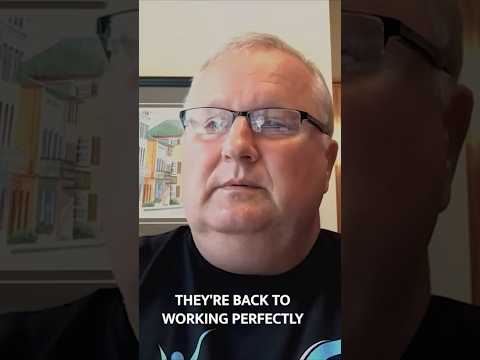
Whole Body O₂ Overview
The Whole Body O₂ protocol requires a LiveO2 system. The Adaptive Contrast system is recommended for the full protocol experience.
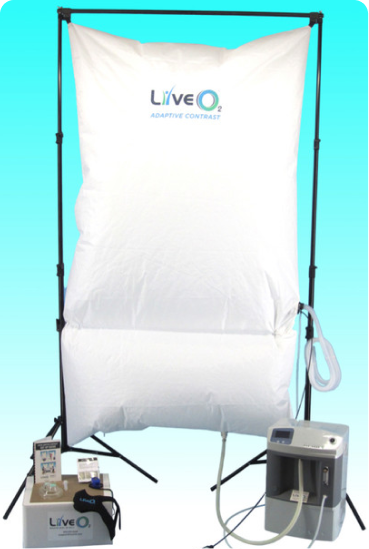
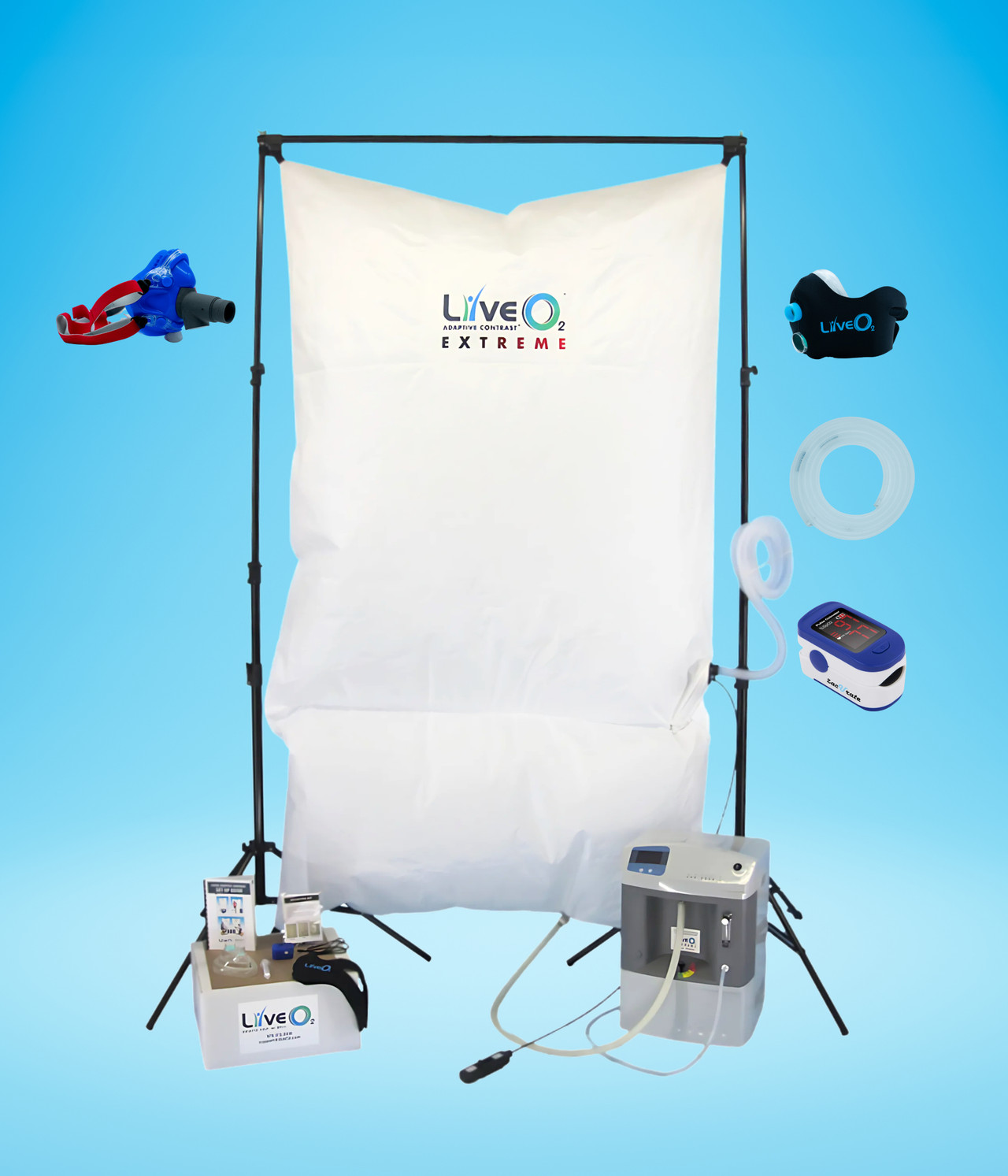
The Whole Body O₂ Method:
This protocol, and LiveO2, are not intended to treat, mitigate or cure any specific disease or health condition. It is specifically intended to increase oxygen available to cells and to support optimal physiological function. More on LiveO2 Intended Use.
Why This Protocol Comes First
Designed to acclimate — not overwhelm. This 1–2 week protocol follows a 3-days-on, 1-day-rest cycle to build your foundation safely.
Restores oxygen to injured and compromised tissues, reopening capillaries and clearing metabolic waste.
Many users feel differences immediately. Others may need a few sessions to acclimate — it depends on your conditioning and exercise capacity.
Measurable improvements — recovery times shorten, SpO₂ stabilizes faster, and power output increases with each session.
Users in better shape often breeze through this protocol and feel ready for advanced protocols like BrainO₂ sooner.
How It Works
Whole Body O₂ uses adaptive contrast oxygen training to flush metabolic waste and re-establish oxygen levels throughout the body. The protocol combines high-oxygen breathing with brief hypoxic sprints to maximize tissue oxygenation.
Understanding Adaptive Contrast
A clear explanation of the adaptive contrast mechanism — how switching between oxygen-rich and oxygen-reduced air during exercise drives oxygen deep into tissues in ways passive methods can’t match.
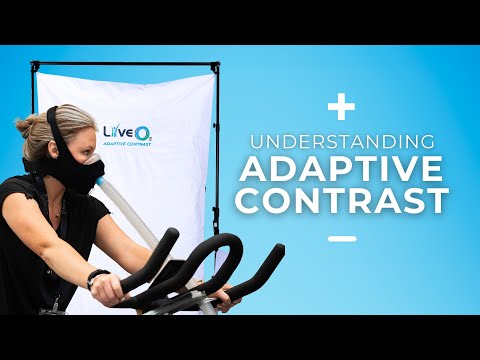
Whole Body O₂ Key Phases
Super-Saturate
Flood your bloodstream with oxygen while exercising. Within minutes, your blood oxygen levels climb far above normal — loading every red blood cell to maximum capacity and priming your body for what comes next.
Vasodilate
A brief burst of reduced oxygen triggers your body’s natural vasodilation response — blood vessels open wider than normal, dramatically increasing the volume and pressure of blood reaching your capillary beds.
The Magic Moment
With vessels wide open, oxygen-rich blood punches through compromised capillaries and restores oxygen to tissues and organs that have been starving. This is the breakthrough — the moment your body begins to heal at the cellular level.
Questions About Whole Body O2?
A LiveO2 team member is available now to answer your questions. Click anywhere to start a live conversation.