
Warrior Unwounded: Tri Lipton
He came home from service a different man than the one who left. This is his account, in his own words.
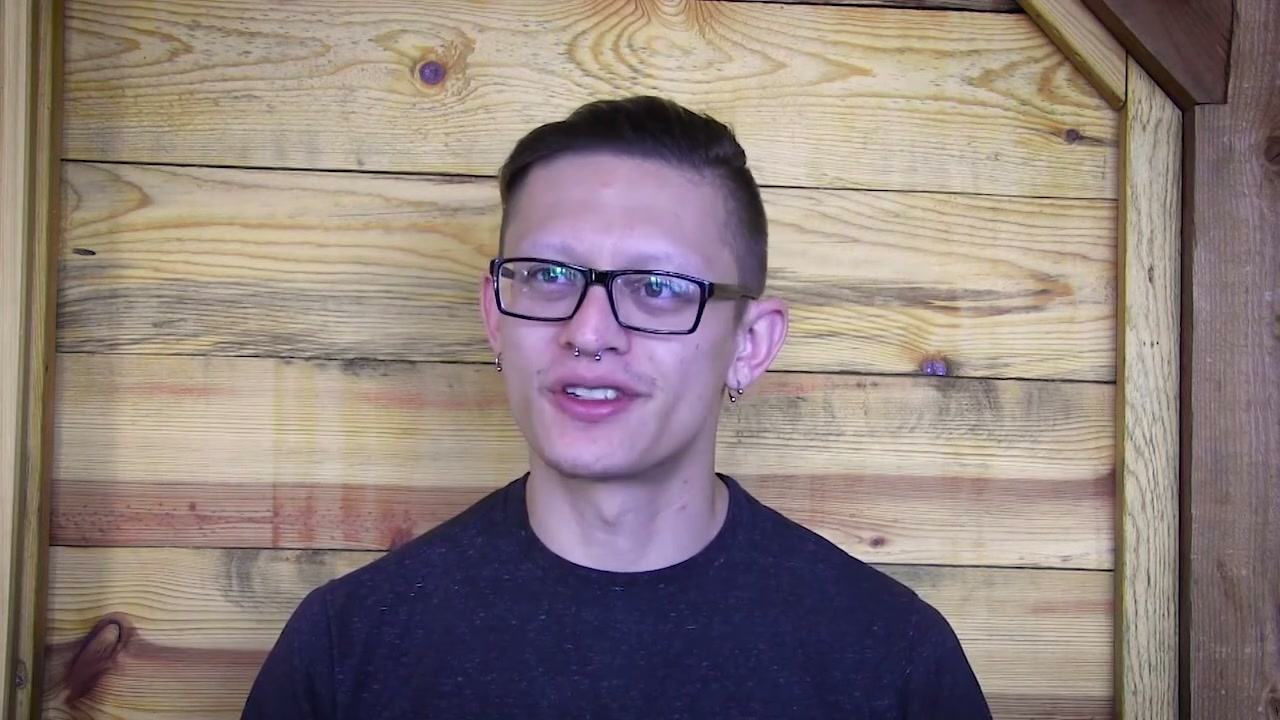
Tri Tells It Himself
Four minutes. No script. Just a veteran describing where he was and where he is now.
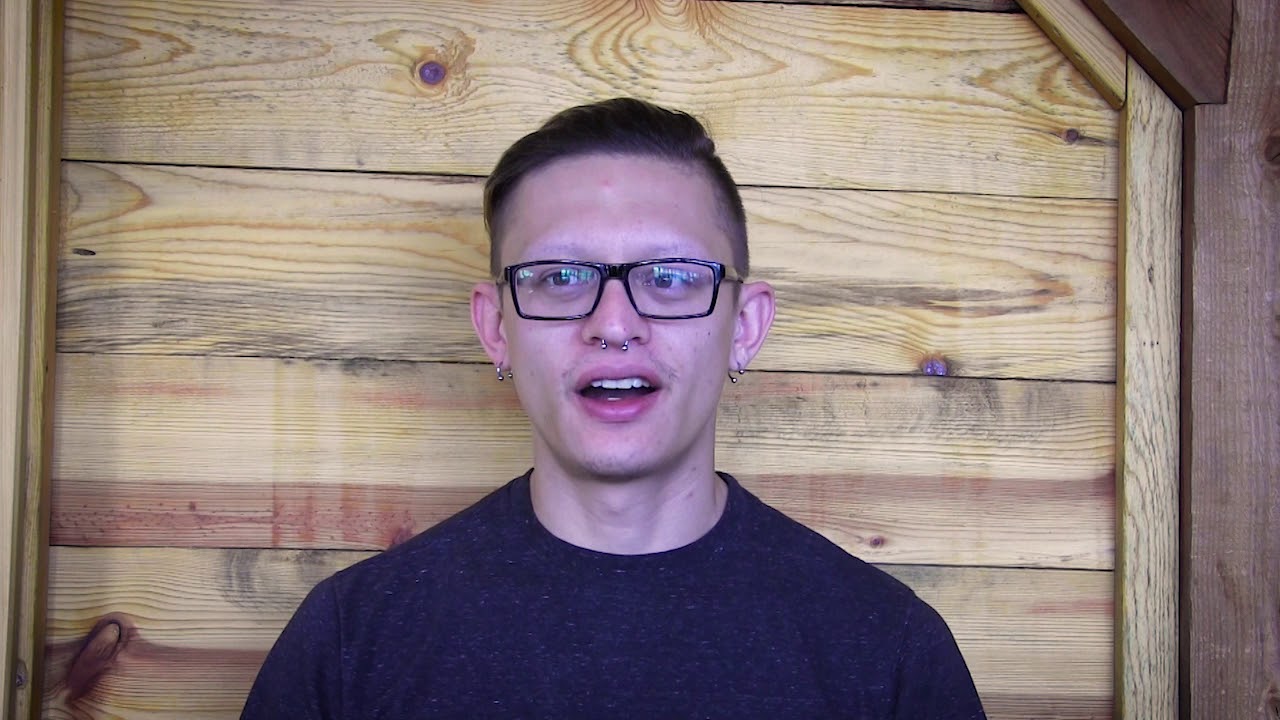
Tri speaks plainly about a hard stretch of his life, including time in hospital. If that is difficult for you today, skip the video and read the page instead.
If you are a veteran in crisis, help is free and available right now. Call or text 988, then press 1 for the Veterans Crisis Line. You can also text 838255. It is open 24 hours a day.
The Man Who Came Home
Trirat Lipton served. He came home disabled, with PTSD.
For a long stretch, leaving the house was the hard part of the day. His job, as he saw it, was to hold himself together enough to be a good father and husband.
He had tried a lot of things before he ever heard of oxygen training.
“I had tried different types of therapies. Talk therapy, yoga, chiropractic stuff. I mean, I’ve literally run the whole gamut. Inpatient setting, outpatient, pills, self‑medicating.”
— Trirat Lipton, U.S. veteranThat list matters. Tri was not looking for one more thing to try. He had already tried nearly everything available to him.
What Tri Says Is Different Now
The change he talks about first is not dramatic. It is a trip into town.
“I went into town the other day for a visit, just because I could. When was the last time I could say I could do that—and enjoyed it?”
— Trirat LiptonAsk anyone who has lost their ordinary days how much that is worth. Tri describes wanting his footing back, for himself and for the people who depend on him.
“I want to be able to stand up on my own two feet. I want to be able to provide for my family. I’ve got a whole new outlook on life.”
— Trirat LiptonHe now serves as a PTSD outreach lead for LiveO2. He offers his own time to people who are still deciding.
“I’m well enough now that you can reach out to me, and you can talk to me, and ask me all the questions you want.”
— Trirat LiptonWhat a Session Actually Is
People picture a chamber or a clinic. It is neither.
You sit on an exercise bike. You wear a mask. You pedal. The mask feeds you air with far more oxygen in it than the air in the room. A session runs about 15 minutes.
Then it does the thing that makes it LiveO2. The system switches between high and low oxygen while you ride — like hot‑cold contrast training, but for oxygen. That switch is the patented part.
That is the whole thing. Tri makes the same point in blunter terms.
“If you can get on a bike and spin, you can do this.”
— Trirat Lipton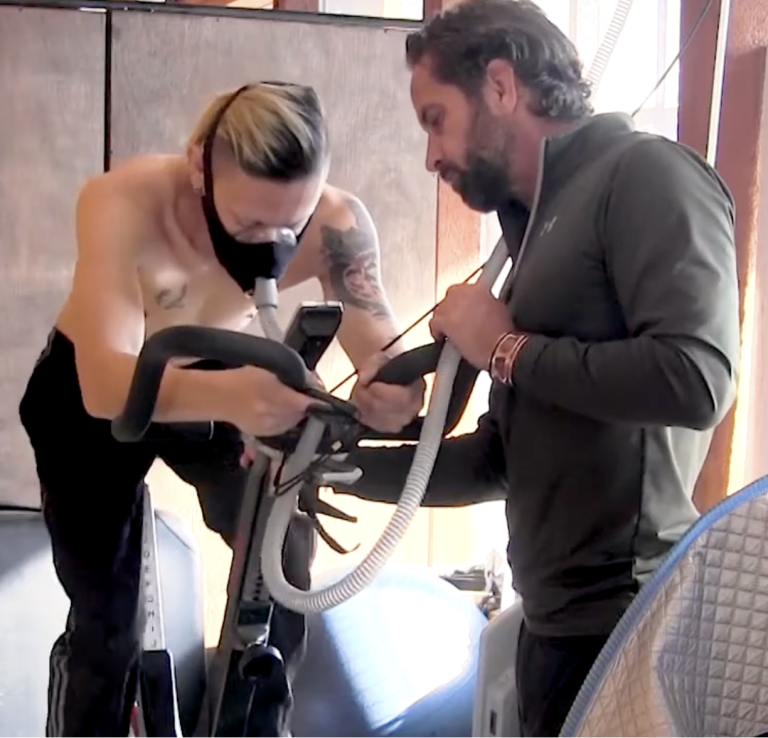
The exercise is not incidental. It is the delivery system. Working muscles raise your heart rate, and a faster heart moves more blood to more tissue. Breathing high‑oxygen air while you are still is a much weaker version of the same idea.
The switch is the other half. Extra oxygen while you sit still raises how much oxygen is in you, but it does much less about where that oxygen goes. Adaptive Contrast works in two steps: first you flip to altitude‑level air, and your body reads the drop and opens the small blood vessels to go get what it needs. Then you flip back to oxygen‑rich air, and it moves through vessels that are already wide open.
What the switch actually does
One cycle, four beats. The vessel is the same vessel throughout — what changes is how wide it is open when the oxygen arrives.
Oxygen-rich air
You breathe air with far more oxygen in it than the room.
Flip to altitude air
Oxygen falls to altitude level. Your body notices immediately.
Vessels open wide
The small vessels widen to go and get what your body is short of.
Oxygen floods through
Oxygen returns — and now it moves through a vessel already wide open.
Open the path first. Then fill it. Breathing extra oxygen while you sit still raises how much oxygen is in you, but does much less about where it goes. The switch is what opens the path — and it is the step passive oxygen treatments skip.
Open the path first. Then fill it. That order is the difference, and it is the step passive oxygen treatments skip.
Why Exercise and Oxygen Get Paired
Your brain is about 2% of your body weight. It takes roughly 20% of your oxygen. It has almost nothing stored in reserve, so it depends on what your blood brings it minute to minute.
Exercise changes what arrives. A 2026 meta‑analysis in Behavioural Brain Research pooled studies of oxygen levels in the cortex. It found that whole‑body exercise raises them in healthy adults.
2% of your weight. 20% of your oxygen. The brain is the most oxygen‑hungry tissue you have, and it holds almost no reserve.
Exercise is also studied on its own in trauma care. A 2023 randomised trial in The Lancet Psychiatry tested adding brief aerobic exercise to trauma‑focused psychotherapy for people with PTSD.
Neither study looked at LiveO2. They are here because they describe the two ingredients—movement and oxygen—that a session is built from. What any of it means for you is a conversation for you and your doctor.
What This Page Is Not
This is one man’s account. It is not evidence that a device fixed a diagnosis.
LiveO2 is not a treatment for PTSD. It is not intended to diagnose, treat, cure, or prevent any condition. Nobody here is a clinician.
Tri kept his care team. Oxygen training was something he added, not something he swapped in. If you are working with a doctor or a therapist, keep them, and tell them what you are considering.
We publish his story because he asked us to. He wanted other veterans to ask him directly.
If This Sounds Familiar
Tri talks to veterans who are still deciding. So do our trainers. Ask what a session actually involves.
Talk to someone about your situationOr call 970-658-2789 and ask for a trainer.
Common Questions
No. LiveO2 is exercise equipment that changes the air you breathe while you train. It is not a treatment for PTSD or any other diagnosis. Tri describes his own experience on this page; that is his account, not a claim about what the equipment does.
About 15 minutes on the bike. Most of that is easy pedalling. You do not need to be fit to start, and you set your own pace.
No. Tri’s own test is whether you can get on a bike and spin. If you can, you can do a session. Ask your doctor first if you have a heart or lung condition.
No. A chamber raises pressure around you while you lie still. Here you are on a bike, at normal room pressure, using your own circulation to move the oxygen. See the side‑by‑side comparison.
Nothing on this page suggests stopping anything. Tri kept his care team. Talk to your doctor or therapist before you change any part of your care.
He asked us to make that possible. He is a PTSD outreach lead for LiveO2. He offers his time to veterans who want to ask a real person. Call 970-658-2789 and ask to be put in touch.
Yes. Ben Menefee tells his own in the Warrior Unwounded series. Each account is that person’s own, and results differ from person to person.
Call or text 988 and press 1 for the Veterans Crisis Line, or text 838255. It is free, confidential, and staffed 24 hours a day. Please do that before anything on this page.
Send Tri a Message
Tri offers his time to people who want to ask a real person. Write to him here.
A note on this story: this is Trirat Lipton’s personal account, shared with his permission. His words describe his own experience and are not a measure of any product’s effect. LiveO2 is not intended to diagnose, treat, cure, or prevent PTSD or any other condition, and nothing on this page is medical advice. Individual results vary and are not guaranteed. If you are struggling, please speak with your doctor, or call or text 988.