
Warrior Unwounded: Ben Menefee
A cable snapped in a gym in 2013. What followed is his story, and he tells it himself.
Ben Tells It Himself
A few minutes, unscripted, from the man it happened to.
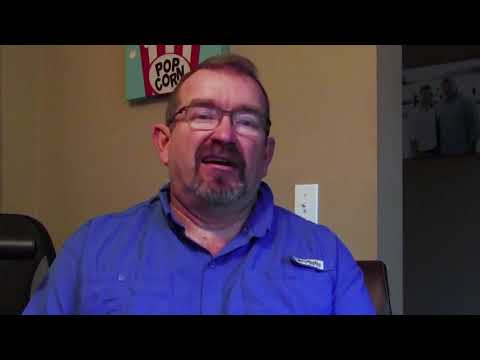
Ben Menefee is retired US Air Force. In this interview he describes the accident, what the doctors told him, and where he is now.
What Happened
On 22 January 2013, Ben was lifting weights in a base gym. A cable snapped. He fell and hit the right side of his head.
The injury caused a brain bleed. He was left hemiplegic — weakness down one side of the body. He was later diagnosed with pseudobulbar affect, a condition that causes sudden uncontrollable crying or laughing.
He was told he might never walk or speak again.
“They told me I may never walk again. They don’t get to decide what I do. Here I’m walking. It’s not sweet, but I can still walk.”
— Ben Menefee, US Air Force (retired)That is Ben’s account of his own recovery. Recovery after a brain injury involves a medical team, rehabilitation, and time. No single thing can be credited for it.
What Ben Says Changed
The first thing he names is his headaches.
“One of the things I love about the Adaptive Contrast system is when you breathe that pure oxygen your headaches go away. And I no longer have headaches.”
— Ben MenefeeThe second is the pseudobulbar affect — the sudden, uncontrollable crying or laughing that followed his injury.
“My PBA is under control. I could see the funniest show on television and start crying, or someone told a joke and I’d cry. But now we can talk about this and I’m good to go.”
— Ben MenefeeThe third is his energy, which is the one he ties directly to the sessions.
“My energy levels definitely increased with only a 15-minute session. Especially after three sessions, I sustained energy for a long time.”
— Ben MenefeeWhere He Says the Sessions Fitted In
Ben is specific about one role in particular. He describes the sessions as what let him get through his therapy at all.
“When I first started therapy I couldn’t get through a session, because I had zero energy. The therapist would say ‘good morning, Ben’ and I’d fall asleep.”
— Ben Menefee“I needed that extra boost of energy to get through it.”
— Ben MenefeeThe rehabilitation did the rehabilitating. What Ben describes is having the energy to show up for it.
Fifteen minutes, three times a week. That is the schedule Ben describes keeping.
Medication
Ben also describes coming off medication he had been prescribed after the injury.
“I’ve pretty much alleviated all medications. After my injury I was on blood pressure medicine and cholesterol medications. My blood pressure has been under control for over a year.”
— Ben Menefee“The only thing I’ve done differently is the LiveO2 sessions. Fifteen minutes, three times a week, is all you need.”
— Ben MenefeeThat is Ben’s account of his own care, and his own doctors were involved in it.
Please do not treat it as instruction. Never stop, reduce, or change a prescription because of something you read on a website. Any change is a decision for you and the doctor who prescribed it.
What a Session Actually Is
The equipment is a bike and a mask. You pedal, and the mask feeds you air with far more oxygen in it than room air.
Working muscles raise your heart rate. A faster heart moves more blood through more tissue. The exercise is the delivery system.
A session runs about 15 minutes. You set your own pace.
What This Page Is Not
This is one man’s account, published with his permission.
Ben’s recovery involved a medical team, rehabilitation and time. LiveO2 is not intended to diagnose, treat, cure, or prevent any condition.
Ben kept his medical team and his rehabilitation programme throughout. Nothing here suggests replacing either.
Working Through a Recovery?
Ben needed the energy to get through therapy. Ask us how it fits alongside yours — and ask your doctor too.
Talk to a trainerOr call 970-658-2789 and ask for a trainer.
Common Questions
No. LiveO2 is exercise equipment that changes the air you breathe while you train. It is not a treatment for brain injury, paralysis, or any other diagnosis. Ben describes his own experience; that is his account.
Having the energy to get through his rehabilitation sessions. He is clear that at first he could not stay awake through therapy at all.
No. Never change a prescription because of a story on a website. That decision belongs with you and your prescribing doctor.
He describes 15-minute sessions, around three times a week.
No. You set your own pace and resistance. Ask your doctor first, particularly if you are recovering from a serious injury.
No. A chamber raises pressure while you lie still. Here you are on a bike at normal room pressure, and your own circulation moves the oxygen. See the comparison.
Yes. Tri Lipton tells his own in the Warrior Unwounded series. Each account is that person’s own, and results differ from person to person.
Send Ben a Message
Ben offers his time to people who want to ask a real person. Write to him here.
A note on this story: this is Ben Menefee’s personal account, shared with his permission. His words describe his own experience and are not a measure of any product’s effect. LiveO2 is not intended to diagnose, treat, cure, or prevent brain injury, paralysis, pseudobulbar affect, or any other condition, and nothing on this page is medical advice. Individual results vary and are not guaranteed. Never change your medication or your rehabilitation programme without your doctor.