
What to Expect in Your First Session
Inclusive by design. Built for challenge. Your first session establishes your baseline — every session after builds from it. Here’s exactly what happens, step by step.
Your Pace. Your Challenge. Your Protocol.
The exercise in a LiveO2 session is not about fitness — it’s the mechanism that drives oxygen into circulation. What that looks like depends entirely on you. A competitive athlete and someone rebuilding after illness are both doing the same protocol, at the level that challenges them.
Your first session has one goal: establish your baseline and let your body show you what it needs. The system is reading your response in real time. From that first session forward, you build — at your own rate, toward your own target.
Designed for every point on the spectrum: From someone rebuilding after a health setback to an athlete pushing performance limits, LiveO2 meets you at your current level and creates a real challenge from there. The protocol scales — the experience is yours to define.
Watch Before Your First Session
This short briefing walks you through exactly what to expect — the equipment, the phases, and what your body will experience. Two minutes now means zero surprises on the day.
LiveO2 Preflight Briefing
Three Simple Pieces of Equipment
The entire system is three components. That’s it. Your guide or coach will have everything set up before you arrive — you just need to show up.
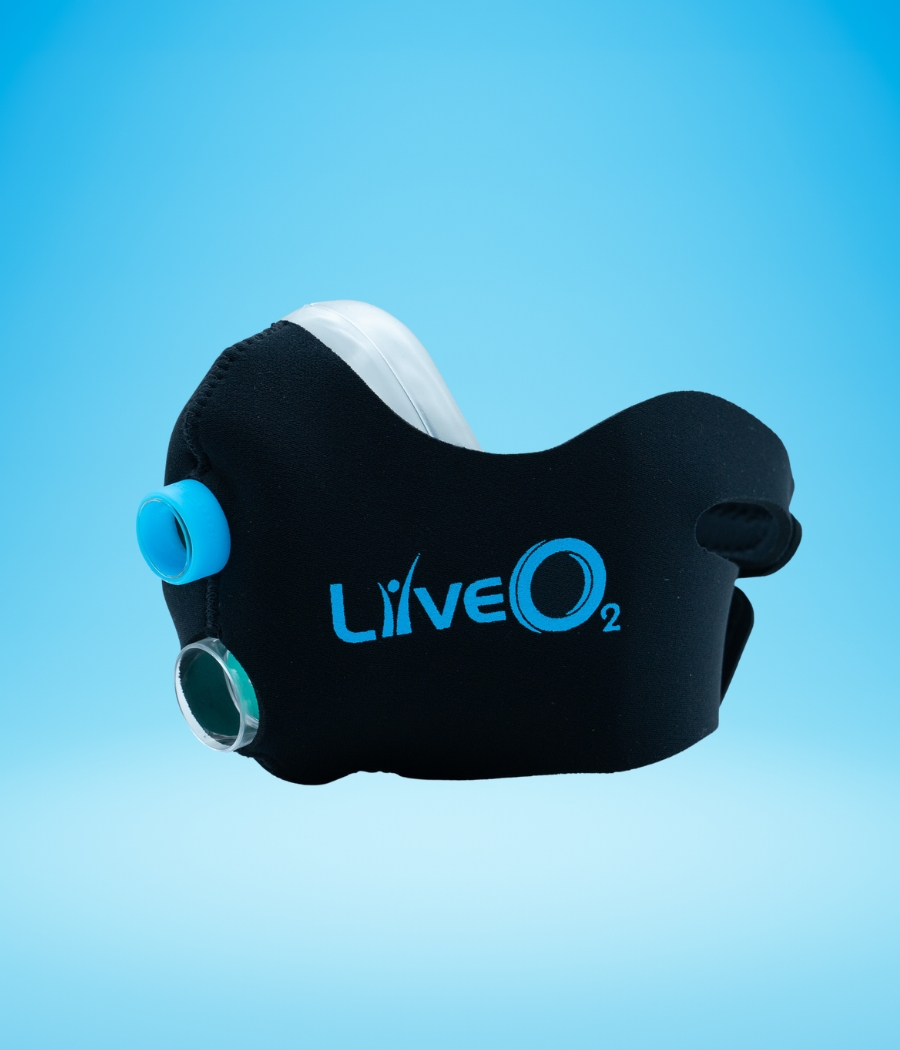
The Mask
A comfortable breathing mask that guides the air you inhale and exhale. You’ll hold it to your face first before any strap is applied — no surprises.
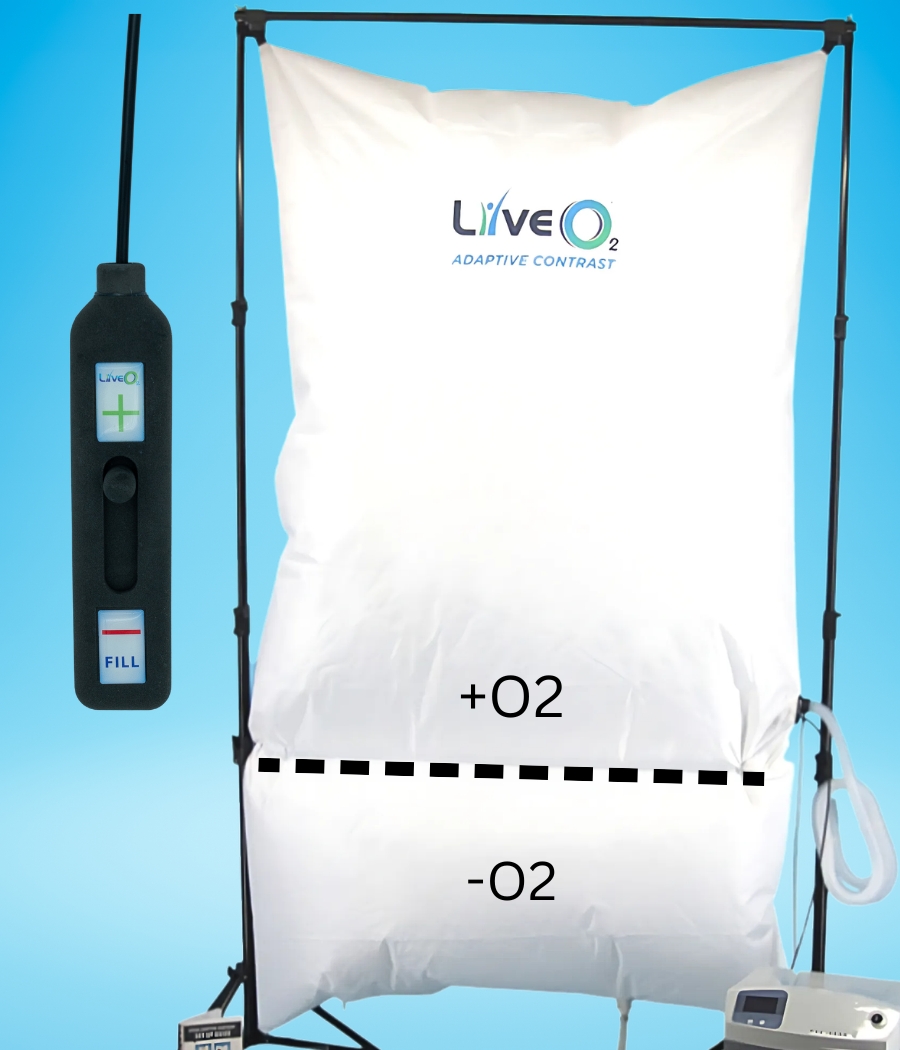
The Reservoir
Large bags that hold oxygen-enriched air. When you breathe in, you draw from the reservoir. When you breathe out, air exits through a separate valve.
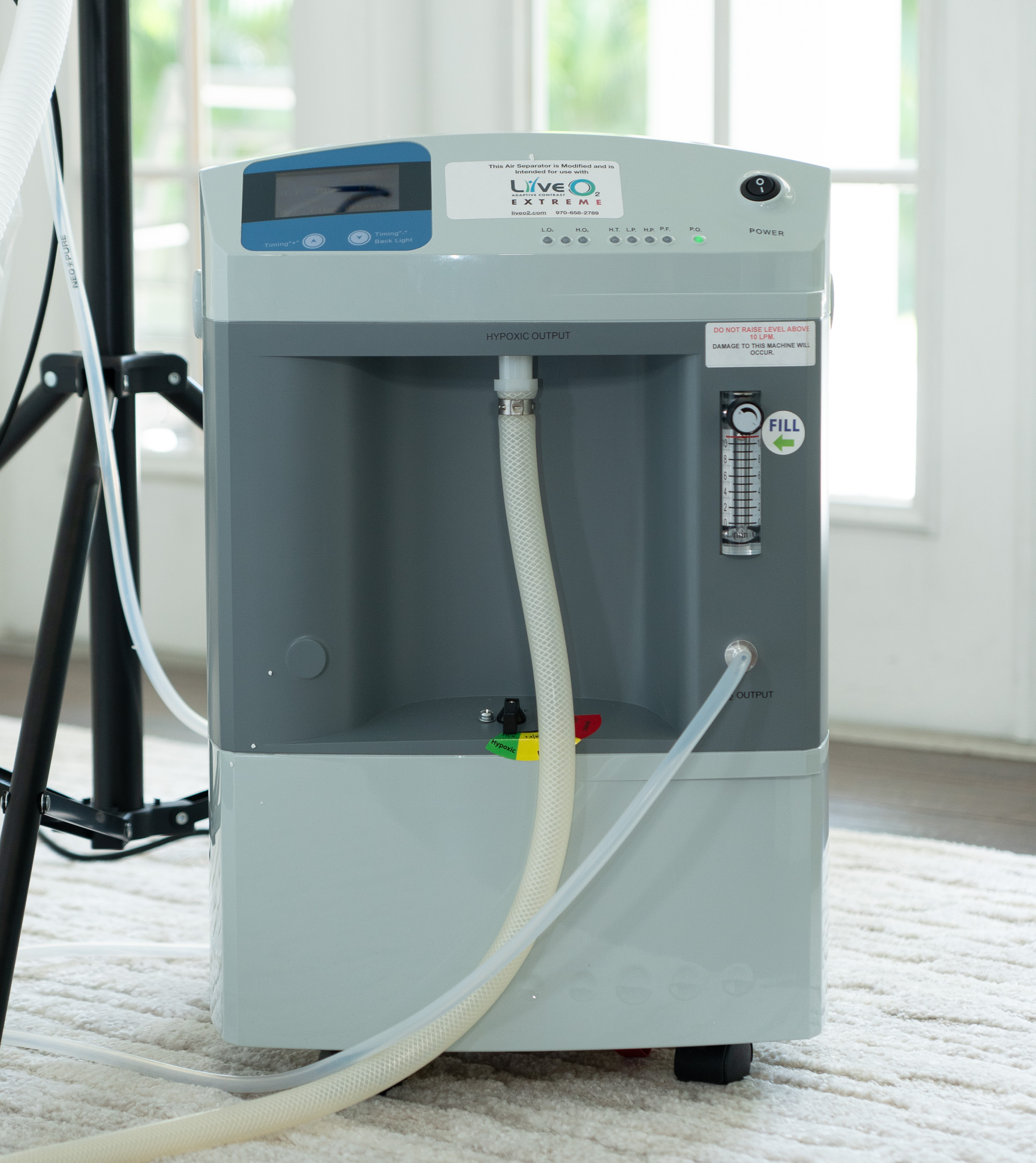
The Air Separator
The Adaptive Contrast unit that separates ambient air into high-oxygen and low-oxygen streams — letting your coach guide you between the two during your session.
Your Session, Step by Step
A first LiveO2 session follows a simple, structured flow. Your coach guides you through every transition — you just move and breathe.
Mask Introduction
Before you start movingYour coach will show you the mask, explain how air moves through it, and let you hold it to your face and breathe normally — with no strap attached. You get comfortable with it on your own terms. Once you’re ready, you’ll connect it to the hose and feel the oxygen-rich air flowing. The strap is offered only when you’re ready; it’s always your choice.
Warm-Up on High Oxygen
6–8 minutesYou begin moving at a pace that matches your current capacity — on a bike, treadmill, rebounder, or elliptical — while breathing oxygen-enriched air. For some that’s a brisk cycling cadence; for others it’s measured walking. The goal is steady, continuous movement that gets your blood circulating. Your coach monitors pulse oximetry as your body loads up with oxygen and your saturation climbs toward 98%+.
Short Challenge Rounds
2–3 rounds · 15 seconds eachYour coach switches to low-oxygen air and signals you to push harder — a genuine increase in effort, calibrated to your level — for 15 seconds. Then you switch back to high oxygen and hold the pace through recovery. That’s one round. The low-oxygen push drives your circulation higher; the high-oxygen phase floods that activated blood flow with concentrated oxygen, reaching tissue that rarely gets it. What counts as a “push” is relative to you — the physiology works the same whether you’re at 60% or 90% of your max. First-time users typically complete 2–3 rounds; athletes with strong SpO ₂ rebound may push to four.
Recovery
3 minutesYou slow down and breathe deeply on high oxygen. This is when most people feel it most clearly — a sense of grounded clarity, warmth, and physical calm. Your coach may invite you to simply pay attention to how your body feels right now. There’s nothing to do except breathe and recover.
What You Might Feel During and After
Everyone’s first session is a little different. These are the most common things people notice — all of them normal and expected.
Calm and Settled
Many people feel a pleasant heaviness and mental quiet during the recovery phase. A common description: “like a clean reset.”
Warmth or Tingling
Oxygen-rich blood moving into tissues that don’t normally receive much circulation can create a mild warmth or tingling sensation — especially in the hands and feet.
Mental Clarity
Users often notice sharpened focus and a feeling of alertness in the hours after their session. This is normal and tends to deepen with regular use.
Deeper Breathing
As your body adjusts to the oxygen-rich air, breathing may feel fuller and more natural. Some people notice they’ve been breathing more shallowly than they realized.
Fatigue — the Good Kind
Some people feel pleasantly tired after their first session — especially if it’s their first real exertion in a while. This is normal and often followed by improved sleep.
Nothing in Particular
Some people simply finish and feel fine. Results often accumulate over multiple sessions rather than arriving in the first one. Both outcomes are equally valid.
The “Initial Dipper” — a Sign of Healing, Not Danger
Occasionally, during a first session on high oxygen — before any low-oxygen switch — some users experience a spontaneous drop in oxygen saturation. This is called the Initial Dipper pattern, and it’s actually a sign that your body is using the extra oxygen to repair old stress or injury patterns it has been holding onto. It’s most common in people with chronic injuries (shoulders, knees, back, prior concussion). If this happens, your coach will keep you on high oxygen, monitor your recovery, and gently end the session early so your body can integrate the healing response. You likely won’t see it again.
“I didn’t know what to expect — I was a little nervous about the mask. But within the first two minutes I just felt this calm come over me. By the time it was done I felt clearer than I have in years. I couldn’t explain it. I just felt like myself again.”
— LiveO2 user, 67 — first session feedbackYou Are Always in Control
Your coach will say it before you start, and it holds true for the entire session: you can slow down, remove the mask, or stop at any time — no explanation needed. The goal of a first session is to leave feeling good about coming back. That’s the only measure of success.
What Your Coach Does For You
Every first session is guided. Your coach handles all of the setup and monitoring so you can simply focus on breathing and moving. Here’s what they manage on your behalf:
- System powered on and oxygen reservoirs filled at least one hour before you arrive
- Mask fitted and valves confirmed functional before you put it on
- Exercise equipment adjusted to your height and comfort before you begin
- Pulse oximetry monitored throughout — your oxygen saturation is watched in real time
- Every oxygen switch timed and guided verbally so you’re never surprised
- Pacing adjusted based on your body language, breathing, and feedback
- Recovery phase guided with attention to how you’re responding
- Debrief conversation after — what you noticed, what to expect next time
Common Questions Before Your First Session
Honest answers to the things most people wonder before they start.
Not at all. The mask has a one-way valve in and a one-way valve out, so air flows naturally with each breath. You’ll hold it to your face and breathe through it before anything is connected — most people are surprised by how normal it feels. If you’ve ever worn a snorkel mask or a medical oxygen mask, the sensation is similar. Some people feel slight resistance initially, but this typically disappears within the first few breaths.
This is one of the most common concerns, and it’s addressed directly in how first sessions are guided. You start by simply holding the mask to your face — no strap, no connection — and breathing until it feels natural. The strap is offered, not required. If at any point you want to remove the mask, you remove it. Anxiety about the mask typically resolves within the first session once your body realizes there’s no restriction in the airflow. Your coach is trained specifically to read for signs of discomfort and will adjust accordingly.
Enough to drive circulation — and the right amount is different for everyone. The exercise is the delivery mechanism, not the goal. During the warm-up phase you move at a pace that gets your heart rate up and blood flowing. During the challenge rounds, you push meaningfully harder for 15 seconds — not all-out, but genuinely challenging for your level. What that looks like varies: for one person it’s a sprint interval; for another it’s a brisk walk. The protocol is the same. The effort is yours to define.
LiveO2 has been used across a wide range of health situations — post-surgery recovery, neurological conditions, chronic fatigue, long COVID, cardiovascular rehabilitation, and more. If you have a specific condition, let your coach know before the session. The protocol can be adjusted in pacing, intensity, and number of challenge rounds to match your current capacity. As always, consult with your physician if you have any medical concerns about cardiovascular exercise.
You may notice the air smells slightly different on the low-oxygen setting — that’s normal. The 15-second window is brief enough that most people don’t feel significant hypoxic effects before switching back to high oxygen. Your coach will demonstrate the switch before your first challenge round so it’s never a surprise. If at any point the low-oxygen phase feels uncomfortable, tell your coach and they’ll switch back immediately.
Most people feel calm, clear, and grounded immediately after. Some feel pleasantly tired; others feel energized. A small number feel entirely normal — as if nothing happened — and notice the effects later in the day or over the following week of regular sessions. Drink water after your session, give yourself a few minutes to sit before driving, and take note of how you feel — your observations will help guide future sessions.
Regular use produces cumulative results. Most people see meaningful change with 3–5 sessions per week over the first several weeks. Daily use is safe and beneficial. Your second session typically goes further than your first — your body already knows what to expect, and your coach can begin building on the foundation established in your first experience.
Ready to Begin?
Talk to our team about your health goals, your starting point, and what to expect for your specific situation.
Learn More Before You Start
Questions? Call us at 970-658-2789 or send a message.