
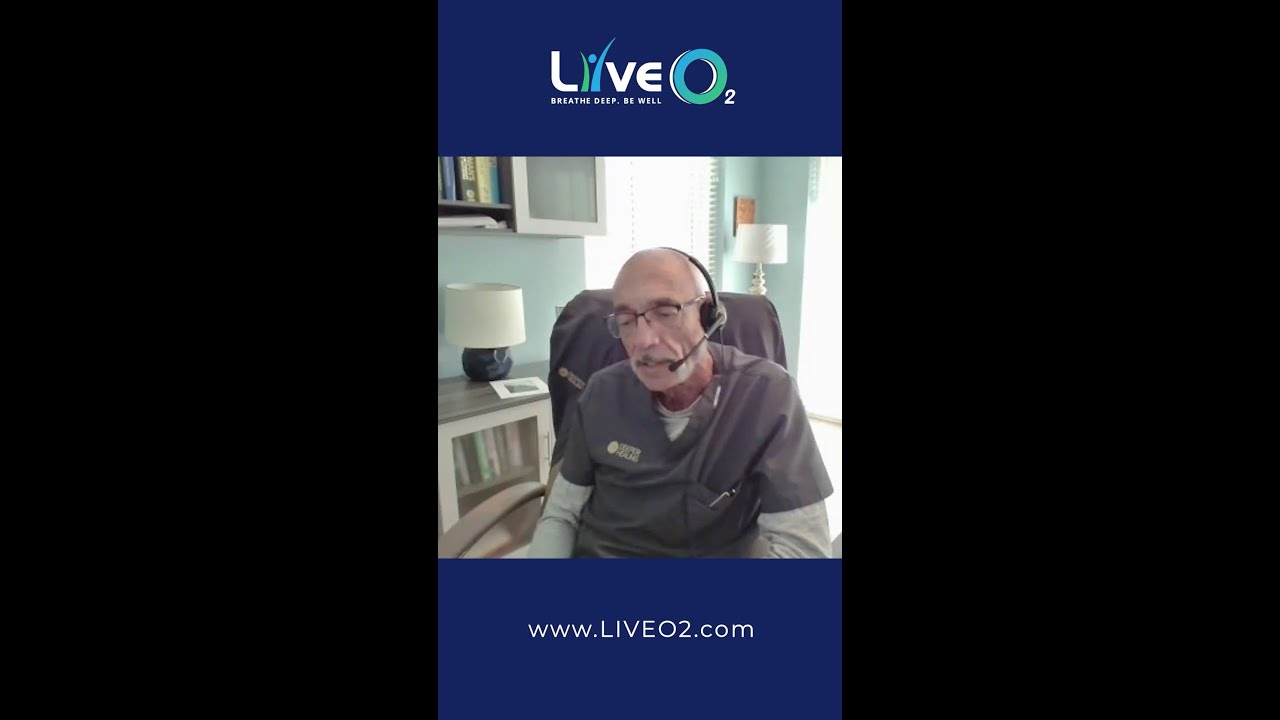
Dr. Mike Bauerschmidt on Inflammation’s Root Cause — And How Oxygen Supports Recovery
Integrative medicine physician Dr. Mike Bauerschmidt breaks down the cellular mechanism of chronic inflammation — and explains why oxygen, not just anti-inflammatories, is the key to recovery.
Who This Is For
This is for people with chronic inflammatory conditions who want a physician’s perspective on why oxygen addresses the root cause of inflammation — not just the symptoms.
- People frustrated that anti-inflammatory treatments manage but don’t resolve their inflammation
- Individuals with chronic inflammatory conditions wanting a deeper physiological understanding
- Patients of integrative or functional medicine practitioners exploring oxygen therapy
- Healthcare providers interested in the oxygen-inflammation relationship for patient education
- Anyone who wants a credentialed physician’s explanation of how LiveO2 addresses inflammation
The Root Cause of Inflammation Most Physicians Don’t Address
Dr. Mike Bauerschmidt, an integrative medicine physician with decades of clinical experience, identifies cellular oxygen deprivation as the root cause mechanism underlying most presentations of chronic inflammation. The conventional medical view treats inflammation as an immune system problem — too much immune activity that needs suppression. Dr. Mike’s integrative perspective identifies why the immune response is failing to resolve: the tissue isn’t receiving the oxygen required to complete the anti-inflammatory resolution phase.
This distinction is clinically important. Suppressing the immune response with anti-inflammatory drugs reduces inflammation markers but doesn’t address why the inflammation wasn’t resolving on its own. The tissue remains hypoxic; the resolution mechanisms remain inactive. When the medication is reduced, inflammation returns — because the root cause was never addressed. Dr. Mike’s approach targets the oxygen deficit that prevents natural resolution.
Dr. Mike’s Explanation: How Oxygen Resolves the Root Cause
Dr. Mike explains that LiveO2 Adaptive Contrast addresses inflammation at the root level by restoring oxygen delivery to hypoxic tissue. The mechanism is physiologically direct: hypoxic cycling opens capillary beds that inflammatory cytokines have partially closed; high-concentration oxygen then reaches inflamed tissue that has been functionally starved of O2. With oxygen restored, the tissue’s own anti-inflammatory pathways can activate — producing resolution rather than ongoing suppression.
Dr. Mike notes that the integrative approach to inflammation doesn’t abandon conventional medicine — it adds the missing physiological layer. Anti-inflammatory medications and LiveO2 oxygen therapy can work together, with LiveO2 addressing the root cause while medications manage acute symptoms. Over time, as tissue oxygenation improves and inflammation resolves, many patients find their medication needs decrease.
What Users Experience
Patients using the approach Dr. Mike describes — oxygen therapy combined with integrative inflammation management — report:
- Resolution of chronic inflammation rather than ongoing symptom suppression
- Reduction in medication dependence as root-cause oxygen delivery improves
- Improved energy alongside reduced inflammation — reflecting the shared cellular mechanism
- Better tissue repair and healing at previously inflamed sites
- Long-term stability of inflammation markers rather than the cycle of flare and suppression
Key Takeaways
- Dr. Mike identifies oxygen deprivation as the root cause of chronic inflammation — not immune overactivity
- Anti-inflammatory drugs suppress the response but don’t address why the tissue isn’t resolving inflammation naturally
- The resolution phase of inflammation requires oxygen-dependent mediator synthesis that cannot occur in hypoxic tissue
- LiveO2 restores oxygen to hypoxic inflamed tissue, enabling the body’s own resolution mechanisms to activate
- Integrative approaches combine conventional symptom management with root-cause oxygen restoration
- Long-term improvement requires addressing tissue oxygenation — not just reducing inflammatory markers with medication
Address inflammation at its root
Follow Dr. Mike’s clinical insight — restore cellular oxygen delivery and give your body what it needs to resolve inflammation naturally.
Explore LiveO2 Systems Talk to an ExpertFrequently Asked Questions
Dr. Mike Bauerschmidt is an integrative medicine physician with extensive clinical experience in functional and integrative approaches to chronic disease. He has worked with LiveO2 and incorporated oxygen therapy into his clinical practice, offering a physician’s perspective on the mechanisms by which Adaptive Contrast addresses inflammation, fatigue, and recovery. His explanations bridge conventional physiology and integrative clinical practice.
Anti-inflammatory medications (NSAIDs, corticosteroids) suppress the immune response and reduce inflammatory markers. They do not address why the immune system was failing to resolve the inflammation on its own. When the root cause is tissue hypoxia — insufficient oxygen for the resolution phase to complete — suppressing the immune response temporarily reduces symptoms while the underlying oxygen deficit remains. Resolution requires oxygen, not just immune suppression.
Resolution of inflammation is mediated by specialized pro-resolving mediators (SPMs) including lipoxins, resolvins, protectins, and maresins. These molecules signal macrophages to switch from pro-inflammatory to anti-inflammatory function and direct immune cell clearance from inflamed tissue. Their synthesis requires oxygen and omega-3 fatty acids. In hypoxic tissue, SPM synthesis is impaired, preventing the resolution phase from completing.
Yes. LiveO2 and anti-inflammatory medications address different aspects of the same problem — medications suppress the immune response while LiveO2 addresses the oxygen delivery deficit. Dr. Mike’s integrative approach uses both simultaneously: medications manage acute inflammatory symptoms while LiveO2 works on the root-cause oxygen restoration. As oxygen delivery improves and inflammation resolves, medication needs typically decrease under physician supervision.
Conventional medicine views chronic inflammation primarily as immune dysregulation requiring suppression. Dr. Mike’s integrative perspective adds the cellular oxygen layer: the immune response is not malfunctioning — it is failing to resolve because the tissue lacks the oxygen required for resolution. This reframing shifts treatment from symptom suppression toward root-cause oxygen restoration, producing resolution rather than ongoing management.
Yes. The role of oxygen in inflammatory resolution is well-documented in peer-reviewed literature. Research on hypoxia-inducible factors (HIF), tissue hypoxia in inflamed joints and tissues, and the oxygen dependence of SPM synthesis is established in immunology and physiology literature. Dr. Mike’s clinical explanation reflects this foundational science applied to the practical context of LiveO2 therapy.