
A Physician’s Verdict: Why Dr. Mike Bauerschmidt Prefers LiveO2 Over HBOT for Most Patients
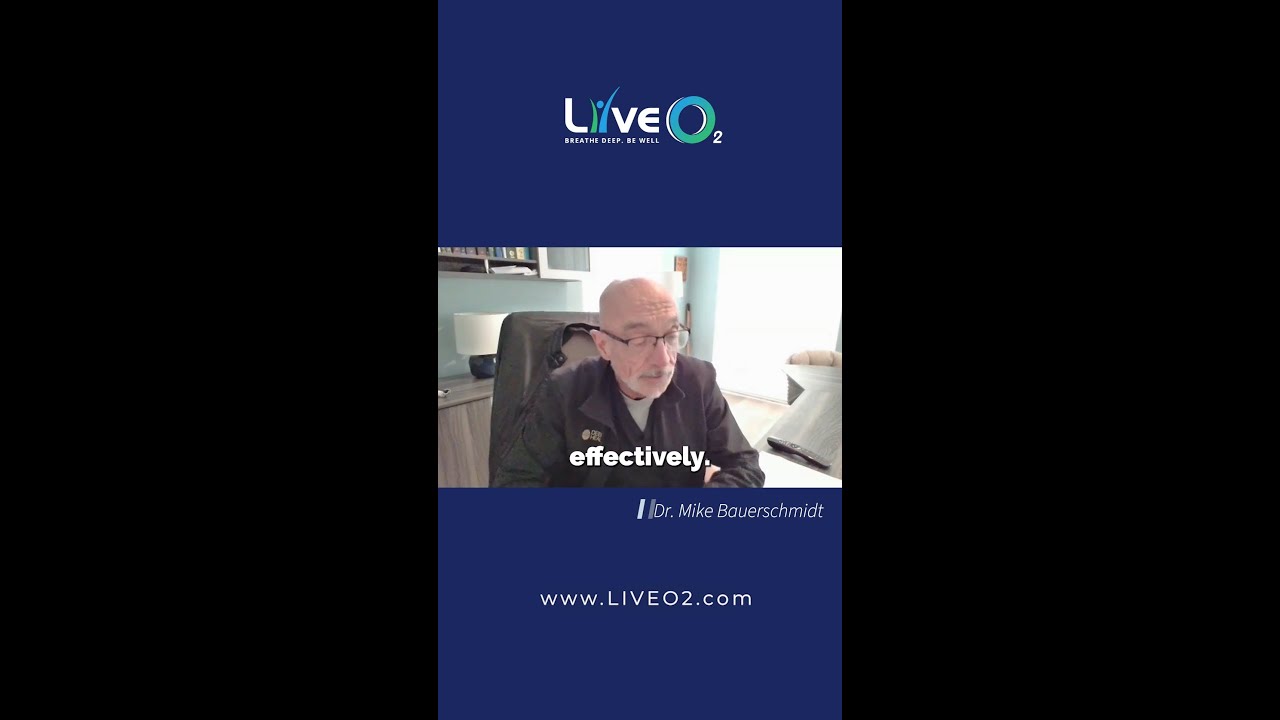
When an integrative medicine physician who has used both HBOT and LiveO2 explains his reasoning, it’s worth listening carefully.
Who This Is For
This is for patients, health-conscious individuals, and clinicians who want a physician’s evidence-based perspective on how HBOT and LiveO2 compare for real-world health applications.
- Patients considering HBOT who want a physician’s comparison
- Individuals looking for alternatives to expensive clinical HBOT
- Integrative medicine practitioners evaluating oxygen therapy options
- Health consumers who trust physician perspectives over marketing
- Anyone wanting to understand the clinical reasoning behind choosing LiveO2
The Problem with Standard Options
Patients researching oxygen therapy often rely on marketing material rather than clinical perspective. HBOT has significant brand recognition and some insurance coverage — which creates a perception that it’s the gold standard. But clinical practitioners who have used both approaches often reach different conclusions based on mechanism, patient outcomes, and practical considerations.
Dr. Bauerschmidt’s perspective is particularly valuable because he approaches the comparison from a physiological mechanism standpoint — not marketing or brand familiarity. Understanding why a clinician with hands-on experience in both modalities chooses LiveO2 for most patients provides a foundation for evidence-based decision-making.
Why LiveO2 Adaptive Contrast Wins
Dr. Bauerschmidt’s clinical analysis centers on the oxygen delivery mechanism. HBOT dissolves oxygen in plasma under pressure — effective, but passive and slow. LiveO2 Adaptive Contrast uses the cardiovascular system to drive oxygen into tissues through the body’s natural pumping mechanism, enhanced by hypoxic contrast cycling that forces capillary beds to open and accept more oxygen than normal circulation allows.
From a clinical standpoint, Dr. Bauerschmidt notes that the active exercise component of LiveO2 provides systemic benefits that passive HBOT cannot — including cardiovascular adaptation, mitochondrial stimulation, and metabolic waste clearance that complement the oxygenation itself.
What Users Say After Switching
Dr. Bauerschmidt’s patients using LiveO2 report outcomes consistent with his clinical reasoning:
- Equivalent or superior oxygenation outcomes versus their previous HBOT protocols
- Dramatically better compliance with the protocol due to time efficiency
- Measurable improvements in cognitive function, energy, and recovery
- Reduction in chronic inflammation markers with consistent use
- Higher patient satisfaction due to active rather than passive treatment experience
Key Takeaways
- Physician-backed comparisons cut through marketing to focus on mechanism and outcomes
- HBOT’s passive nature is a limitation — active exercise with oxygen is physiologically superior for most applications
- Protocol adherence is dramatically higher with 15-minute LiveO2 versus 60–90 minute HBOT
- The hypoxic contrast phase provides a therapeutic mechanism HBOT cannot replicate
- Clinicians with experience in both modalities consistently favor LiveO2 for ongoing wellness applications
- Cost per treatment favors LiveO2 significantly over clinical HBOT
Ready to compare for yourself?
Get a physician-informed perspective on whether LiveO2 is right for your specific health situation. Talk to our expert team about your goals.
Explore LiveO2 Systems Talk to an ExpertFrequently Asked Questions
Dr. Mike Bauerschmidt is an integrative medicine physician with clinical experience in both hyperbaric oxygen therapy and LiveO2 Adaptive Contrast. His comparison draws on hands-on clinical use of both modalities and direct patient outcome observation — making his assessment significantly more credible than theoretical or marketing-driven comparisons.
Dr. Bauerschmidt’s primary clinical finding is that LiveO2’s combination of active exercise and hypoxic contrast cycling produces tissue oxygenation outcomes equivalent to or better than HBOT — in 15 minutes versus 60–90 minutes. He also notes that the exercise component provides systemic benefits that passive HBOT cannot, and that patient compliance is dramatically higher with LiveO2 due to time efficiency.
HBOT remains the appropriate choice for specific acute medical conditions where it has established clinical protocols — including decompression sickness, wound healing in diabetic patients, and some forms of carbon monoxide poisoning. For ongoing wellness, cognitive health, athletic recovery, chronic inflammation, and anti-aging applications, Dr. Bauerschmidt favors LiveO2.
Yes — as discussed in the video, Dr. Bauerschmidt has personal experience with LiveO2 as well as clinical experience prescribing it for patients. Physician self-use is one of the strongest indicators of confidence in a therapeutic modality.
Integrative medicine physicians typically have broader exposure to alternative and complementary health approaches than conventional practitioners. Dr. Bauerschmidt’s perspective includes both conventional clinical training and hands-on experience with oxygen therapy modalities — which allows him to compare mechanisms, not just brand familiarity or insurance coverage.
LiveO2 maintains a network of clinical practitioners who are familiar with and use the system. Contact LiveO2 directly to ask about practitioners in your area, or to get a recommendation for how to discuss LiveO2 with your existing physician.