
BrainO₂™
25 minYour Brain Isn’t Broken. It’s Starved for Oxygen.
If you’ve tried treatments and still can’t think clearly, there’s a reason. Most medicine never looks at the one thing your brain runs on: oxygen.
BrainO₂ sends oxygen deep into the brain so it can work better and heal faster.
Why BrainO₂ Works
- Exercise drives more blood to your brain. BrainO₂ adds oxygen at that exact moment.
- Opens blood vessels first, then floods them with oxygen.
- Oxygen-rich blood flow triggers healing and rebuilds damaged brain tissue.
Patented technology · Used by veterans, athletes, and clinicians · 15+ years in development
Brain Oxygen Recovery
Pick a topic below to see how BrainO₂™ can help
After long COVID, chronic fatigue, or other illness, your brain may not get enough oxygen. That’s what causes the fog. Your doctor’s tests may look normal, but your brain still doesn’t feel right. That’s because most tests don’t measure how much oxygen actually reaches your brain cells.
BrainO₂ first opens up the tiny blood vessels in your brain. Then it fills them with fresh oxygen. Other oxygen treatments skip that first step, so the oxygen never reaches the areas that need it most. You don’t need to exercise hard. The breathing mask does the work. What people commonly notice:
- Clearer thinking within the first few sessions — many say it feels like "the lights coming back on"
- You can finish a thought, follow a conversation, and remember what someone just said
- Longer stretches of clear thinking — not just in the morning
- Many describe it as "a window opening after years of being shut"
What Users With Chronic Brain Fog Experience
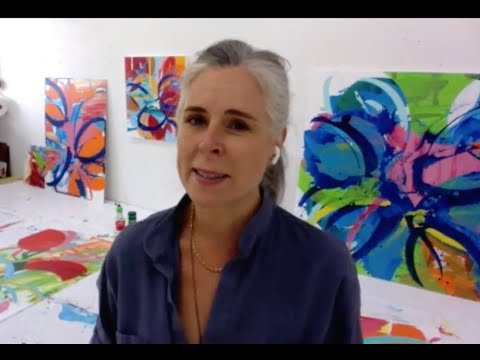
30 years of paint solvents. Crushing fatigue. Then LiveO2 changed everything.
- •“I had a tremendous burden of toxins in my blood”
- •“Sleeping 10 hours a night, napping twice a day — I couldn’t figure out why”
- •“The mental clarity — it was like rocket fuel. I leveled up in my paintings.”
— Professional Painter, Stockholm
Watch full story →Less blood flowing to your brain is one of the earliest signs of mental decline — and it starts years before you notice it. It shows up slowly: a name you can’t recall, a word that takes longer to find, thinking that used to be easy but now takes effort. The time to act is now, before it gets worse.
Adaptive Contrast gives your brain what it needs most: more blood flow, more oxygen deep inside, and help making the protein that keeps memory and brain pathways strong. Just 25 minutes added to a light workout. What people commonly notice:
- Names come back faster. Words stop disappearing mid-sentence.
- Better short-term memory — you remember what you read and what you decided
- Mental energy that lasts past the afternoon
- Fitness gains that your doctor can measure — the same numbers linked to long-term brain health
How One 75-Year-Old Reversed What His Doctors Said Was Permanent
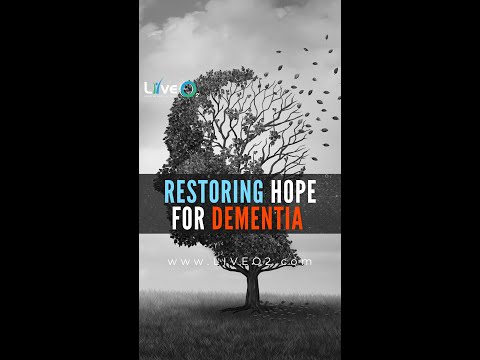
“A 75-year-old dementia patient — told by his doctors that his decline was permanent — has seen measurable cognitive improvements using LiveO2 Adaptive Contrast.”
— Coach Pete, LiveO2 Practitioner
After a head injury, the tiny blood vessels in your brain get damaged and narrow. Blood flow slows down. The hurt parts of your brain stop getting the oxygen they need to heal. Rest helps. Time helps. But the damaged areas can’t heal on their own without oxygen. Your brain needs oxygen delivered right to the injured areas. That’s what this does.
BrainO₂ first opens up the blood vessels in your brain. Then it pushes oxygen-rich blood into those open pathways — including areas that haven’t had good blood flow since the injury. Other oxygen treatments can’t do this because they don’t open the pathways first. What people commonly notice:
- Headaches happen less often and feel less strong — usually within the first few weeks
- Better balance and body control
- Skills you thought were gone start coming back — finding words, reading, handling emotions
- Healing that builds over time — not a one-time fix, but steady progress week after week
When the Doctors Said Recovery Wasn’t Possible
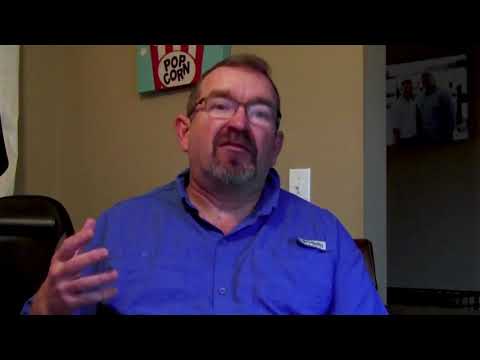
“Doctors at Walter Reed told me I may never talk or walk again — only 2 out of 100 survive my type of injury. Using LiveO2 with Adaptive Contrast, my body is continuing to regain optimal function and structure.”
— Ben Menefee, USAF Veteran
You’ve already improved your sleep, training, and diet. Your focus is good. But you’ve hit a ceiling. Supplements help for a while, then stop. Your morning routine gives you two good hours. You want something that raises the ceiling itself — not just gets you closer to it.
The system switches between low and high oxygen while you exercise — like hot-cold contrast training, but for your brain. It opens blood vessels, floods them with oxygen, and helps your brain build new connections. Just 25 minutes added to your workout. No extra time needed. What people at this level commonly notice:
What High Performers Experience
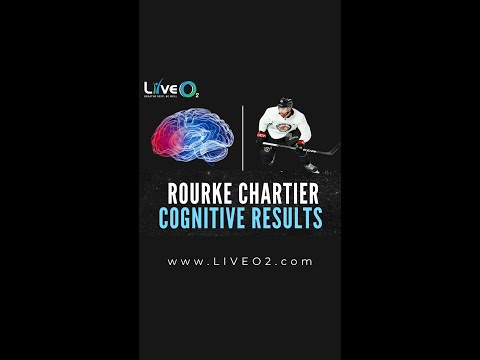
“Adaptive Contrast training drives rapid, measurable improvements in brain oxygen levels — visible within a single session. This is what peak brain performance training looks like.”
— Rourke Chartier, Professional Athlete
BrainO₂™ How It Works
Why Adaptive Contrast gets oxygen where other methods can’t
BrainO₂™ Protocol Introduction
Oxygen Therapy Technology Comparison
Not all oxygen therapies deliver the same results. The chart below shows how quickly each technology improves cognitive function — and why the method matters as much as the oxygen itself.
Recovery Results & Validation
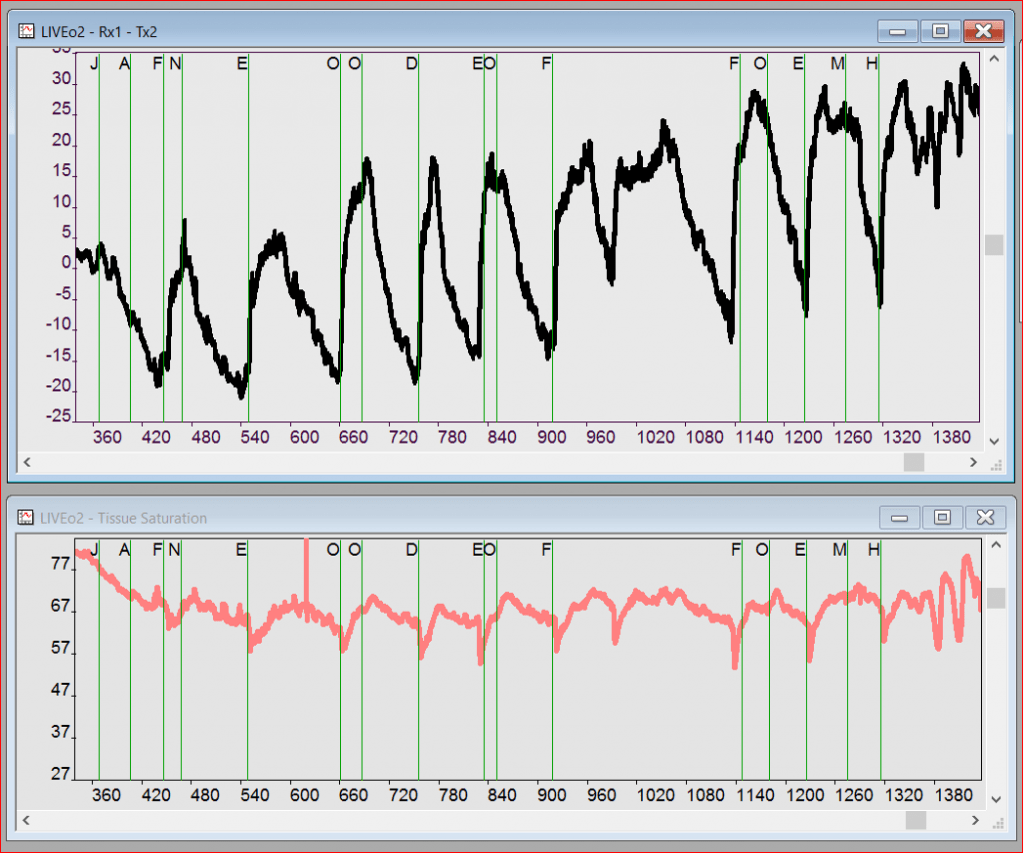
Brain Oxygen Graph (2017)
This graph shows brain oxygen levels getting better over 4 years after a chemical injury. It shows that steady BrainO₂ use can help the brain recover even years after an injury.
- Brain recovery tracked over 4 years from a chemical injury
- A short dip is normal before big improvement begins
LiveO2 Brain Oxygenation
Most people who can exercise see results within the first week. How fast you recover depends on the type and seriousness of your injury.
- Brain oxygen levels show clear improvement with regular use
- Reaches tiny blood vessels that other oxygen treatments can’t
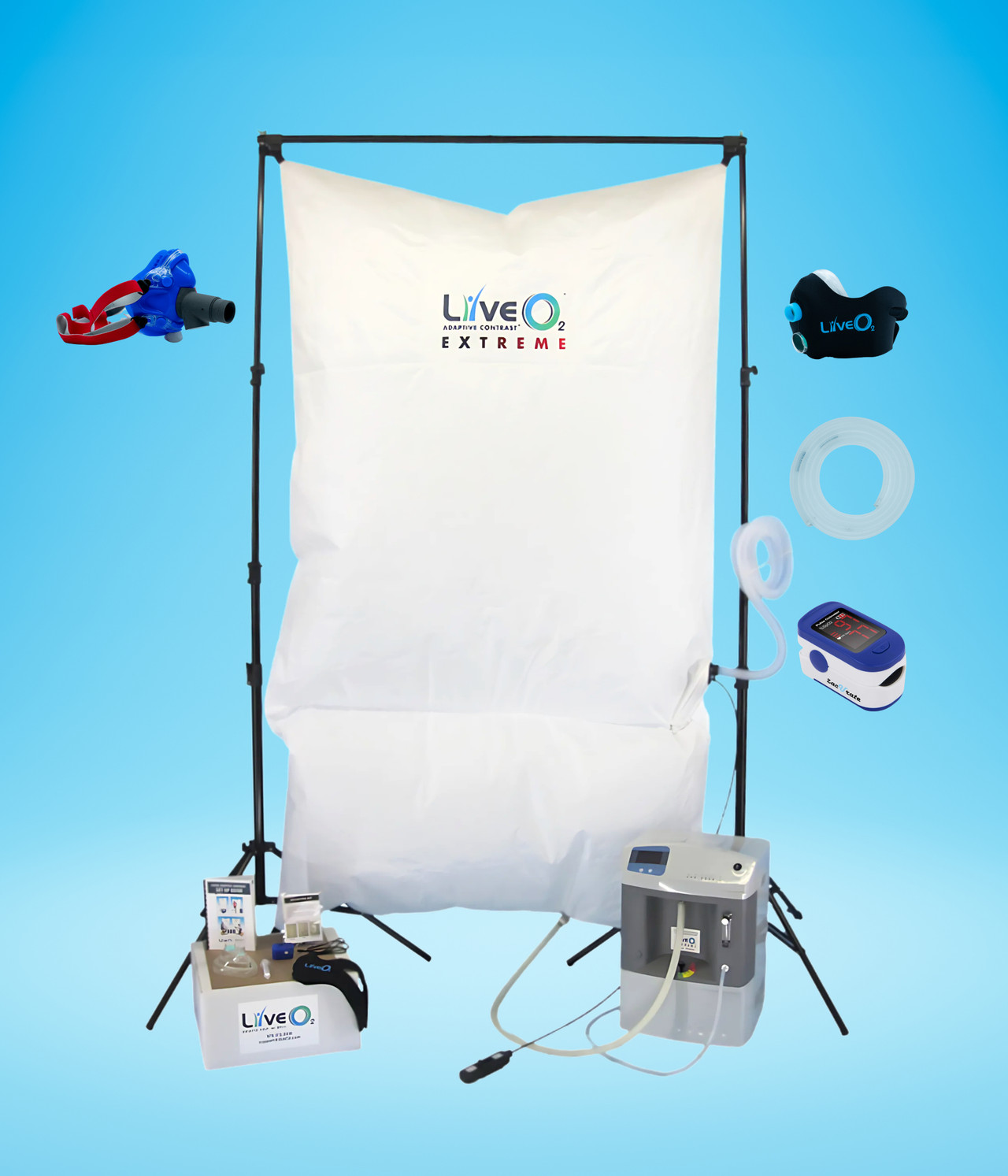
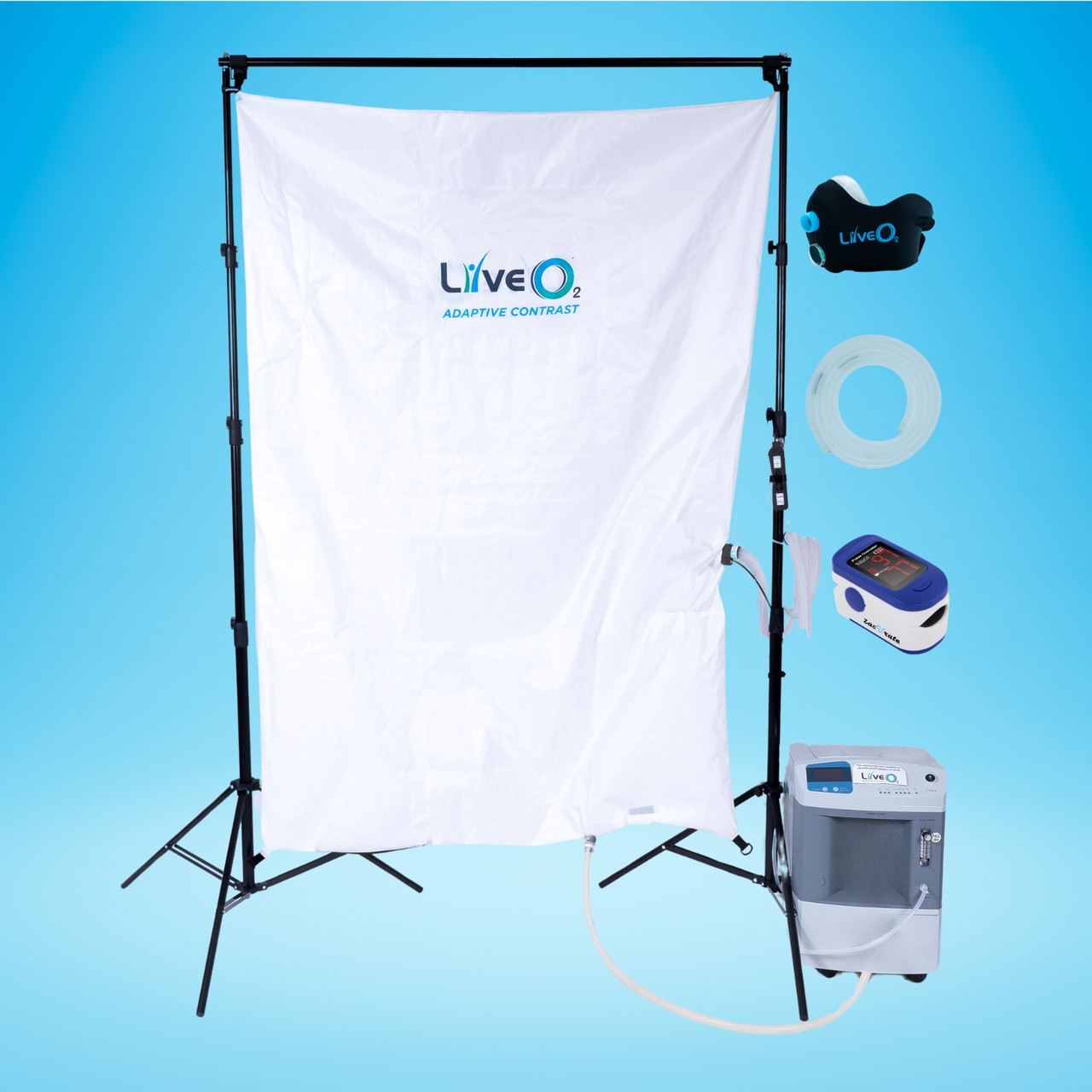
Protocol Overview
Frequently Asked Questions
Your brain burns 20% of your body’s total oxygen just to function. When that supply drops — from aging, illness, injury, or poor circulation — cognition, mood, and mental energy all suffer. But low oxygen delivery isn’t something most doctors test for, because it doesn’t fit neatly into a standard diagnosis or insurance billing code.
Oxygen therapy for cognitive conditions is largely absent from mainstream treatment protocols. It’s not that it doesn’t work — it’s that there’s no reimbursable category for it. So most patients never hear about it.
LiveO2 isn’t a medical device and doesn’t require a prescription. It’s a training protocol that restores what your brain has been missing — deep oxygen delivery to the areas that need it most. That’s what makes it accessible outside the insurance system entirely.
Standard tests like MRIs and blood work check your brain’s shape, not how well it’s working. They don’t measure how much oxygen actually reaches your brain cells. So your tests look fine, but your brain still doesn’t feel right.
Brain fog from long COVID, chronic fatigue, and other illnesses is tied to less oxygen getting to your brain. The tiny blood vessels narrow. Blood flow slows down. Your brain cells don’t get what they need to work clearly.
BrainO₂ goes right after this problem. First, it gets your brain to open up blood flow. Then, it fills those open pathways with oxygen. This isn’t just “more oxygen” — it’s oxygen sent to the parts of your brain that need it most.
Hyperbaric chambers work. We won’t say otherwise. Breathing oxygen under pressure gives real benefits, and there’s research behind it.
The difference is how the oxygen gets to your brain. With a chamber, you lie still and breathe. The oxygen just shows up. Your blood flow doesn’t increase first — your body takes in what it can.
BrainO₂ works differently. First, the low-oxygen phase tells your brain to send more blood and open up blood vessels. Then, the high-oxygen phase fills those open pathways with oxygen. Exercise makes both steps even stronger — sending 3–5 times more blood to your brain than resting.
Cost matters too. A chamber costs $150–$200 per visit. A full round of 40 sessions = $6,000–$8,000 — and when it’s done, it’s done. BrainO₂ is a one-time purchase you can use every day at home.
Yes. BrainO₂ is gentle. There is no pressure chamber. No risk from too much oxygen at these levels. You don’t need to exercise hard.
Thousands of people with head injuries and concussions have used this system. You start at whatever level you can handle — even a slow walk or easy bike ride is enough to get it working.
If you’re seeing a doctor for your brain injury, let them know you’re using this. Not because it’s risky — just so your care team knows your full plan.
If you’re looking into this for a family member: call our team first. We’ll talk through their situation with you.
No. This is one of the most common questions we hear — especially from people with long COVID or chronic fatigue.
Very light movement is enough. A bike on the easiest setting. A slow walk on a treadmill. Even seated movement works. The breathing mask does the work — not the exercise.
Many tired people say they feel better during the session than before they started. The high-oxygen phase gives your body a boost while you breathe. Sessions are 25 minutes. Most people feel more energy after, not less.
If you’re very low on energy: start with 10–15 minutes and build up. The system works with wherever you are.
It depends on your situation — and we’d rather be honest than make promises we can’t keep.
People with brain fog often notice the earliest changes. Some feel clearer thinking within the first few sessions — less heaviness, better focus, the ability to hold a thought longer. Some say it feels like “a window opening.”
For head injury recovery: real change usually builds over 4–8 weeks of regular use. Recovery isn’t a straight line. Some weeks are better than others. Each session builds on the last.
If you’re trying to keep your brain sharp as you age: you may not feel a big shift right away because you’re working on a slow problem before it gets bad. Your fitness levels will improve — and that’s the number most tied to long-term brain health.
The most important thing is doing it regularly. 3–5 sessions per week makes a difference. Once every two weeks does not.
Hyperbaric oxygen therapy for cognitive conditions is rarely covered by insurance — not because it doesn’t work, but because it doesn’t fit neatly into a reimbursable diagnostic category. Most insurers simply don’t have a billing code for “improve brain oxygenation.”
LiveO2 isn’t a medical device and doesn’t require a prescription. That’s not a limitation — it’s what makes it accessible. You don’t need a referral, prior authorization, or clinic visit. It’s a one-time purchase you own and use at home on your own schedule.
For many people, that actually makes it more affordable than insurance-covered alternatives. A full course of HBOT (40 sessions) runs $6,000–$8,000 out of pocket even when partially covered. LiveO2 is a one-time investment with unlimited use for life.
Most people notice two different feelings — and once you feel them, you understand how it works.
During the low-oxygen part, you might notice your breathing a bit more. Some people feel a slight heaviness in their chest. It passes quickly. This is your brain opening up blood flow.
During the high-oxygen part, that feeling goes away. Most people feel lighter, clearer, or more relaxed. Some say it’s like stepping outside into fresh air.
When the 25 minutes are done, most people feel awake and alert — not tired. The boost often lasts for hours after.
Each session can feel a little different. The first few may be subtle. By weeks 3–4, most people say the difference is clear.
Ready to Talk About Your Recovery?
Every brain is different. Our team can help you figure out if BrainO₂ is right for you — no pressure, no obligation.