
Real Blood Numbers After 3 Weeks of LiveO2
Michael Kummer is a biohacker who tracks everything. Here’s what happened to his blood markers — with lab work to prove it.
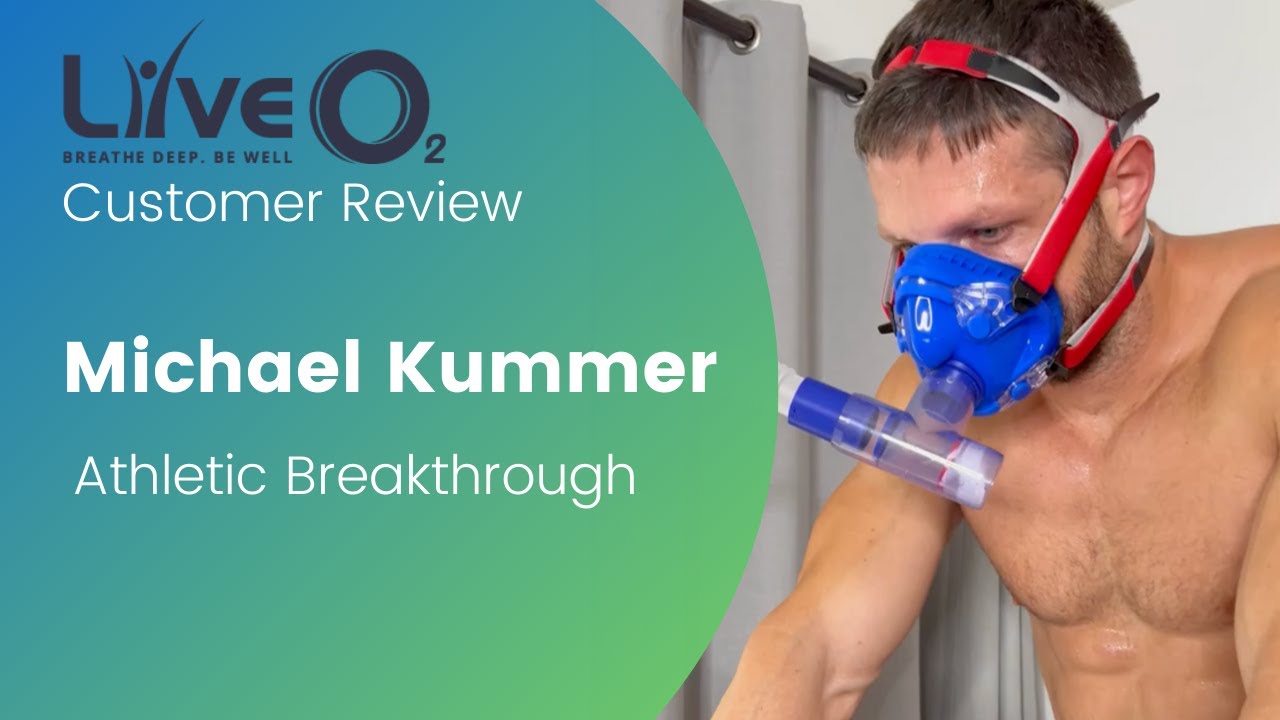
The Numbers (3 Weeks, ~30 Minutes/Day)
Michael didn’t just feel better. He had lab work done before and after. Here’s what changed:
Red blood cells carry oxygen. More red blood cells = more oxygen delivered to muscle and brain. These numbers moved 20–24% in three weeks. That’s not a supplement claim — that’s a blood panel.
What the Adaptation Looks Like Week by Week
Michael tracks everything — CrossFit performance, wearables, sleep. Here’s the pattern he noticed:
“I got off the bike and seriously, for the rest of the day I felt like a million bucks. All that mental fog — gone. I was clear, sharp, focused.”
— Michael Kummer, biohacker and health researcherWhy Blood Markers Move This Fast
LiveO2 Adaptive Contrast cycles your oxygen level up and down during exercise. The low-oxygen phase tells your body it needs more red blood cells. The high-oxygen phase gives cells the fuel to respond.
Your kidneys release a hormone called EPO during the low-oxygen phase. EPO signals your bone marrow to produce more red blood cells. This is the same pathway used by altitude training — but compressed into a 15-minute session.
The other factor: blood turbulence. Hard exercise on high oxygen creates turbulence that breaks down old, stiff red blood cells and replaces them with younger, more flexible ones. Younger cells carry oxygen better. That’s why endurance improves after the adaptation window.
Research published in the Journal of Applied Physiology confirms that intermittent hypoxic exposure raises EPO and red blood cell production in a dose-dependent way.
What Happens to Your Aerobic Endurance
Michael noticed this at day 14. Before LiveO2, he’d fall off his CrossFit performance at a certain intensity. After the adaptation window, he could hold that intensity longer before falling off.
That’s not a placebo. It’s physiology. More oxygen in blood = more ATP generated per breath = more work before lactic acid accumulates.
He also noticed altitude endurance improved — less effort at elevation. That’s expected. Higher red blood cell density means you carry more oxygen with each breath, even when the air is thinner.
Common Questions
Michael saw measurable changes in blood work after 3 weeks of ~30 minutes per day. His red blood cell count, hematocrit, and hemoglobin each rose 20–24%. Individual results vary based on training intensity and current fitness level.
When LiveO2 reactivates dormant tissue, it flushes out toxins that have accumulated in those areas over years. Your liver works harder to filter them out, which temporarily raises resting heart rate. This phase typically lasts 10–14 days and is a sign the protocol is working.
Around day 10, old and fragile red blood cells get broken down by the turbulence created during high-intensity oxygen training. Your body is replacing them with younger, more capable cells. This creates a temporary dip in performance — typically 3–5 days — before you come back stronger than baseline.
It uses the same biological pathway — the hypoxic phase triggers EPO production, which stimulates red blood cell growth. But unlike altitude training, which requires weeks at elevation, LiveO2 compresses that signal into each 15-minute session. You also get the high-oxygen phase, which altitude training can’t provide.
Michael Kummer is a biohacker, health researcher, and content creator who uses wearables and regular blood panels to track his physiology. He uses an Oura Ring, WHOOP, and Eight Sleep for daily tracking, and gets a blood panel every quarter. His LiveO2 review is based on objective data, not impressions.
Michael trained approximately 30 minutes per day. Most protocols recommend 3–5 sessions per week for the initial adaptation period. Consistency matters more than total time — regular sessions stack the EPO signal and accelerate red blood cell turnover.