
Julia Hubbel: Defy Age with Oxygen and Attitude
She summited Kilimanjaro at 60. Hiked Everest Base Camp the next year. Here is what keeps her going.
Listen to the Episode
Julia and Tom talk attitude, aging, discipline, and why you owe your gifts to the world.
Listen on your favorite podcast platform
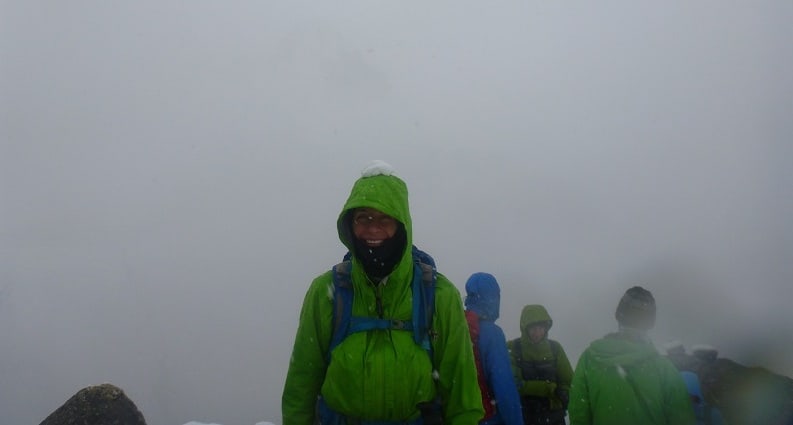
Kilimanjaro at 60
Julia Hubbel summited Mount Kilimanjaro — the highest mountain in Africa — at age 60. The next year she completed the Inca Trail and hiked to Everest Base Camp in Nepal.
Since then she has been all over the world. Riding. Kayaking. Climbing. Skydiving. Paragliding. She is ex-military. A prize-winning author. A former director of training at Fortune 500 companies.
She is not slowing down. She is speeding up.
Most people hear this and think she is some kind of genetic outlier. She is not. She is disciplined. She trains. She moves her body every single day. And she refuses to accept the story that aging means decline.
Age 60: Kilimanjaro. Age 61: Everest Base Camp. She did not slow down. She climbed higher.
The Attitude Problem
Julia has a philosophy that cuts through everything. She says it simply.
“Whatever you think, you’re right.”
— Julia HubbelIf you think you are too old to exercise, you are right. If you think your body is falling apart, you are right. If you think 60 is the beginning of the end, you are right. Your body will follow your beliefs.
But if you think 60 is the beginning of your best decade — you are also right. And Julia is living proof.
This is not motivational fluff. Research backs it up. A landmark 2002 study in the Journal of Personality and Social Psychology found that people with positive perceptions of aging lived an average of 7.5 years longer than those with negative perceptions (PubMed 12150226). That is a bigger effect than low cholesterol, low blood pressure, or not smoking.
Your mindset is not separate from your biology. It drives it.
Recognizing When You Start Dying
Julia makes a bold claim in this episode. She says most people start dying long before they are actually sick. They stop moving. They stop challenging themselves. They settle into comfort. And comfort, she argues, is the beginning of decline.
She is not wrong. The medical literature is clear on this. Sedentary behavior is one of the strongest predictors of all-cause mortality. A 2019 meta-analysis in The Lancet found that physical inactivity accounts for more deaths globally than smoking (PubMed 30496192).
The moment you stop moving, your oxygen delivery starts declining. Your blood vessels constrict. Your mitochondria produce less energy. Your brain gets less fuel. You do not feel it at first. It happens slowly. But it compounds.
Julia saw this pattern in corporate America. Successful people with money, resources, and access to the best healthcare — dying slowly because they stopped moving.
You Owe Your Gifts to the World
One of the most powerful ideas in this episode: Julia says you owe your gifts to the world. You do not have the right to waste them. Your health is not just about you. It is about the people who depend on you, learn from you, and need what you have to offer.
When you let your body decline, you are not just hurting yourself. You are robbing the world of what you could contribute. That reframe changes everything. It turns exercise from a chore into a responsibility.
Julia uses that mindset to push through hard things. When the trail gets steep, when the air gets thin, when her body says stop — she keeps going. Not because she is tough. Because she believes she has something to deliver on the other side.
That is what separates people who age well from people who do not. It is not genetics. It is not supplements. It is purpose backed by action.
Where Oxygen Fits In
Julia is an adventurer and a mindset coach. But the oxygen connection is real. At altitude, your body gets less oxygen. That is why Kilimanjaro and Everest are hard. It is not just the physical climb. It is the oxygen deprivation.
The same thing happens as you age — just slower. Your blood vessels narrow from inflammation. Your capillary density drops. Your mitochondria become less efficient. By the time you hit 60, you may be getting 20 to 30 percent less oxygen to your tissues than you did at 30.
LiveO2 Adaptive Contrast reverses that process. It opens blood vessels. It drives oxygen into tissue. It wakes up mitochondria that have been running on empty. It is the physical complement to the mental discipline Julia talks about.
You need both. The mindset to keep going. And the oxygen to fuel the journey.
Common Questions
Julia Hubbel is an adventurer, prize-winning author, ex-military veteran, and former Fortune 500 training director. She summited Kilimanjaro at 60 and completed Everest Base Camp at 61. She continues to ride, climb, skydive, and explore around the world.
Absolutely. Julia is proof that age is not a barrier to extreme physical activity. Research shows that consistent exercise and positive attitudes toward aging can extend both lifespan and healthspan significantly.
As you age, blood vessels narrow from chronic inflammation, capillary density drops, and mitochondrial efficiency declines. By 60, you may be delivering 20–30% less oxygen to your tissues than you did at 30. Learn how to restore oxygen delivery.
Yes. LiveO2 works with your own effort level. You control the exercise intensity. Many users over 60 start with gentle pedaling and increase as their fitness improves. The oxygen does the heavy lifting.
Research shows positive attitudes toward aging add an average of 7.5 years of life. Mindset drives biology. Oxygen training gives your body the fuel it needs, but your attitude determines whether you show up to use it.
Wordfood explores how the words we use — to ourselves and others — shape our relationships and our health. Julia argues that language is a form of nutrition. Feed yourself the wrong words and your life suffers.