
What’s Involved in a LiveO2 Training Session?
15 minutes. A bike. A mask. A switch. Here’s exactly what happens.
See a Session in Action
Mark Squibb walks through the basics of a LiveO2 training session.
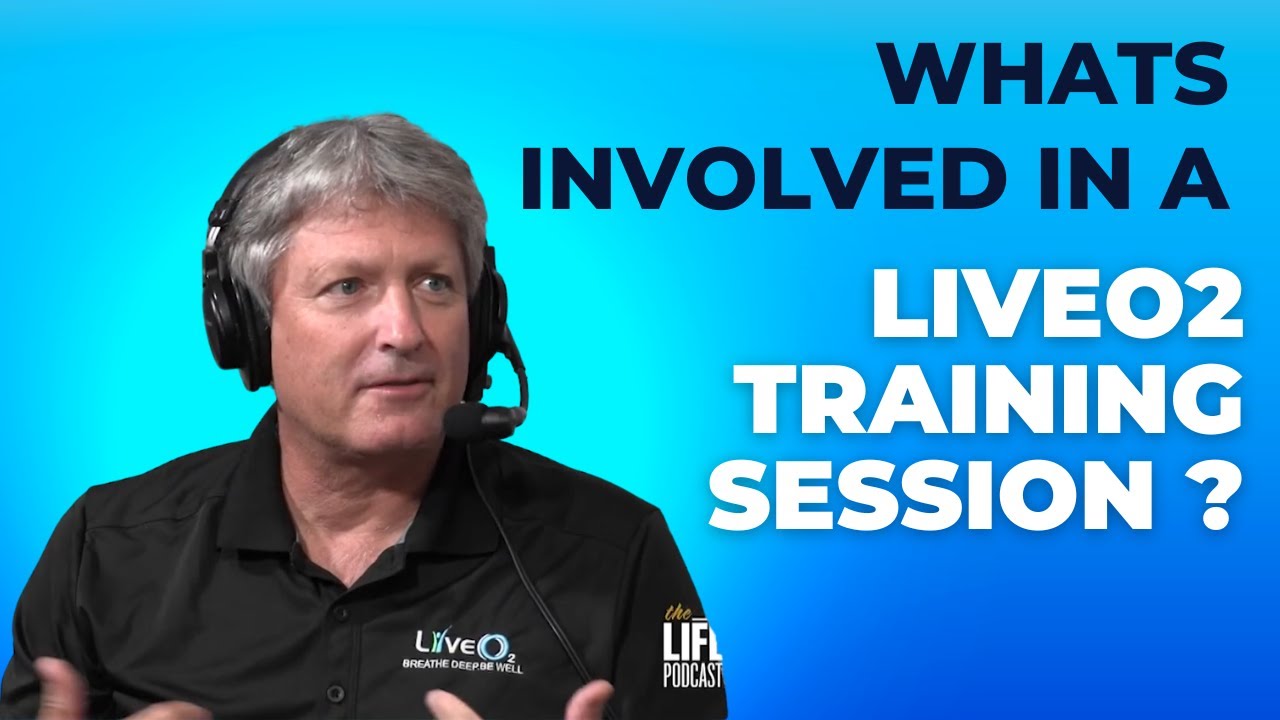
A LiveO2 session is simple. You exercise with a mask on while a system controls whether you breathe low oxygen or high oxygen. The contrast between the two is what makes it work.
The Short Version
LiveO2 is a turbocharger for your workout.
You get on a bike or treadmill. You put on a mask. The system controls what you breathe — either low oxygen (like being at 12,000–14,000 feet altitude) or high oxygen (85%+ concentrated O2).
You exercise. You switch between the two. And your body does something it can’t do any other way.
“LiveO2 is a turbocharger for your exercise. It’s a piece of exercise equipment and a system that controls what you breathe when you work out.”
— Mark Squibb, LiveO2 InventorThe whole thing takes 15 minutes. Most people do 3 sessions per week.
What Happens During a Session
Every LiveO2 session follows the same three steps.
Warm Up on Low Oxygen
You start exercising while breathing air from a simulated altitude — 12,000 to 14,000 feet. Your body responds by pushing more blood to keep tissues oxygenated.
Flip the Switch
When your heart rate climbs and blood flow peaks, you flip a switch on the mask. Your next breath is 85%+ concentrated oxygen.
Flood with Oxygen
Oxygen rushes through every pathway your body just forced open. Tissues that normally run low on oxygen get saturated.
That’s it. You repeat the cycle a few times during the 15-minute session. Each switch floods a different set of capillaries.
The key insight: exercise is what makes this work. When you exercise, your heart pumps roughly 3x more blood than at rest. That increased pressure opens capillaries that stay closed when you’re sitting still. A 2017 study in the Journal of Applied Physiology confirmed that exercise-induced blood flow increases tissue oxygen delivery far beyond what passive methods achieve.
What Equipment Is Involved?
A LiveO2 session uses four pieces of equipment. All of them come with the system.
The LiveO2 System
The main unit that generates and stores oxygen. It fills a reservoir you breathe from during exercise.
A Breathing Mask
Comfortable mask with a switch that lets you toggle between low and high oxygen mid-workout.
Exercise Equipment
A stationary bike or treadmill. Most users prefer a bike because it’s easier to wear the mask.
The Contrast Switch
A simple switch on the mask. Flip it one way for low oxygen. Flip it the other for high. You control the timing.
The system lives in your home. No appointments. No clinic fees. No waiting rooms. You train on your schedule.
Example: The Brain O2 Session
The most popular LiveO2 protocol is called Brain O2. Here’s what that session looks like.
You exercise under low oxygen until your heart rate climbs high enough that you can hear your heartbeat in your head. That’s the signal your body is sending 4x more blood to your brain.
Then you flip the switch.
A brief but powerful oxygenation event that your brain doesn’t get any other way.
“You exercise under a low oxygen environment until your body says wow I need to send as much blood as possible to the brain. We activate that circuit and then throw the switch — it’ll send at least four times more oxygenated blood with six times more oxygen to the brain.”
— Mark Squibb, LiveO2 InventorUsers report clearer thinking, better sleep, and less brain fog — often after a single session. A 2019 review in Frontiers in Physiology found that intermittent hypoxic-hyperoxic training may improve cerebral oxygenation and cognitive function in older adults.
Brain O2 is just one of several structured protocols built into the LiveO2 system.
Who Uses LiveO2?
The session is the same for everyone. But the reason people train varies.
Athletes use it to improve VO2 max and recovery speed. The exercise-plus-oxygen combination drives cardiovascular adaptation faster than exercise alone.
People with brain fog or TBI history use the Brain O2 protocol to restore oxygen flow to the brain. The 24x oxygenation event targets areas that normal circulation can’t reach.
Aging adults use it to maintain energy and cognitive sharpness. The AgeO2 protocol focuses on reversing age-related capillary decline.
Wellness seekers use it for better sleep, more energy, and sharper focus. 15 minutes, 3 times a week.
The system is designed so the whole family can use it. One investment. Everyone benefits.
Frequently Asked Questions
You need the LiveO2 system, a breathing mask with a contrast switch, and a stationary bike or treadmill. Everything except the exercise equipment comes with the system.
A typical session is 15 minutes. Most protocols call for 3 sessions per week. That’s 45 minutes of training per week total.
No. The system adapts to your fitness level. You control how hard you exercise and when you flip the switch. People from age 20 to 80+ use it. Learn about the effort level required.
It feels like exercising at altitude. You’ll breathe harder and your heart rate will climb faster than normal. The system simulates 12,000–14,000 feet. When you flip the switch to high oxygen, the contrast is immediate — most people feel a rush of energy.
Yes. LiveO2 is designed for home use. The system is a one-time investment with no recurring fees. You train on your own schedule, as often as you like.
Basic EWOT gives you high oxygen only. LiveO2 adds Adaptive Contrast — the switch between low and high oxygen that forces your body to open capillaries before flooding them. The contrast is what drives the results. Read the full comparison.
Hyperbaric uses pressure in a chamber for 60–120 minutes. You lie still. LiveO2 uses exercise-driven circulation and oxygen contrast in 15 minutes at home. Exercise increases oxygen delivery in ways passive pressure cannot. See the detailed comparison.
Many users notice more energy and clearer thinking after the first session. Over weeks, people report better sleep, reduced brain fog, and improved physical performance. Results depend on your goals and consistency. See the typical timeline.