
Restoring Oxygen for Optimal Health
Your body runs on oxygen. When the delivery system breaks down, everything breaks down with it. Here’s how to fix it.
Why Oxygen Is the Missing Piece
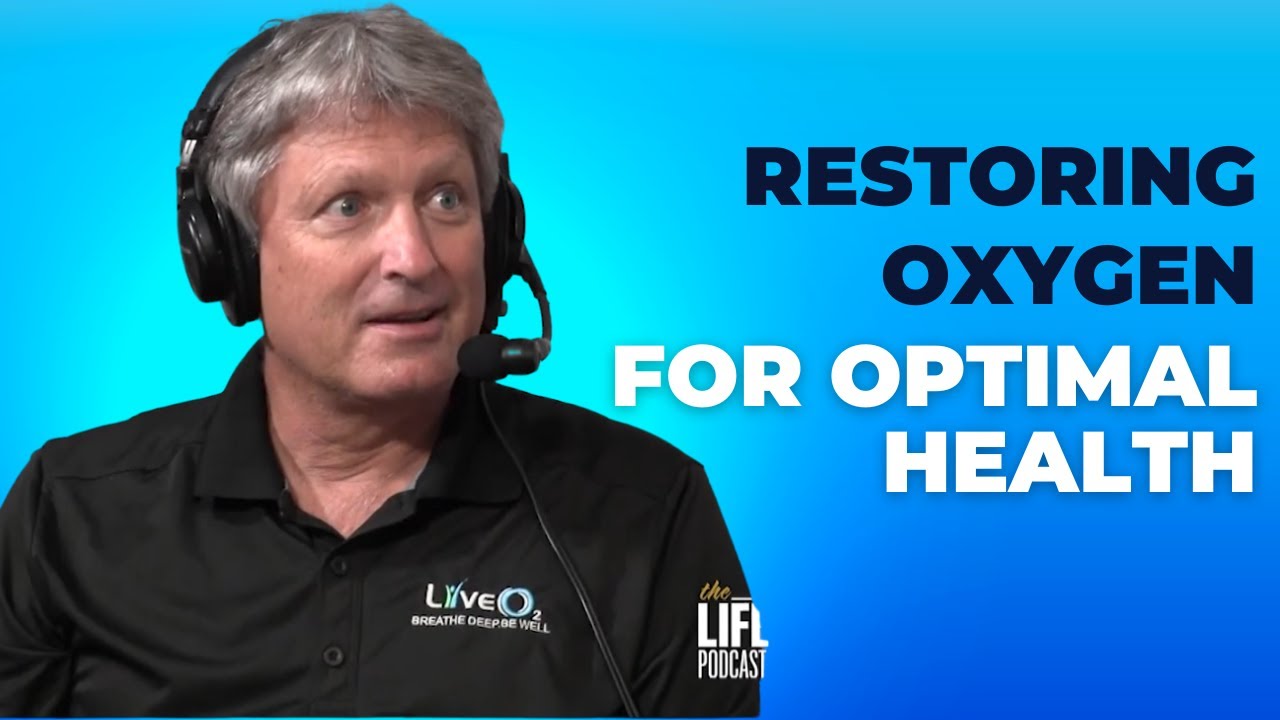
Mark Squibb explains why restoring oxygen delivery changes everything — and how the body heals when it gets enough.
Every cell in your body needs oxygen to make energy. When the delivery system fails, cells switch to survival mode. They stop repairing. They stop performing. You feel it as fatigue, brain fog, slow recovery, and aging that seems too fast.
Why Your Oxygen Delivery System Breaks Down
You have about 60,000 miles of blood vessels. Most of them are capillaries — tiny tubes thinner than a hair. They carry oxygen from your blood to your cells.
Over time, these capillaries get damaged. Stress, illness, toxins, sedentary habits, aging — they all cause inflammation in your blood vessel walls. The walls swell inward. The tubes get narrower. Less blood gets through. Less oxygen reaches your cells.
Research published in Physiological Reviews confirms that tissue oxygenation depends on intact microcirculation — and that capillary dysfunction is a root cause of organ failure, chronic disease, and accelerated aging.
Your lungs work fine. Your blood is full of oxygen. But the last mile of delivery is broken. Your cells are starving even though there’s plenty of oxygen in your body.
“There is a huge amount of research that links decreased oxygen to almost every known disease process. The body’s ability to deliver oxygen to tissue declines with age and with disease.”
— Mark Squibb, LiveO2 InventorThis is why so many health problems share the same symptoms. Fatigue. Brain fog. Slow healing. Poor sleep. Weak immunity. They all trace back to cells that don’t get enough oxygen.
What Happens When Oxygen Returns
Your cells have two modes. Survival mode — when oxygen is low, they make just enough energy to stay alive. And performance mode — when oxygen is high, they produce full energy through aerobic cellular respiration.
The difference is massive. Aerobic respiration makes 36 units of energy per fuel molecule. Without oxygen, cells make only 2. That’s 18 times less energy from the same fuel.
With oxygen: 36 ATP per glucose molecule. Without: only 2.
That’s 18x more energy — from the same food you already eat.
When oxygen delivery is restored, cells shift back to performance mode. They start repairing damage. They clear out waste. They produce the energy your body needs to actually feel good.
“When we restore the body’s ability to deliver oxygen to the tissue, the tissue starts to heal. We see improvements in energy, mental clarity, immune function — across the board.”
— Mark Squibb, LiveO2 InventorThis isn’t adding something foreign. It’s giving your body back what it already knows how to use.
How LiveO2 Restores Oxygen Delivery
LiveO2 uses Adaptive Contrast — a method that combines exercise with oxygen switching to reopen damaged capillaries.
Step 1: Challenge. You exercise while breathing reduced oxygen. This simulates high altitude. Your body responds by pushing harder — increasing blood pressure and forcing open capillaries that normally stay closed.
Step 2: Switch. At peak effort, you flip to 90%+ concentrated oxygen. Your blood becomes supersaturated with oxygen in seconds.
Step 3: Flood. All those capillaries you just forced open get flooded with oxygen-rich blood. Tissue that hasn’t had proper oxygen in months — sometimes years — gets saturated.
The whole session takes 15 minutes. You ride a stationary bike or walk on a treadmill while wearing a mask connected to the system.
“We challenge the body first. That’s what makes the difference. You can’t just give someone oxygen and expect it to get where it needs to go. You have to open the pathways first.”
— Mark Squibb, LiveO2 InventorExercise is the key. It increases your pulse pressure by about 3x. That extra force drives oxygen deep into tissue that passive therapy can’t reach. See how hard you need to exercise.
Who Benefits Most
People with chronic fatigue. When your cells don’t get oxygen, they can’t make energy. LiveO2 restores the delivery system so cells shift out of survival mode. Learn about post-illness recovery.
Athletes and fitness enthusiasts. VO2 max — your body’s maximum oxygen use — is the single best predictor of cardiovascular fitness. Restoring full capillary function directly improves it. See the VO2Max protocol.
People with brain fog or cognitive decline. Your brain uses 20% of your body’s oxygen. When delivery drops, thinking slows. The BrainO2 protocol targets brain oxygenation specifically.
Anyone over 40. Oxygen delivery declines with age. It’s not inevitable — it’s fixable. Restoring capillary function is one of the most direct ways to slow the biological aging process. See the AgeO2 protocol.
People recovering from illness. Chronic disease damages capillaries. Even after the disease is treated, the vascular damage stays. LiveO2 repairs what the disease left behind.
Common Questions
Oxygen is the fuel for cellular respiration — the process your mitochondria use to turn food into energy (ATP). Without enough oxygen, cells produce 18x less energy and switch to survival mode. Restoring oxygen lets them operate at full capacity again.
Breathing exercises and oxygen bars deliver oxygen to your lungs. That’s not usually the problem. The problem is getting oxygen from your lungs to your tissue. LiveO2 uses exercise plus contrast switching to force open capillaries and drive oxygen deep into tissue. No passive system can do that.
15 minutes. You ride a stationary bike or walk on a treadmill while wearing a mask connected to the system. Most people do 3 sessions per week. Many notice a difference after their first session.
Yes. Your brain consumes 20% of your body’s oxygen supply. When capillary damage reduces delivery, thinking slows, focus drops, and fog sets in. LiveO2’s BrainO2 protocol specifically targets brain oxygenation. See the cognitive research.
Yes. Capillary density decreases with age, chronic stress, and sedentary lifestyle. Blood vessels lose elasticity. Inflammation narrows the pathways. The result is less oxygen reaching your cells every year. This decline is reversible with the right approach.
You control the intensity. A light pedal on a stationary bike — even seated — is enough. The system adjusts to your fitness level. People from age 8 to 90+ use LiveO2. Start easy and build up over time. See the exercise guidelines.
Users report improvements in chronic fatigue, brain fog, slow recovery from illness, reduced athletic performance, poor sleep, and age-related decline. Any condition linked to impaired oxygen delivery may respond to restoring that delivery. Always consult your healthcare provider for specific conditions.