
How High Can You Get with LiveO2?
LiveO2 simulates altitudes from 10,000 to 22,000 feet — while you exercise. Here’s what each level does and why it matters.
Watch Mark Explain Altitude Settings
Mark breaks down the altitude range and why different levels exist.
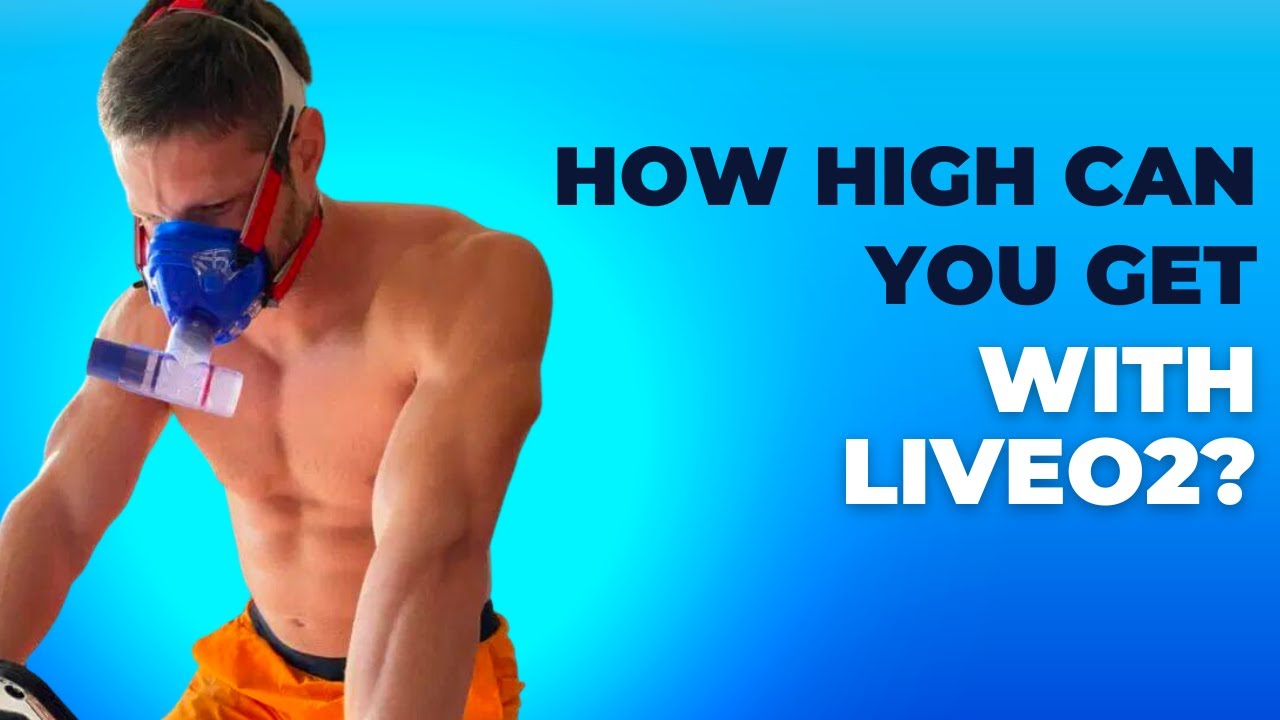
LiveO2 doesn’t just give you oxygen. It takes oxygen away first. The low-oxygen phase simulates altitude — like being on a mountain. Then you flip the switch and get flooded with high oxygen. The contrast is what makes it work.
What Does “Simulated Altitude” Mean?
When you fly in an airplane, the cabin is pressurized to about 10,000 feet. There’s less oxygen up there. Your body notices. Your heart pumps harder. Your blood vessels open wider.
LiveO2 does the same thing — without leaving the ground. The system reduces the oxygen in your breathing air. Your body responds like you climbed a mountain. Blood pushes harder. Capillaries open up.
Then you flip the switch. Pure, concentrated oxygen rushes through every pathway your body just forced open. That’s the magic. The altitude challenge is just the setup. The oxygen flood is the payoff.
Research supports this approach. A 2015 study in the British Journal of Sports Medicine found that intermittent hypoxic training improved oxygen delivery and exercise performance in trained athletes (PubMed 25539781).
The Altitude Levels — 10,000 to 22,000 Feet
LiveO2 doesn’t lock you into one altitude. You can adjust it. Here’s what each range does.
| Altitude | Who It’s For | What It Feels Like |
|---|---|---|
| 10,000 ft | Beginners, older adults, anyone starting out | Like a commercial airplane cabin. Mild challenge. Easy to handle. |
| 12,000–14,000 ft | Regular users building up over weeks | Noticeable effort. Heart pumps harder. Breathing deepens. |
| 16,000–18,000 ft | Experienced users, athletes, anti-aging protocols | Strong challenge. Body works hard to compensate. Big oxygen payoff after the switch. |
| 20,000–22,000 ft | Advanced users after months of acclimatization | Intense. Like high-altitude mountaineering. Reserved for conditioned users. |
You don’t start at the top. You start at 10,000 feet and work your way up over weeks and months. Your body adapts. It gets stronger. Then you push it further.
“As we released our new product, especially around the anti-aging objectives … you can move from ten thousand to twelve thousand to sixteen thousand to twenty thousand and so forth.”
— Mark Squibb, LiveO2 InventorWhy Higher Isn’t Always Better
More altitude sounds tougher. Tougher sounds better. But the goal isn’t to suffer. The goal is to force your body to open circulation pathways — then flood them with oxygen.
At 10,000 feet, that happens. Your body opens capillaries. Your heart pushes more blood. For most people, that’s plenty of challenge. The oxygen flood after the switch still delivers massive benefits.
Going higher adds more stress. More stress means more adaptation over time. But only if your body is ready for it. Push too hard, too fast, and you just feel terrible. No extra benefit.
The smart approach: start low. Build up. Let your body tell you when it’s ready for more.
Gradual progression. Your body acclimatizes. You get stronger at each level before moving up.
The Acclimatization Effect
Here’s what happens when you train at altitude over time. Your body learns to handle lower oxygen. Red blood cell production goes up. Capillary density increases. Mitochondria get more efficient.
One user who helped at a trade show was 56 years old. After months of training at higher altitude settings, he was back at his college performance levels. Lifting more weight than he could at 20. Zero paid help needed for three hard days of trade show work.
That’s not a fluke. That’s acclimatization. The body adapts when you give it the right challenge at the right pace.
A 2020 meta-analysis confirmed these adaptations: intermittent hypoxic exposure increases hemoglobin mass, improves oxygen-carrying capacity, and enhances aerobic performance (PubMed 31820373).
Why Exercise Makes Altitude Work Better
Sitting in a tent at altitude is one thing. Exercising at simulated altitude is something else entirely.
When you exercise, your pulse pressure goes up roughly 3x. That means blood pushes through capillaries that stay closed when you’re sitting still. The Bohr Effect kicks in — exercising muscles produce CO2 that forces hemoglobin to release oxygen right where tissue needs it.
So the altitude challenge opens pathways. Exercise forces blood through them. Then the oxygen switch floods those open pathways with concentrated O2.
That’s why LiveO2 combines altitude simulation with exercise. The altitude alone is useful. The exercise alone is useful. Together, they multiply each other. That’s Adaptive Contrast.
Frequently Asked Questions
LiveO2 simulates altitudes from 10,000 to 22,000 feet. You start at the lower end and progress upward over weeks and months as your body acclimatizes.
At 22,000 feet, you’re at the highest setting. This is for advanced users who have trained at lower levels for months. You build up gradually. Nobody starts here. As with any exercise program, consult your physician before starting.
Most users spend weeks at each level. Moving from 10,000 to 16,000 feet might take a couple of months. Reaching 20,000+ feet can take six months or more. Your body sets the pace.
No. Most users get excellent results at 10,000 to 14,000 feet. The altitude challenge opens circulation pathways and the oxygen flood does the heavy lifting. Higher altitudes add deeper adaptation over time, but they are not required for strong results.
LiveO2 reduces oxygen concentration in your breathing air to match what you’d breathe at those altitudes. Your body responds the same way — increased heart rate, deeper breathing, capillary opening. The key difference is you stay at ground-level air pressure, which makes it safe and controllable. Learn more about Adaptive Contrast.
Anti-aging users typically work up to the 16,000–20,000 foot range over several months. At these levels, the body produces stronger acclimatization responses — more red blood cells, better mitochondrial efficiency, improved capillary health. See the AgeO2 protocol.