
Oxygen Transport
Your lungs absorb oxygen just fine. The problem is getting it from your lungs to the tissue that needs it. Here is why delivery fails — and how to fix it.
Watch the Presentation
Mark Squibb on Oxygen Transport
The Problem Nobody Talks About
Most people think oxygen is simple. You breathe it in, your blood carries it around, your cells use it. Done.
That is like saying shipping is simple. You put a package on a truck. The truck drives to a house. The house gets the package. Done.
Except anyone who has ever waited for a delivery knows it is not that simple. Roads get blocked. Trucks break down. Addresses get lost. The package sits in a warehouse 10 miles from your front door and nobody can figure out how to close the gap.
Oxygen transport works the same way. Your lungs load oxygen into your blood just fine. The problem is what happens between your lungs and your cells. And for most people, the delivery system is quietly failing.
What Is Tourniquet Injury?
Dr. Adam Del Torto and Mark Squibb — the inventor of LiveO2 — explain a mechanism that most doctors never learn about in medical school. It is called tourniquet injury, and it is the single biggest reason your tissues are not getting the oxygen they need.
Here is how it works. When tissue gets damaged — from trauma, chemical exposure, inflammation, or even chronic stress — the blood vessels in that area swell. The vessel walls thicken. The passageways narrow.
Now you have a tourniquet. Not the kind you tie around an arm. The kind your own body creates inside your blood vessels. The swelling squeezes the pathway shut. Oxygen-rich blood flows right past the damaged area because it cannot get through the congested tissue.
The result? The tissue that was damaged stays damaged. It is starving for oxygen, but the damage itself prevents delivery. It is a vicious cycle that can persist for years — sometimes decades.
Tourniquet injury is why people do not heal. The damage creates a barrier that prevents the oxygen needed for repair from ever arriving.
The Presenters
This explanation comes from two people who have spent their careers solving the oxygen delivery problem from different angles.
Dr. Del Torto approaches oxygen transport from the structural side — how the physical alignment of your body affects blood flow to the brain and organs. Mark Squibb approaches it from the biochemical side — how to maximize the amount of oxygen that actually dissolves into plasma and reaches tissue.
Together, they explain why simply breathing more oxygen is not enough. You need to solve the delivery problem first.
How Adaptive Contrast Solves the Delivery Problem
Here is what makes LiveO2 different from every other oxygen system on the market.
Standard oxygen therapy gives you more oxygen. Fine. But if your blood vessels are congested, that extra oxygen just flows past the damaged tissue. It is like adding more trucks to a road that is already blocked. More supply does not help if the delivery route is broken.
Adaptive Contrast takes a completely different approach. It creates simultaneous maximums of blood flow and oxygen pressure. Here is what that means in plain language:
Step 1: Challenge. You breathe low-oxygen air while exercising. Your body panics — not enough oxygen. So it does what it is designed to do in an emergency: it opens every blood vessel as wide as possible. Blood flow surges. This is the same response that kept your ancestors alive when they sprinted away from predators at altitude.
Step 2: Switch. At the peak of that blood flow surge, you switch to high-oxygen air. Now you have maximum blood flow AND maximum oxygen concentration happening at the same time.
Step 3: Flood. That combination of wide-open vessels and oxygen-saturated blood forces oxygen into tissue that has been starved for years. The oxygen pressure is high enough to penetrate congested, swollen tissue that normal breathing cannot reach.
“You are not just giving the body more oxygen. You are reopening the delivery routes that injury closed down.”
— Mark Squibb, LiveO2 InventorWhy This Matters for Trauma and Concussion
Trauma and concussion create the worst kind of tourniquet injury. The brain has the highest oxygen demand of any organ — roughly 20% of your total oxygen supply goes to a 3-pound organ. When the blood vessels feeding the brain get congested from impact, the consequences cascade fast.
Brain fog. Memory problems. Fatigue that sleep does not fix. Emotional instability. These are not psychological symptoms. They are symptoms of oxygen starvation in specific brain regions.
Chemical exposure creates a similar pattern. Toxins inflame blood vessel walls throughout the body. The inflammation causes swelling. The swelling restricts flow. And the tissue downstream slowly deteriorates because it is not getting what it needs to function — or repair.
Adaptive Contrast addresses this directly. By creating the conditions where blood flow and oxygen pressure are both at their maximum, it can push past the congestion that months or years of normal breathing could never penetrate.
The Takeaway
You do not have an oxygen absorption problem. Your lungs work fine. You have an oxygen delivery problem. And until you solve the delivery problem, more oxygen alone will not fix anything.
LiveO2 Adaptive Contrast is engineered specifically for this. It does not just give you more oxygen. It creates the physiological conditions — maximum blood flow, maximum oxygen pressure — that force delivery through congested tissue.
That is the difference between oxygen therapy and oxygen training. Therapy gives you oxygen. Training teaches your body to deliver it.
The body that can deliver oxygen is the body that can heal. Fix the transport. Everything else follows.
Common Questions
Tourniquet injury is when damaged or inflamed blood vessels swell and restrict blood flow to surrounding tissue. The tissue downstream is starved of oxygen, and the damage persists because the delivery pathway is blocked. It can result from trauma, chemical exposure, chronic inflammation, or stress.
Regular oxygen therapy increases the amount of oxygen you breathe. Adaptive Contrast creates simultaneous maximums of blood flow AND oxygen pressure — first by challenging your body with low oxygen to open blood vessels wide, then switching to high oxygen to flood those open pathways. Adaptive Contrast vs. Standard EWOT.
Yes. Tourniquet injury can persist for years or decades. By creating high enough oxygen pressure to penetrate congested tissue, Adaptive Contrast can reach areas that have been oxygen-starved since the original injury. See results 41 years after a concussion.
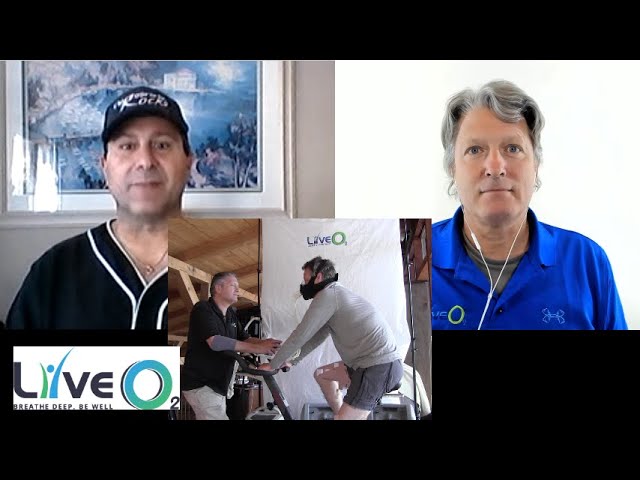
Dr. Adam Del Torto, a pioneer in cranial adjustments, and Mark Squibb, the inventor of LiveO2, explain the oxygen transport mechanism and how Adaptive Contrast addresses it.
Oxygen therapy delivers extra oxygen passively. Oxygen training combines exercise with oxygen delivery to actively improve your body’s ability to transport oxygen to tissues. Training creates lasting vascular adaptations. Full comparison here.