
ALS and LiveO2 Training: An Adaptive Contrast Case Study
A person with ALS showed measurable improvements in gait and speech after 2 sessions of hypoxic-hyperoxic interval training. Here’s what happened.
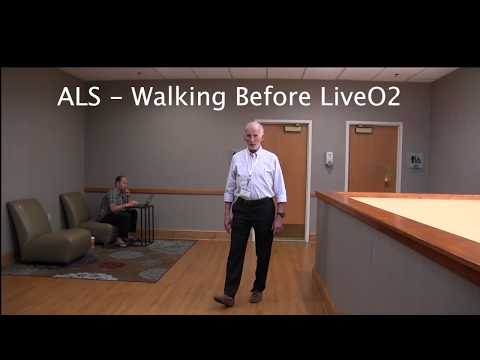
ALS ACIM Case Study — Reproduction of Kim Cherry Effect. Trainer: Dakota Squibb.
Two 15-Minute Sessions. Visible Changes.
This case study documents what happened when a person diagnosed with ALS completed 2 repetitions of the 15-minute Whole Body Flush Protocol using LiveO2 Adaptive Contrast training at a conference.
The video shows the subject before and after the sessions. Improvements to gait — how the person walks — and speech were visible and measurable.
Those improvements lasted approximately 3 weeks. When the subject got the flu, function returned toward baseline. This time frame matters: it tells us the effect isn’t a trick of motivation or a short burst of adrenaline.
Why High Oxygen During Exercise Could Matter for ALS
ALS — amyotrophic lateral sclerosis — damages the motor neurons that control muscles. The disease is progressive. Most interventions slow decline rather than reverse it.
LiveO2’s position is straightforward: during adaptive contrast training, users alternate between low-oxygen and high-oxygen breathing. The high-oxygen phase floods the body — including the brain and spinal tissue — with more oxygen than normal air can deliver.
More oxygen available during exercise may help neurons fire more efficiently. LiveO2 attributes the motor and speech improvements observed in this case study to that mechanism. The same mechanism, they note, could be produced by any method that raises oxygen levels similarly during exercise.
LiveO2 asserts that any product or other means of similarly increasing oxygen levels during exercise may produce similar results. This finding is not exclusive to any single brand or device.
What the Training Session Actually Looked Like
The protocol used was the hypoxic/hyperoxic interval training Whole Body Flush — a structured session that alternates breathing low-oxygen air with breathing high-oxygen air while exercising. The goal is to create a physiological demand that triggers deep oxygen uptake throughout the body’s tissues.
Trainer Dakota Squibb ran the session. The subject completed 2 full repetitions of the 15-minute protocol during a single conference event.
Session Summary
- Protocol: Hypoxic/Hyperoxic Interval Training — Whole Body Flush
- Session length: 15 minutes per repetition
- Repetitions: 2 sessions completed at conference
- Trainer: Dakota Squibb
- Setting: Single conference event, not a clinical trial
- Outcome measured: Gait and speech, before vs. after, on video
This Isn’t the First Time. The Kim Cherry Effect.
This case study was designed to reproduce findings originally seen with Kim Cherry, an ALS patient who reported meaningful symptom improvement using high-oxygen therapy during exercise.
Researchers at a peer-reviewed journal documented a related case. The LiveO2 experiment adds an additional data point: a different subject, a different setting, and video documentation showing the changes in real time.
This doesn’t prove a cure. It doesn’t constitute medical treatment. What it does suggest is that the pattern is worth documenting, and that further structured research is warranted.
Frequently Asked Questions
Adaptive contrast training alternates between low-oxygen (hypoxic) and high-oxygen (hyperoxic) air while the user exercises. The contrast — not just the high oxygen alone — creates a physiological response that drives deeper oxygen uptake into tissues. Simply breathing supplemental oxygen at rest does not produce the same circulatory demand.
No. This is a single case study — one person, two sessions, documented on video. It is not a clinical trial and LiveO2 makes no claim to treat or cure ALS. The case study documents what was observed and shares it for research purposes. Users report a range of experiences; results are not guaranteed.
The subject showed improved gait and speech for approximately 3 weeks. After contracting the flu, function returned toward baseline. This suggests the benefit requires ongoing application rather than a single permanent change — similar to how physical therapy must be maintained.
The Whole Body Flush is a structured 15-minute hypoxic-hyperoxic interval training session. It alternates between low-oxygen and high-oxygen breathing phases during exercise to drive deep oxygen delivery throughout the body. It is one of LiveO2’s core training protocols and is documented in detail on the Whole Body Flush page.
The trainer was Dakota Squibb. The session took place at a conference setting. Music was composed by Tanner Squibb. The study was designed to reproduce the Kim Cherry effect previously reported in peer-reviewed research.
LiveO2 states that any method capable of delivering similar oxygen levels during exercise may produce similar results. The key appears to be achieving high oxygen saturation during physical activity — the contrast between low and high oxygen phases, combined with exercise. LiveO2 is one implementation of that principle, not the only possible one.
A related case was published in a peer-reviewed journal and is linked from this page. The LiveO2 case study documents an additional observation consistent with those findings. Neither constitutes a large randomized controlled trial. The evidence is preliminary and observational — but consistent enough to document and share.
Explore More
Questions about this case study or the protocol used? Call 1-800-388-0935 | Schedule a tryout session →