
Stephen McCain’s Secret Weapon
Two-time Olympic gymnast Stephen McCain ruptured his Achilles on a Nike set. Then he found LiveO2 — and what came next.
Hear the Full Story
From a career-threatening rupture to the best physique of a 20-year career — in his own words.

Stephen McCain — a two-time Olympic gymnast, Hall of Famer, and 20-year film and television veteran — discovered LiveO2 at the Bulletproof Conference in 2017. What started as injury recovery turned into the most powerful training tool he’s ever used.
A Career-Threatening Injury on a Nike Set
He was in his mid-40s. Still performing at the highest level. Working on a Nike commercial with an Oscar-winning director.
The floor wasn’t great. He knew he was pushing it. But he got caught in the moment — the way professionals do when the work is going well — and ruptured his Achilles tendon.
For most people, that’s a six-month recovery minimum. Surgeons tell you to plan for it. Accept it. Be patient.
He had a different idea.
“I took my approach to recovery as serious as I did making an Olympic team. I said I don’t want any limitations in this body.”
— Stephen McCain, two-time Olympic gymnast & Hall of FamerHe threw the kitchen sink at it — every recovery tool he knew from the medical and biohacking worlds, under his doctor’s supervision. Blood flow restriction. Amino acids. A stack of modalities layered on top of conventional rehab.
And LiveO2.
Running in Five Months
The fastest Achilles recovery that his rehab facility — the same one used by top professional athletes — had ever seen was six months.
He was running in five.
The rehab team was impressed. But for him, the most striking moment wasn’t a milestone on a timeline. It was what happened right after his first LiveO2 session.
“After I did LiveO2, I got off the bike and my brain had forgotten that I was injured. I almost started walking normal. I realized — no, don’t do that.”
— Stephen McCain, two-time Olympic gymnast & Hall of FamerSomething about flooding his body with oxygen desensitized the protective pain mechanism. His brain stopped guarding the injury. He could move freely for the first time since the rupture.
That isn’t just a psychological trick. In healthy adults, alternating low- and high-oxygen breathing alongside light exercise produced measurable shifts in inflammatory and oxidative-stress markers — an approach the researchers proposed specifically for people whose injuries keep them from training hard enough to get a training effect (PubMed: 34502508).
The Metabolism Problem Nobody Talks About
When you rupture a major tendon, the worst part isn’t the surgery. It’s the six weeks of doing nothing afterward.
Crutches. Sitting. Waiting. Your metabolism tanks. Your workload capacity drops. And now you’re trying to rehab from a major injury with a body that can barely produce energy.
LiveO2 solved that problem. He could ride a bike with a torn Achilles — boot on, foot strapped in. The system let him maintain a high metabolism during the weeks when most people are losing theirs.
By the time he was cleared for full rehab, his body was still ready. His engine was still running. He didn’t have to rebuild his fitness and heal the injury at the same time.
“It allowed me to preserve my metabolism so I didn’t have to — in the middle of rehabbing — fight an impaired workload capacity.”
— Stephen McCain
The Best Physique of a 20-Year Career
The injury healed. But he kept going.
He developed a stacking protocol at home. Start with LiveO2 — sprint intervals, hypoxic training, load the body with oxygen. Then move to weight training under red light panels. Then hit the sauna. Cold shower to finish.
The result? The best physique he’d ever built. In his mid-40s. After a career-ending injury.
Lean. Strong. Shredded. More energy than he’d had in years.
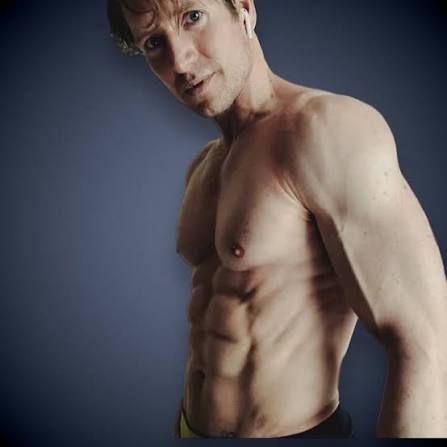
“I built the best physique I ever had. Shrink-wrapped. A ton of energy. Strong. Muscular. Lean. I call it legalized blood doping.”
— Stephen McCain, two-time Olympic gymnast & Hall of FamerHe wasn’t 25. He wasn’t at the Olympic Training Center. He was in his apartment in Los Angeles with a LiveO2 system, some weights, and a sauna. That’s it.
How Stephen Trains on LiveO2
He is emphatic that the value only shows up once you can drive the system hard. This is not a passive session he sits through — he works up to sustained high-intensity intervals against the oxygen contrast, and holds the hypoxic phase as long as he can stand it.
Stephen McCain running an Adaptive Contrast session on a Concept2 erg — footage from his own channel. Muted by default; unmute for his commentary, or watch the full 10-minute session.
- Work up to it first“If you get a little bit in shape for LiveO2, do a couple of sessions and really adapt enough into it where you can really drive it” — that is when it separates from everything else.
- Sprint and interval work under oxygenHe loads the body with oxygen, then does sprint and interval training rather than steady easy pedalling.
- Push the hypoxic phase to thresholdHe works up toward the equivalent of 20,000 feet and tries to stay at the point where he is genuinely hypoxic, as long as he can hold it.
- Flip the switch and go full out“When I can’t take it, I flip the switch, give myself some oxygen and come right back.” That contrast, taken at full effort, is the part he calls a profound experience.
- Stack what comes afterWeight training under red light, then sauna, then a cold shower — the sequence he credits with the best physique of his career.
“When you feel like you’re sprinting as fast as you can for two minutes, you are going to have a profound experience.”
— Stephen McCain, two-time Olympic gymnast & Hall of FamerThat is the range worth understanding before a first session. The floor is low — light movement is enough to produce a response. The ceiling is where Stephen trains, and there is nothing capping how hard an athlete can work against the contrast cycle.
The Upgrade That Made Him Weep
He started with the original Adaptive system. Loved it. Got incredible results.
Then he upgraded to the Adaptive Extreme.
The first two or three sessions were so intense he had a cathartic emotional response. Not pain. Not discomfort. A full-body purge. Years of accumulated stress and tension flushing out at once.
He called LiveO2 afterward and said: “What the hell? This is unbelievable.”
The deeper hypoxic training — pushing to the equivalent of 20,000 feet of altitude before switching to oxygen — created an experience he’d never felt with any other modality. And he owns saunas, red light panels, and every biohacking device on the market.
Nothing else comes close.
Outfitting an Olympic Training Center
When the coach of the U.S. men’s gymnastics team asked him to help build out a world-class training facility, the first thing he recommended was a LiveO2 system.
His pitch to them was simple: the athletes who train with it will hold their endurance longer than the ones who don’t.
The pommel horse event requires sustained sets of 60 to 70 rotations. Before LiveO2, the gymnasts were struggling to hit 60. After incorporating oxygen training, they were doing it effortlessly.
A systematic review of intermittent hypoxia–hyperoxia training found improvements in peak oxygen uptake and exercise tolerance (PubMed: 35639211). In a pilot study of track-and-field athletes, the same low-then-high oxygen approach restored exercise capacity after overtraining (PubMed: 26443707).
“There’s nothing like a LiveO2 system. I have saunas. I have red lights. I have so much gear. There’s nothing I get from anything else like what I get from this.”
Common Questions
LiveO2 drives oxygen-rich plasma into injured tissues, which may support the body’s natural healing processes. This Olympic athlete used it as part of his Achilles recovery protocol and was running in five months — faster than his elite rehab facility had ever seen.
Hypoxic training uses reduced-oxygen air to trigger your body’s adaptive response: blood vessels dilate, heart rate increases, and nitric oxide floods your system. When you switch back to high-oxygen air, your body absorbs dramatically more oxygen than normal. LiveO2’s Adaptive Contrast automates this process. Learn more.
More oxygen reaching your cells means more efficient energy production in your mitochondria. This athlete describes it as the single most impactful tool for sustained energy he’s ever used — above saunas, red light, and every other modality in his arsenal.
Yes. LiveO2 systems are used by Olympic athletes, professional hockey players, and elite training facilities. This athlete helped outfit a U.S. Olympic training center with LiveO2 as its primary recovery and performance tool.
The Adaptive Extreme allows deeper hypoxic training — simulating altitudes up to 20,000 feet equivalent. This creates a more intense contrast effect and can produce more profound results. This athlete described the upgrade as a “must” after experiencing the difference immediately.