 ×
×

Oxygen Fixes the Brain
Everything from Mark Squibb's NPAllies presentation — the science, 5 case studies, and the clinical framework for adding LiveO2 Adaptive Contrast to your practice.
"Most brain conditions are oxygen delivery failures — not structural ones. The tissue is still there. Neurons are dormant in brownout zones, starved of blood flow. Restore the flow with enough force, and the brain switches back on — sometimes within hours, sometimes after decades."
— Mark Squibb, LiveO2 Founder
Sources: 24× oxygen pulse — derived from Manfred von Ardenne's oxygen multistep therapy research (1971) applied to Adaptive Contrast protocol. · 29% brain energy / 48hr window — LiveO2 protocol measurement data. · 10,000+ user observation — LiveO2 active user base.
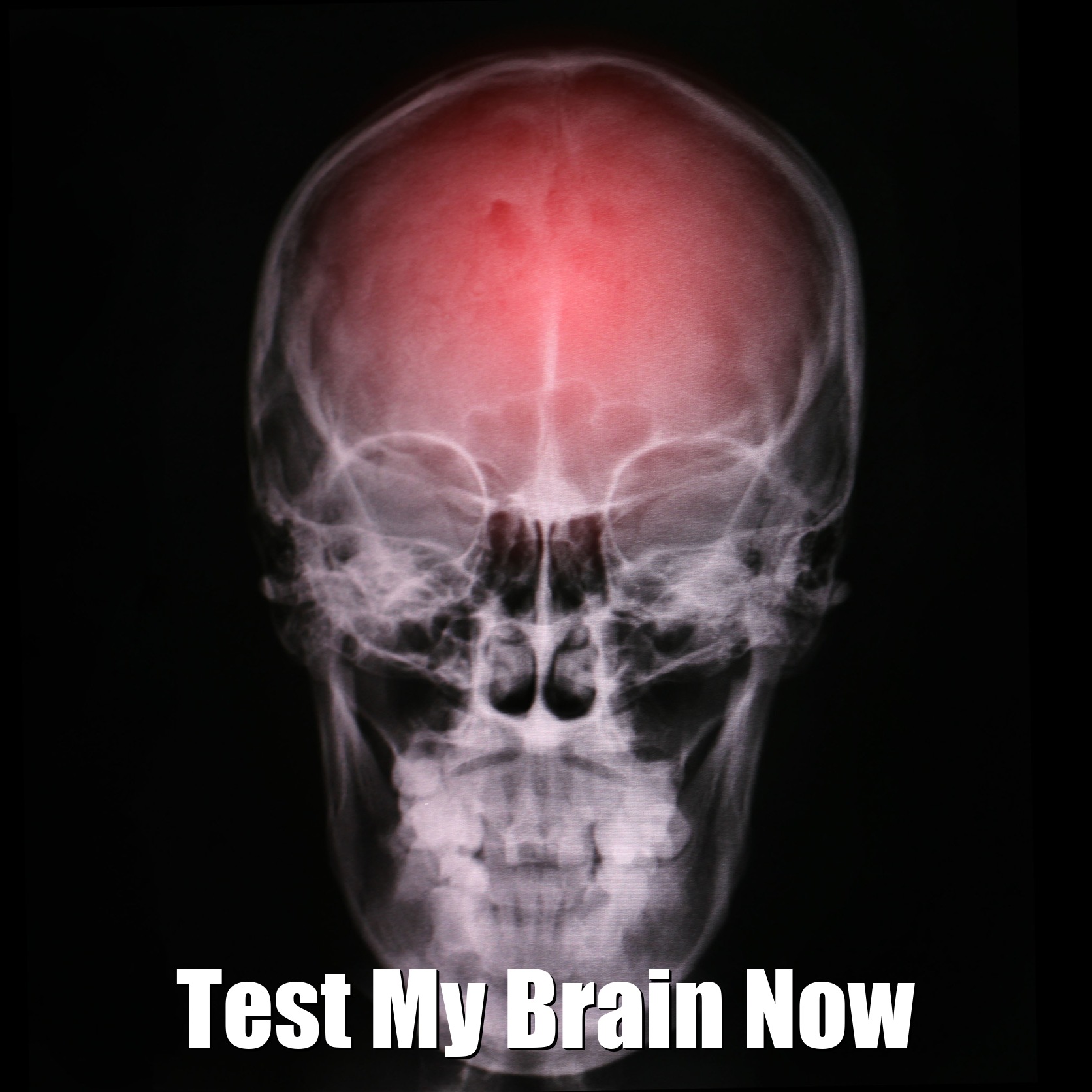
Establish a cognitive performance baseline — for you or your patients, before training begins.
Repeat the test later to monitor brain performance over time.
Know when brain performance is declining — protect your quality of life before symptoms appear.
Measure the results of any brain improvement program — objectively, not anecdotally.
This test is an essential tool for lifetime brain health. We built it so you — and your patients — can watch the brain improve as you use LiveO2.
Which oxygen technology is right for you — or your clinic?
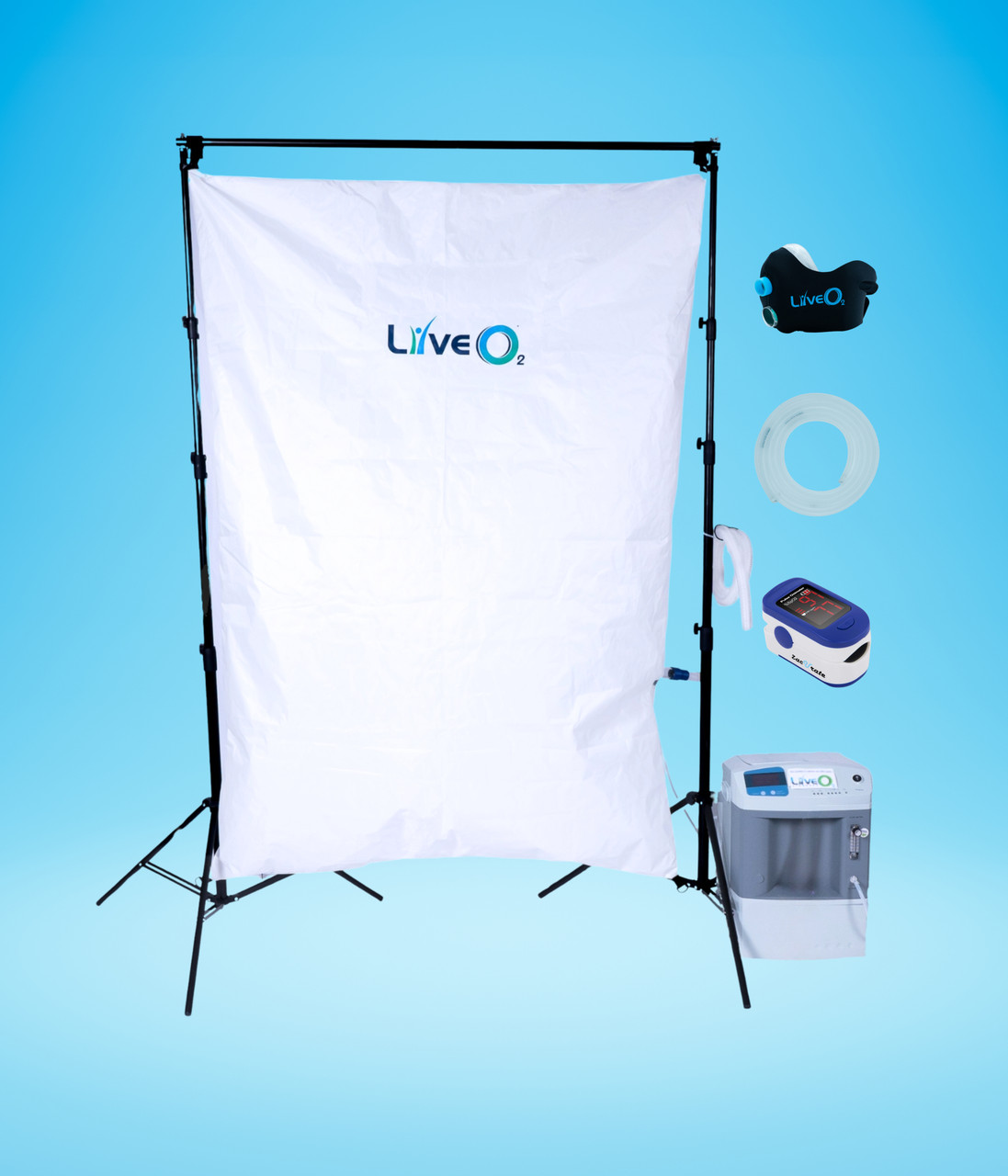
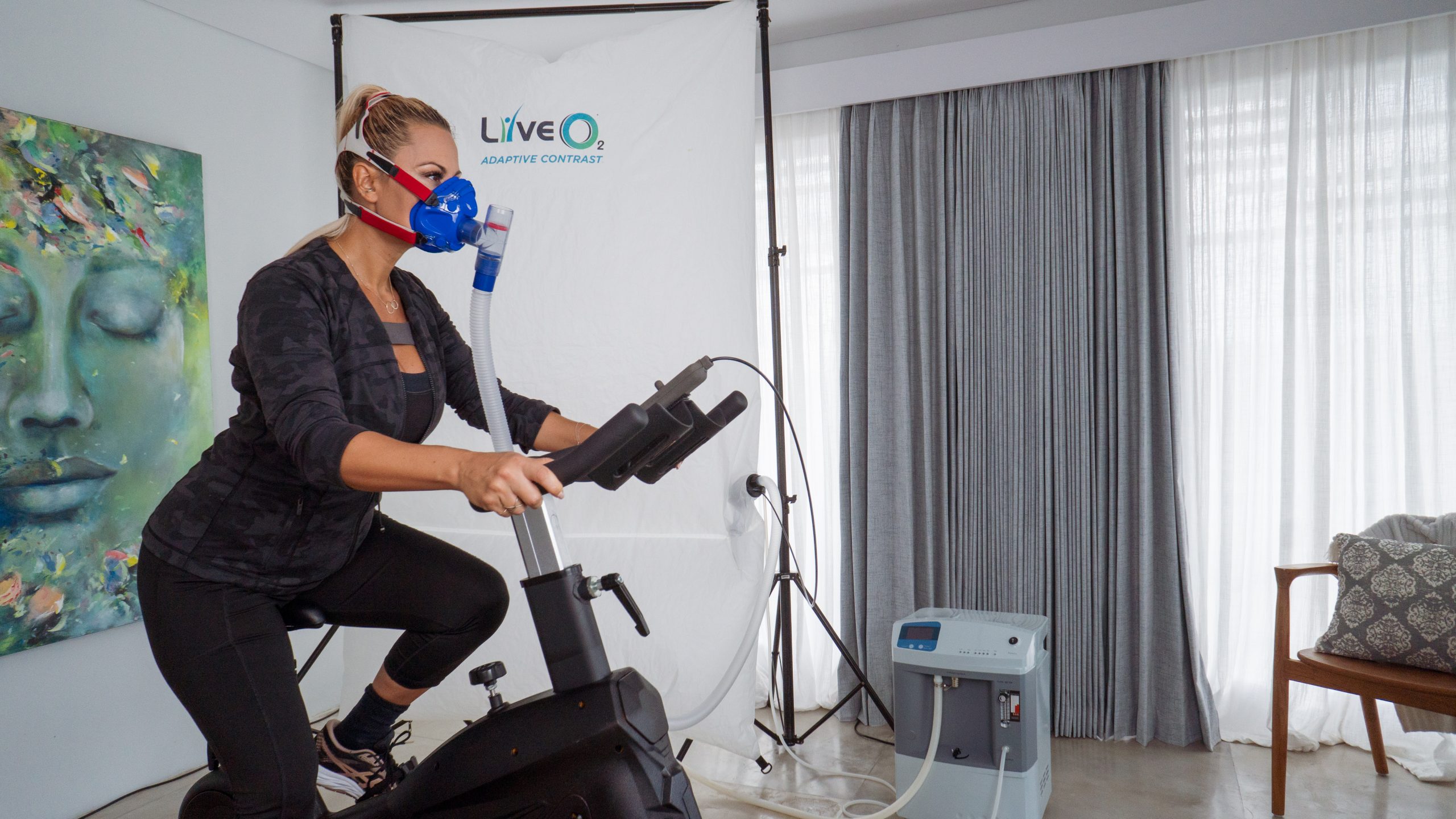
All three use oxygen. Only one creates the internal flow pressure needed to reach blocked or dormant tissue.
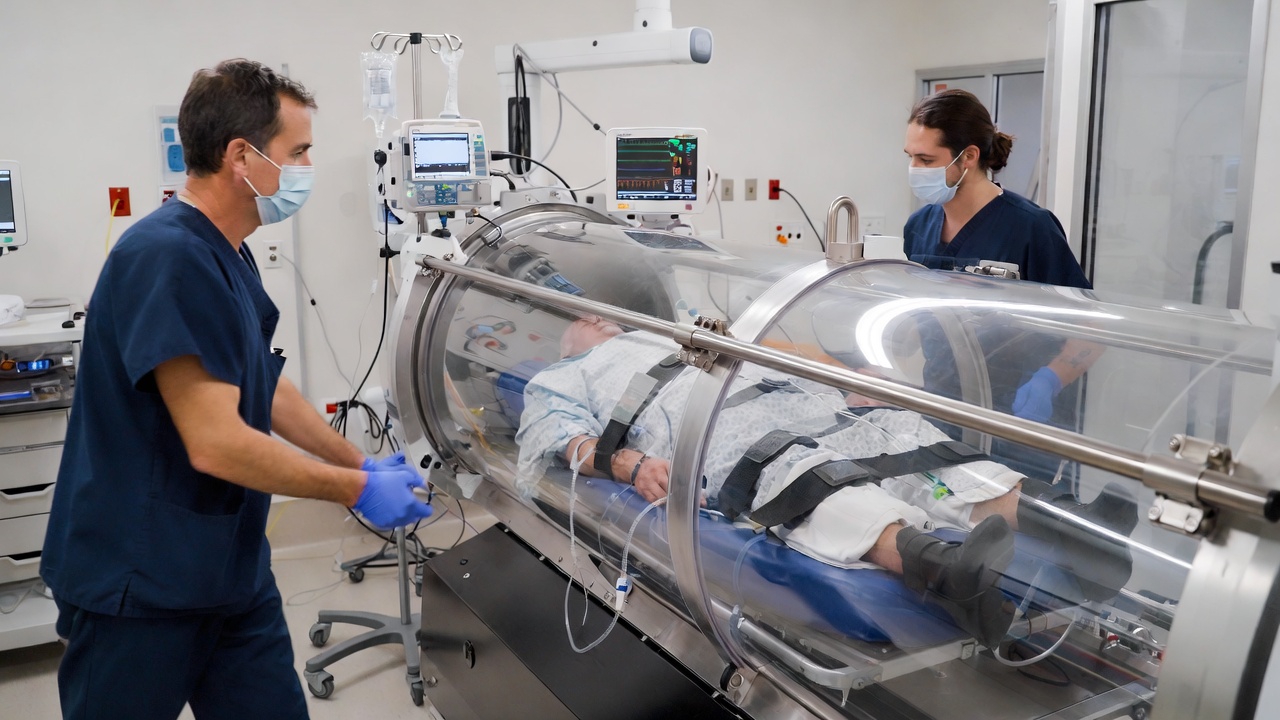
Hyperbaric chamber limitations: Passive pressurized O₂ delivers via diffusion only — without active cardiovascular recruitment, penetration of blocked vascular beds is rate-limited. See: Undersea Hyperb Med. 2015; HBOT mechanisms review.
Oxygen bag vascular paradox: Continuous O₂ supplementation during exercise reduces sympathetic vascular drive — the cardiovascular system perceives abundance and reduces effort. Von Ardenne (1971) identified this ceiling as the rationale for hypoxic-phase contrast. See: LiveO2 Oxygen Science overview.
4× blood flow to brain: Calculated from cardiac ejection fraction increase during hypoxic phase vs. rest baseline, per LiveO2 protocol data.
The Punch-Through Effect — What You'll Observe and Why
A low or unexpected pulse-oximeter reading is a safety signal, not proof that training is working. Stop the session, consider symptoms, and seek qualified medical guidance. The presentation’s proposed mechanism must not be used to dismiss a concerning reading.
How Adaptive Contrast Works — The Cycle

Safety note: Pulse oximeters estimate blood oxygen and can be inaccurate. Treat a very low or unexpected reading as a safety signal: stop the session, verify the reading, assess symptoms, and seek qualified medical guidance.
Certification does not override pulse-oximeter limitations or individualized medical guidance. Stop for a very low or unexpected reading and follow the participant’s qualified medical professional-approved safety plan.
SpO₂ drop during oxygen debt repayment: When super-oxygenated plasma reaches previously hypoxic tissue, local O₂ consumption spikes dramatically as cells repay accumulated debt — transiently diverting oxygen from peripheral measurement sites. See: Oxygen delivery and consumption in tissue recovery, NIH PMC review.
Vascular blockage and dormant tissue: Brain tissue in chronic hypoxic states reduces metabolic activity but retains structural integrity — "ischemic penumbra" research documents the reversibility of dormant but viable neurons. See: Astrup et al., "Thresholds in cerebral ischemia" — penumbra concept.
CPAP and respiratory improvement: Internal LiveO2 practitioner observation. See full documentation: LiveO2 Research.
Michael — Documented Alzheimer's Reversal After 3 Months
From Dr. Heather Sandison's practice. Michael trained 3× per week for 3 months. Standardized cognitive scores improved across all domains — and held as long as training continued.
Dr. Heather Sandison's clinical work with Michael is documented in her book Reversing Alzheimer's — a practical guide to the Bredesen-informed protocol she uses at Marama, her memory care facility in San Diego. The book includes case studies like Michael's and the multi-modal approach that includes oxygen therapy.
→ Reversing Alzheimer's by Dr. Heather Sandison — available on Amazon
LiveO2 is referenced on pages 125–130.
ALS Patient — Stood From Wheelchair After One 20-Minute Session
Filmed live at the Healing ALS conference in Las Vegas. Wheelchair-bound patient with severe speech impairment performed light recumbent cycling while breathing through a LiveO2 mask. Observable improvements in gait and speech appeared within the session.
4 of 5 ALS participants at the Vegas Healing ALS conference showed dramatic speech and gait restoration in 2–3 sessions — all documented on video.
Reiner de Ridder — Biological Age Rollback & Vascular Improvements
Reiner de Ridder (age 35, elite MMA fighter) completed 3 months of Adaptive Contrast training. Results achieved metrics nearly impossible through conventional training alone — demonstrating LiveO2's potential for performance enhancement, not just recovery.
Timestamps are approximate — verify against the video before sharing with patients.
Jill Mackay — 4 Concussions Recovered in 4 Hours, Held 4 Years
Jill's CNS Vital Signs testing showed dramatic cognitive improvements within the first 4 hours of BrainO2 training. A follow-up test 4 years later confirmed the results persisted — with no additional sessions required.
Timestamps are approximate — verify against the video before sharing.
Patti — Memory Restored 41 Years After Injury
Patti suffered a traumatic brain injury at age 17 in a car wreck. At age 58, after 41 years of memory loss, she completed one month of conditioning followed by a 30-day active BrainO2 protocol — and returned to work.
"Dormant tissue doesn't expire. A pipe that's been clogged for 41 years is still a pipe. Unclog it, and it works." — The threshold question is not how long ago — it's is the tissue still there? If yes, it's dormant, not dead.
★ Patti was present in the room during this presentation and personally confirmed that the experience Mark described was accurate.
Read the Full Case StudyCNS Vital Signs — Objective Before/After Panel
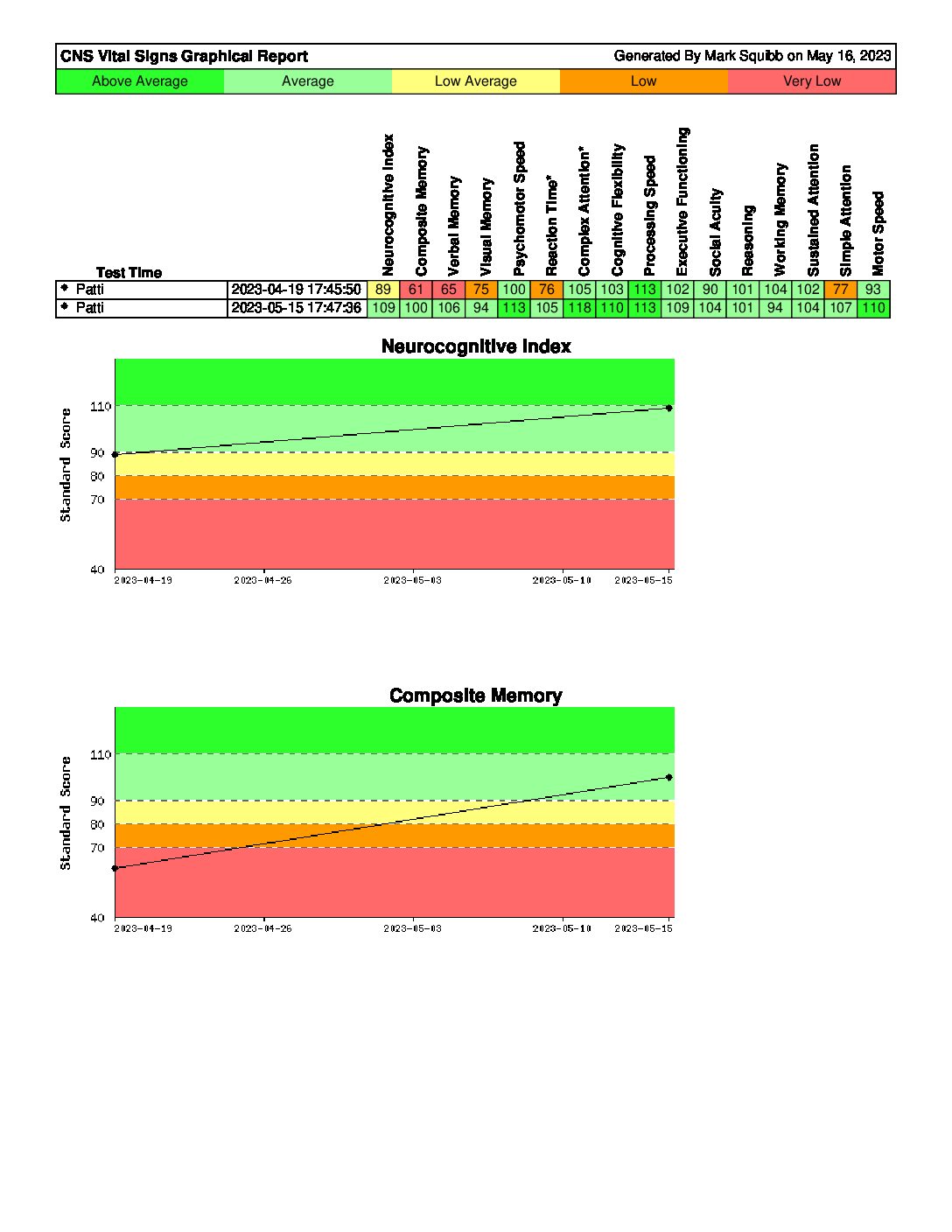
CNS Vital Signs is a standardized neuropsychological assessment platform used clinically to track memory, attention, and processing speed. Patti's scores moved from the red (impaired) range to green (normal) across all domains — objective confirmation of what she reported subjectively.
Additional documented recoveries:
- → Mark's father — 6 months post-stroke — walking & talking normally within 4 days of BrainO2
- → Ben Menefee — severe brain bleed paralysis — partial resolution over 6 months with motor & sensory function returning to right side
- → Rourke Chartier (San Jose Sharks) & Carson Palmer (Arizona Cardinals) — concussion recovery documented
These case studies are reproducible — but only with full protocol understanding. Do not underestimate the value of Training and Certification: they often determine success or failure for your patients. Standard medical training does not prepare practitioners for what Adaptive Contrast produces.
Viewer Questions & Answers
Questions asked live during Mark's NPAllies presentation — with answers drawn directly from what was covered.
When you breathe extra oxygen during exercise, the body detects oxygen abundance and relaxes its delivery system — the cardiovascular system doesn't work as hard. Less blood pressure, less blood flow, less oxygen reaching blocked or dormant tissue.
Adaptive Contrast forces the body to maximize blood flow via the hypoxic phase. The body perceives oxygen scarcity, dilates bronchial pathways, widens blood vessels, and increases cardiac ejection fraction — creating approximately 4× more blood reaching the brain versus standard EWOT.
See: LiveO2 Oxygen Science — explanation of the hypoxic stimulus and cardiovascular response mechanism.
Based on documented case studies, no. Patti recovered memory 41 years post-injury. The key factor is whether the underlying tissue is still present. If yes, it's dormant rather than dead — and restoring blood flow can reactivate it.
This directly contradicts the standard view that brain damage is permanent after a certain point, but the documented outcomes — across multiple independent cases — support the possibility of recovery regardless of elapsed time.
See: Patti's full case study — 41-year post-concussion memory recovery. Also: ischemic penumbra research — Astrup et al., dormant but viable neurons.
Pulse oximeters estimate oxygen saturation and have accuracy limitations. A low reading does not establish the cause, tissue recovery, or a successful training response. Consider the reading together with symptoms and medical guidance.
A falling reading is not evidence of benefit. Stop the session and seek qualified medical guidance for a very low or unexpected reading, or serious or worsening symptoms.
See: LiveO2 Oxygen Science — punch-through mechanism. Background reading on oxygen physiology (not evidence that a low reading is safe): NIH PMC — tissue oxygen delivery and consumption.
Yes. The ALS case study demonstrates this directly. A wheelchair-bound patient with severe speech impairment performed light recumbent cycling while breathing through a mask. Even that minimal exercise level was sufficient to establish the super circuit — resulting in meaningful physiological change in a single 20-minute session.
Exercise intensity matters less than cardiovascular engagement. Almost any level of movement is sufficient to initiate the Adaptive Contrast response.
LiveO2 is sold as an exercise and wellness device — not a medical device under FDA classification. This enables access without a prescription. Insurance reimbursement is not guaranteed; any specific service and coverage must be verified with the insurer.
Home users receive protocol coaching. Practitioners should complete certification before clinical use — both for protocol compliance and to correctly interpret what you'll observe during sessions.
Multiple documented cases including elite athletes show 20–30% VO₂ max improvements. Hemoglobin increases of 20–25% are typical with consistent use — equivalent to months of high-altitude training (Sherpa training data). Functional age rollback averages 15–25 years across the active user base, regardless of starting age.
For recovery patients, the benefit is restored cellular function. For performance patients, the benefit is the same mechanism applied to healthy tissue — more oxygen capacity, faster recovery, better adaptation.
Reiner de Ridder case: biological age 35→27, HRV +185%, resting pulse 60→34 bpm — documented above. VO₂ max and hemoglobin data: LiveO2 Research page. Sherpa altitude-training hemoglobin equivalence: internal LiveO2 protocol data.
How Adaptive Contrast Works — with Dr. Heather Sandison
LiveO2 founder Mark Squibb explains how Adaptive Contrast oxygen training works to Dr. Heather Sandison — breaking down the science and why it matters for practitioners treating cognitive and neurological conditions.
Timestamps are approximate — verify against the video before sharing.
Presentation Slides
Browse the full slide deck from the NP Alliance Summit — case study data, protocol overview, and clinical references.
Ready to bring LiveO2 into your practice? Speak with a specialist about equipment, protocols, certification, and the clinical integration pathway for natural health practitioners.
Schedule MeetingPulse-oximeter safety reference: FDA: Pulse Oximeter Basics. Individual case accounts and presentation claims are not guarantees of clinical outcomes.